


POCO launched its next-gen bang-for-the-buck flagship line a few months early, so you can upgrade right in time for Christmas. But which of them should you take? This is our take on the POCO F8 Ultra.
As the name suggests, the F8 Ultra is the best of the series. But considering the line-up’s track record, you can already make do even with a POCO F8 Pro.
So, what would be the reason why you should spend more for the Ultra? How does it fare with other high-end phones in the market? We’ll find out in our POCO F8 Ultra review.
POCO F8 Ultra Specs
- Android 16, HyperOS 3
- Dual SIM, Dual Standby
- 6.9-inch 2.5K LTPO AMOLED display, 2608 x 1200 pixel resolution, ~416ppi
- up to 120Hz refresh rate
- 3500-nit peak brightness, 2000-nit high brightness mode
- DCI-P3, HDR10+, Dolby VisionDC Dimming
- Wet Touch display 2.0
- TUV Low Blue Light, Flicker-Free, Circadian Friendly Certification
- POCO Shield Glass
- 4.6GHz Qualcomm Snapdragon 8 Elite Gen 5 octa-core processor
- Adreno 840, VisionBoost D8
- 12GB/16GB LPDDR5X RAM
- 256GB/512GB UFS 4.1 internal storage, non-expandable
- 32-megapixel front camera
- 50-megapixel (Light Fusion 950, 1/1.31-inch, f/1.7, OIS) + 50-megapixel (periscope telephoto, f/30, OIS) + 50-megapixel (ultra-wide) rear cameras, LED flash
- Ultrasonic fingerprint scanner, Face unlock
- Stereo speakers, Rear woofer
- Sound by Bose, Dolby Atmos, Hi-Res Audio, Hi-Res Wireless
- IP68 dust and water resistant
- Triple microphone array
- HSPA+, 4G LTE, 5G
- WiFi 7
- Bluetooth
- GPS
- USB-C
- Dimensions: 163.33 x 77.82 x 7.9mm (Black) | 163.33 x 77.82 x 8.3mm (Denim Blue)
- Weight: 218g (Black) | 220g (Denim Blue)
- Colors: Denim Blue, Black
- 6,500mAh non-removable battery, 100W wired, 50W wireless, 22.5W reverse wired charging
Design and Build Quality
The POCO F series has some of the most impressive hardware you can ever see. But aside from packing serious hardware, POCO also blended in some style this time around.

Its textured Denim Blue design looks really unique, but it may not be everybody’s cup of tea. The Black color option that we’re reviewing looks cleaner and more elegant.
It doesn’t have the flashiest look, and the wide camera island on the back may have taken cues from the latest iPhone 17 Pro series. It has a cleaner finish than the rest of the rear panel, which has a subtle, sandpaper-like texture.

The rear panel has a smooth metallic finish that stays clean from fingerprint marks and smudges.
It then has flat, metallic edges that offer a secure grip, while the curvy four corners feel very comfortable to hold.

The device feels very thin and light, with the Denim Blue colorway about 0.4mm thicker and weighs 2g heavier.
It may not be the most attractive flagship phone, but it feels very pleasant to drive daily. Plus, the POCO Shield glass, preinstalled screen protector, free rubber case, and IP68 dust and water resistant give you an extra peace of mind that it will last for years.
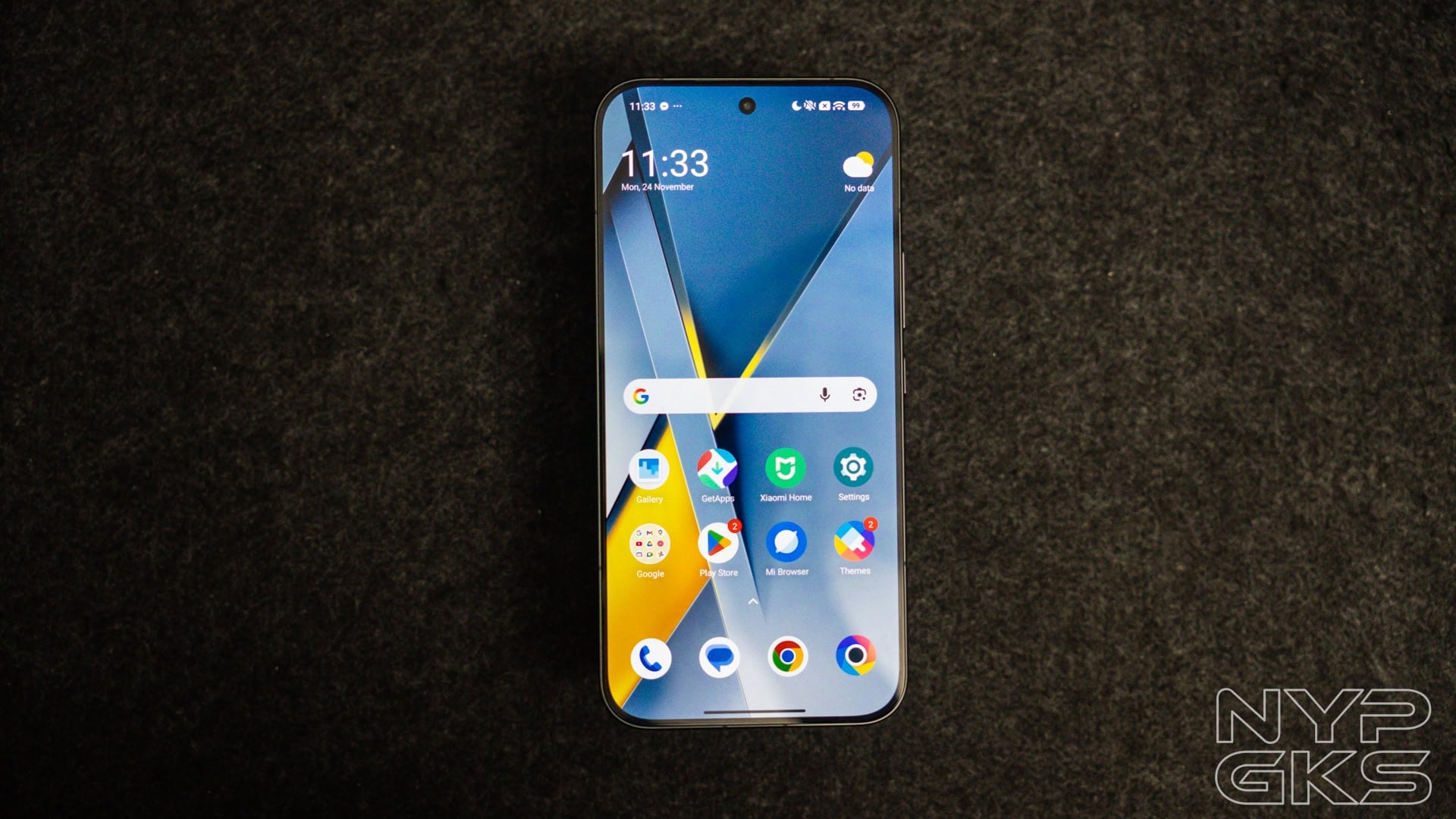
Taking a tour, we have a 6.9-inch LTPO AMOLED screen on the front with very thin bezels all around and a 32-megapixel selfie camera in a punch-hole cutout.
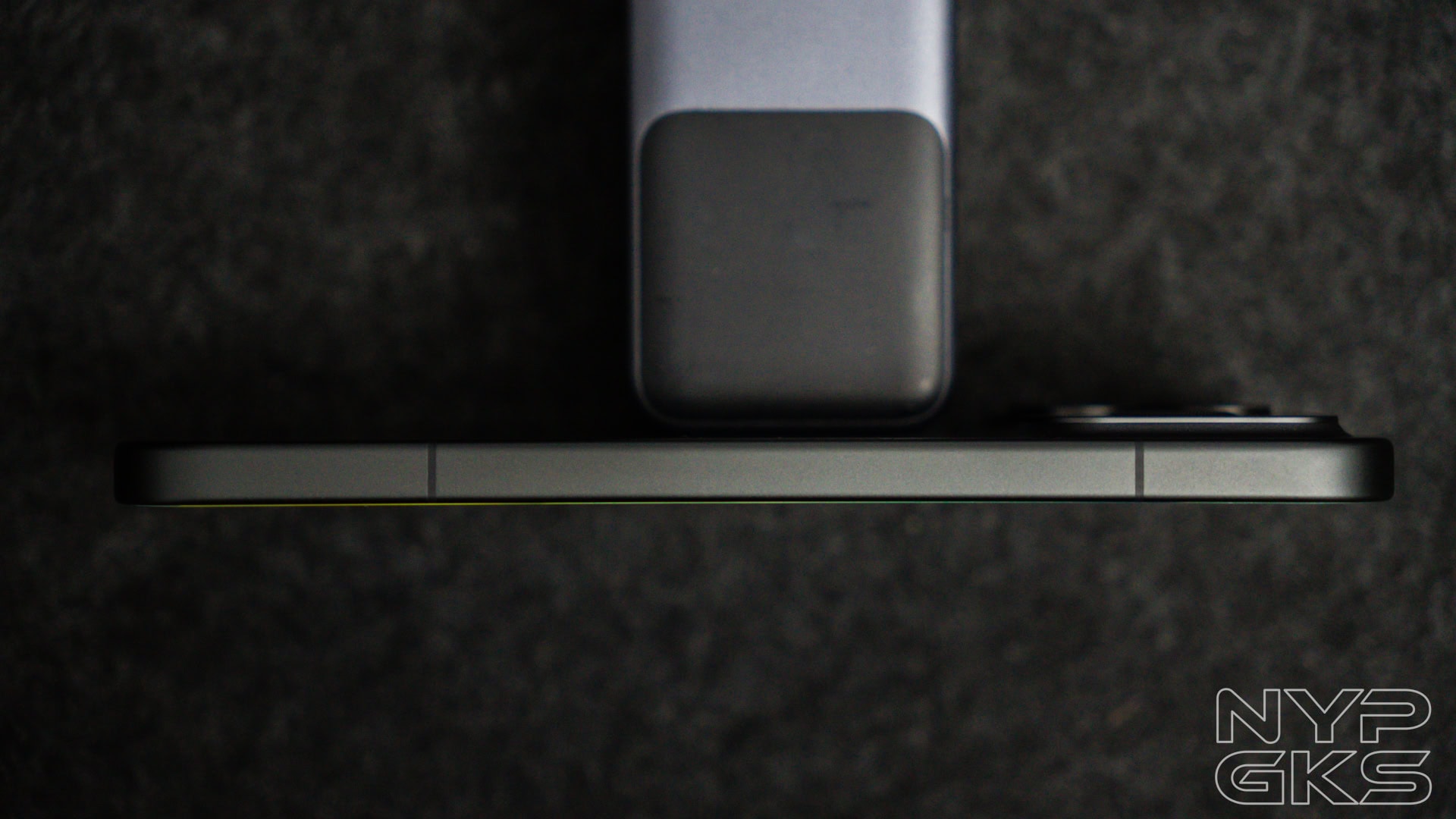
The left side is empty, apart from the two antennas, which are also present on the other three sides of the device.
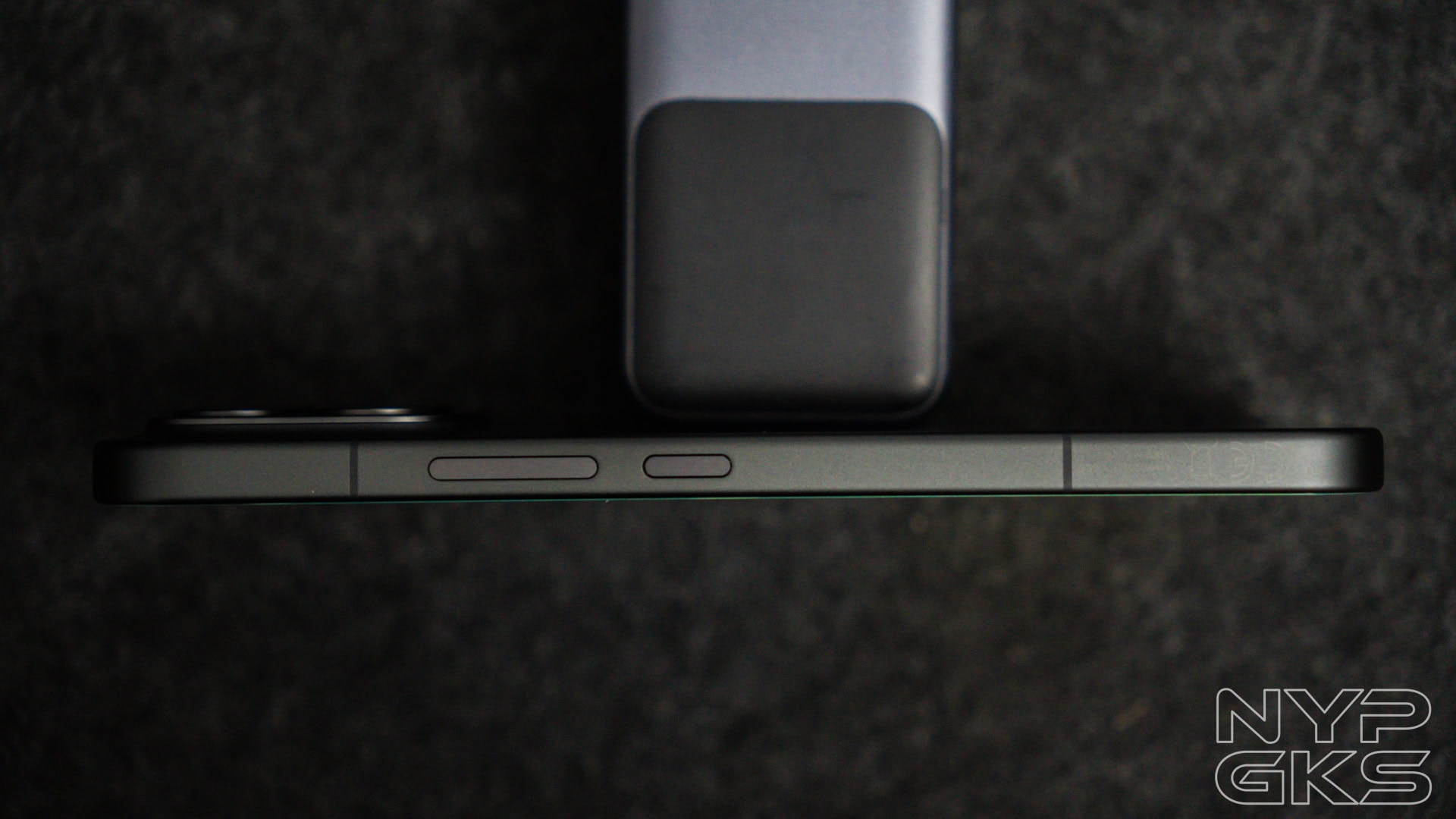
We got the volume controls and lock/power switch on the right side. The top only has the stereo speaker.

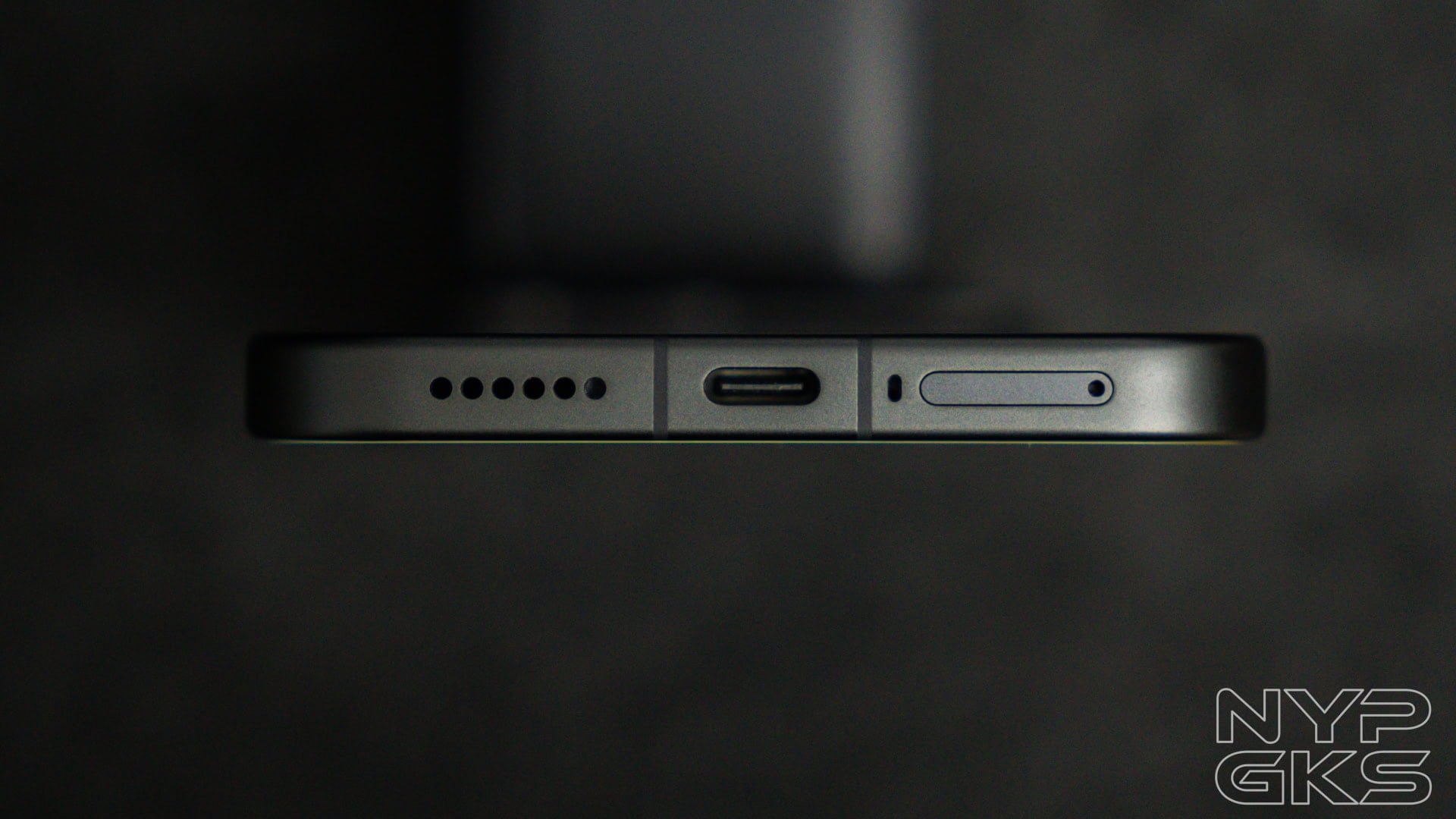
On the bottom, we have the loudspeaker, USB-C port, microphone, and the SIM tray for housing two nano SIM cards.
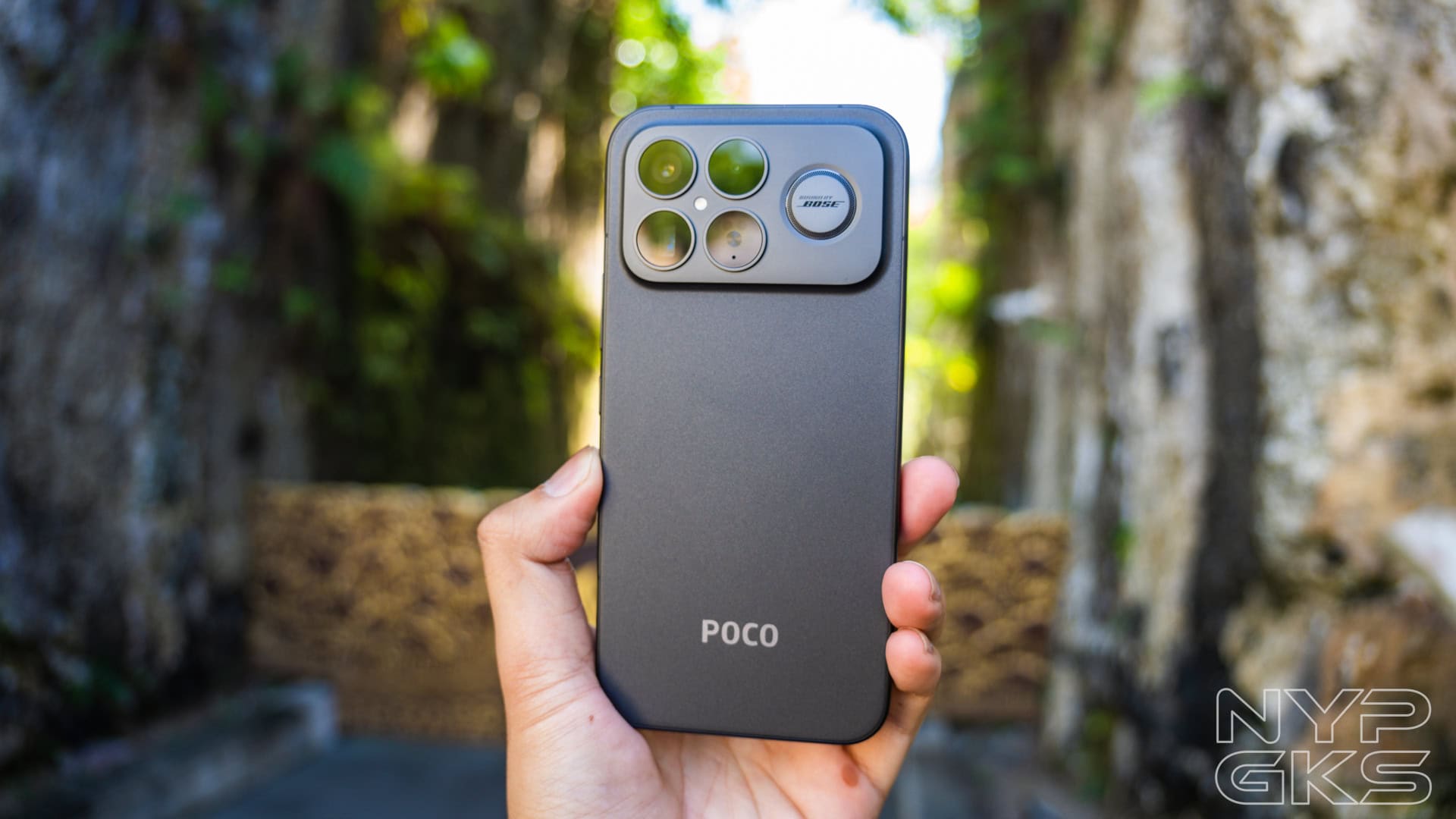
The back has the main camera, next to the ultra-wide. Below are the Periscope lens and a placeholder. The beefier tertiary speaker is on the right with the Bose logo.
Display and Audio
The POCO F8 Ultra has a 6.9-inch 2.5K AMOLED display with a 2608 x 1200 pixel resolution, ~416ppi, up to 120Hz daptive refresh rate, 2000 nits at high brightness mode, 3500 nits at peak, up to 480Hz touch sampling rate, 2560Hz instant touch sampling rate, 12-bit colors, 100% DCI P3, and of course, HDR10 and HDR10+ support, Dolby Vision, and Widevine L1 for FHD Netflix streaming.

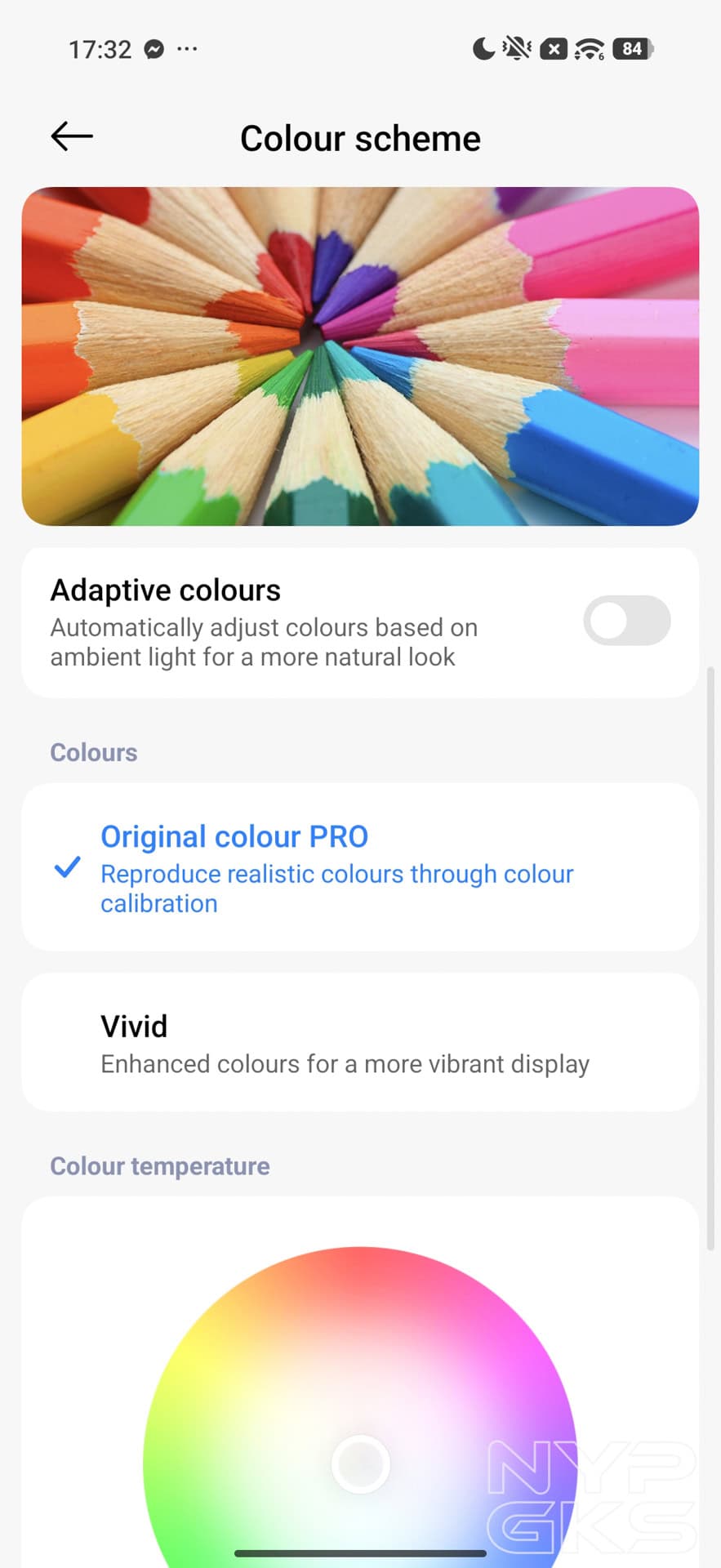


It is also the first device to have the POCO HyperRGB technology that utilizes a full RGB subpixel. According to the company, it provides 2K-like visuals with smoother gradients, accurate colors, and finer details than typical OLED screens.
Unfortunately, it’s not an LTPO panel, hence the limited brightness control compared to those who have it.

Display quality is amazing, even more so for a budget-oriented flagship device. We got nice colors, deep contrast, and smooth frame rates. The brightness also gets reliably high for outdoor use, or really dim for eye safety when scrolling at night.

Instead of partnering with big photography names like Leica or ZEISS to market the POCO F8 Ultra, the company went with Bose, one of the most prominent names in the world of audio.
This is the reason for the “Sound by Bose” branding that can be seen on the back and in the settings. The POCO F8 Ultra has 2.1-channel speakers that consist of two speakers in their usual locations, and one woofer on the back.
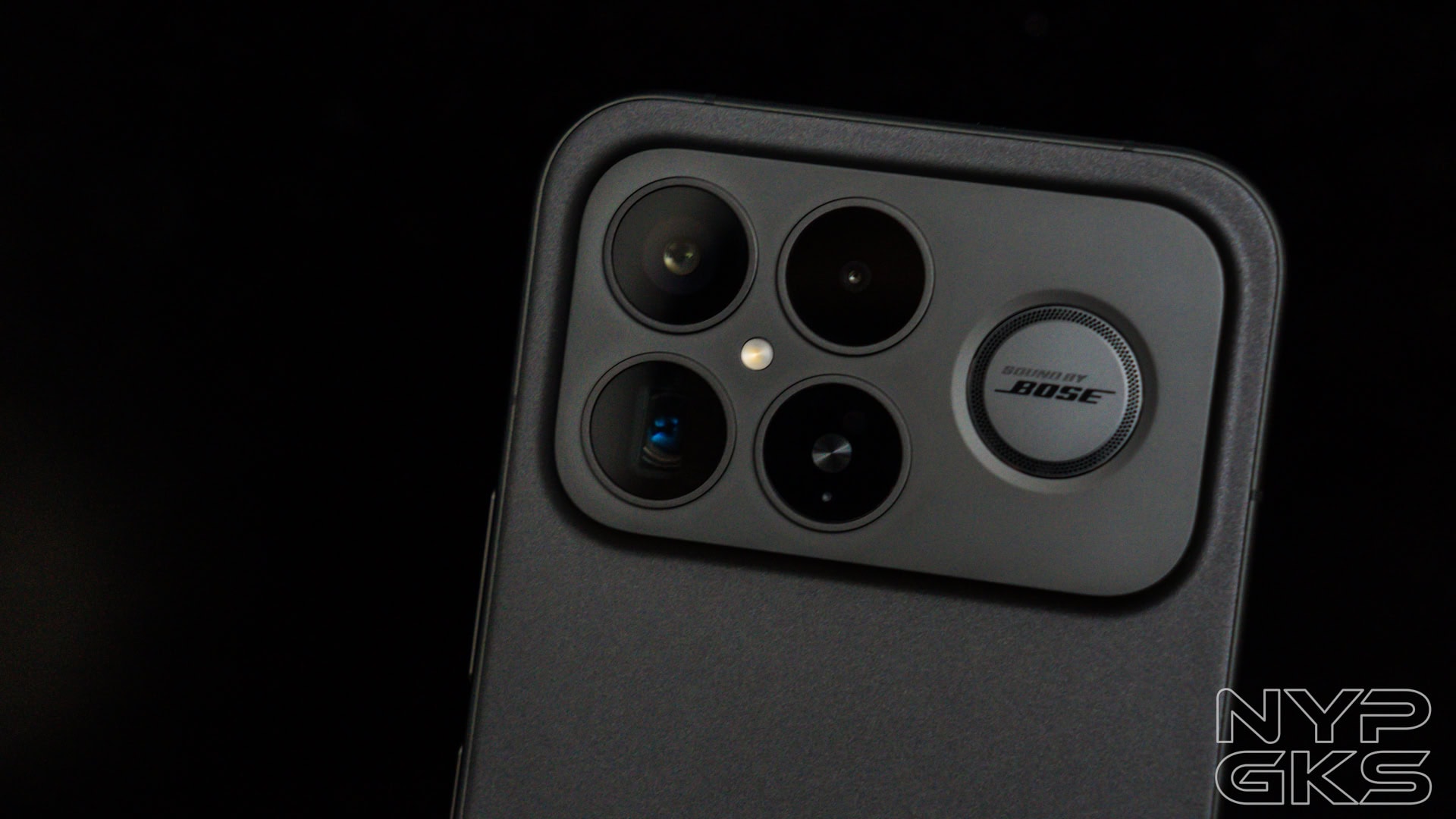
But this is clearly more than just a marketing stunt, as the stereo system on this device is mind-blowingly good. The additional woofer on the back provides a thumping amount of bass that makes dialogues and music sound more full. I didn’t expect it to be a big deal, but the better sound quality is really felt.
What’s more impressive is that the woofer provides that much power without any excessive vibrations that would provide an annoying buzzing feeling when you hold the device.

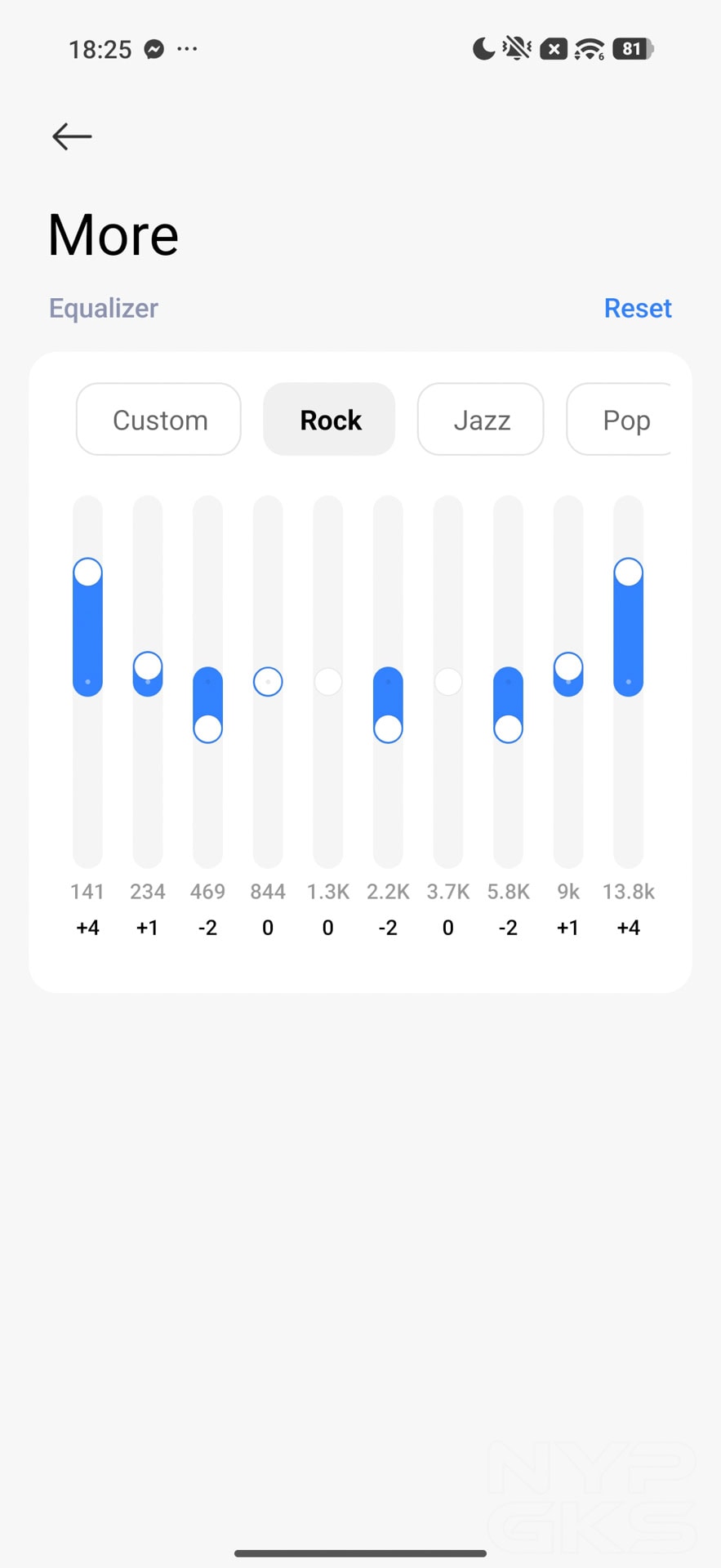
Pair that with the clean left and right channels providing clean treble and audible stereo separation, and you get a complete audio experience that’s great for watching action films, playing games, and listening to music on the go.
Hardware and Performance
Like its predecessors, the POCO F8 Ultra has the best mobile chip Qualcomm has to offer: the Snapdragon 8 Elite Gen 5. It is paired with an Adreno 840 GPU, with our review unit having 16GB of RAM and 512GB of storage.
POCO F8 Ultra Benchmark Scores
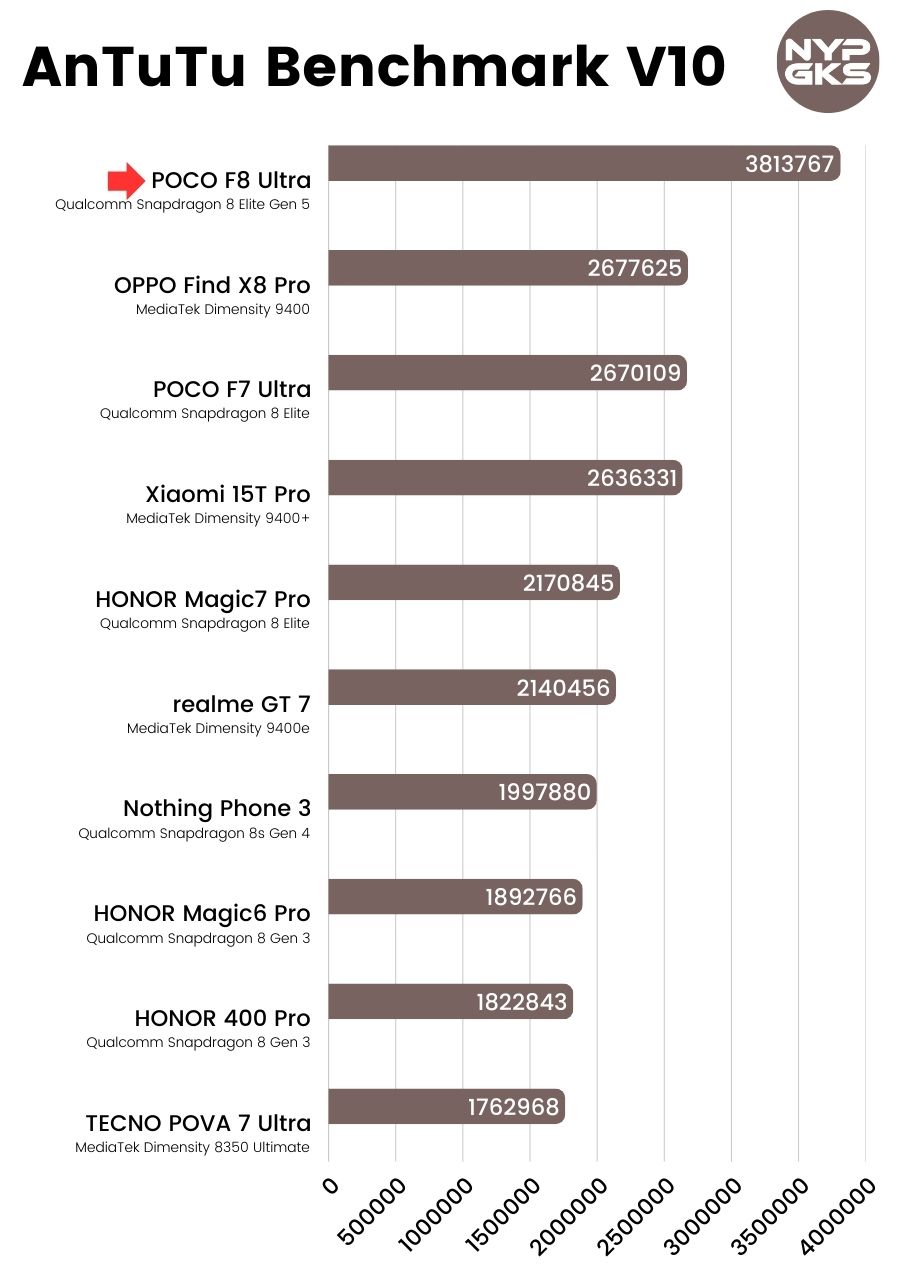


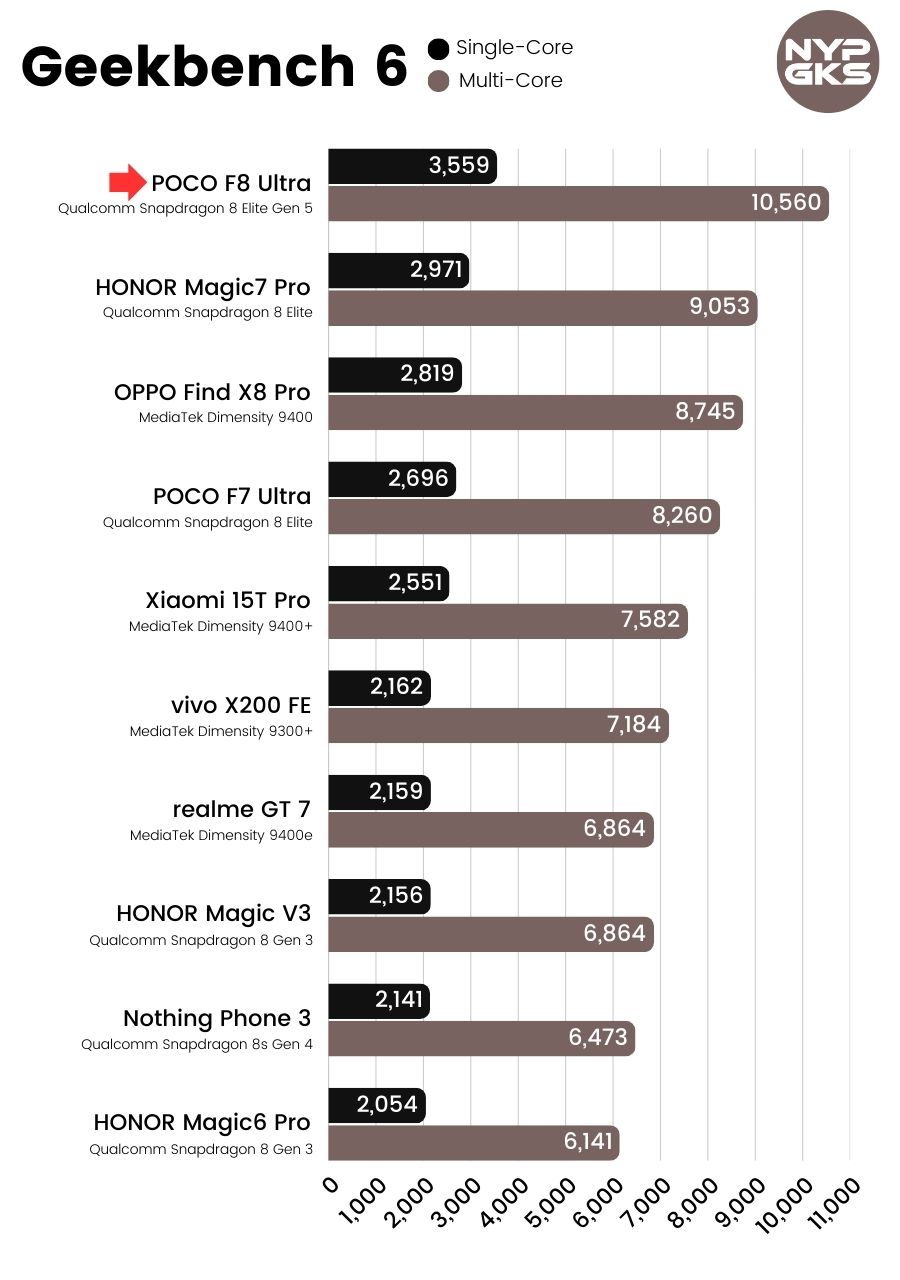
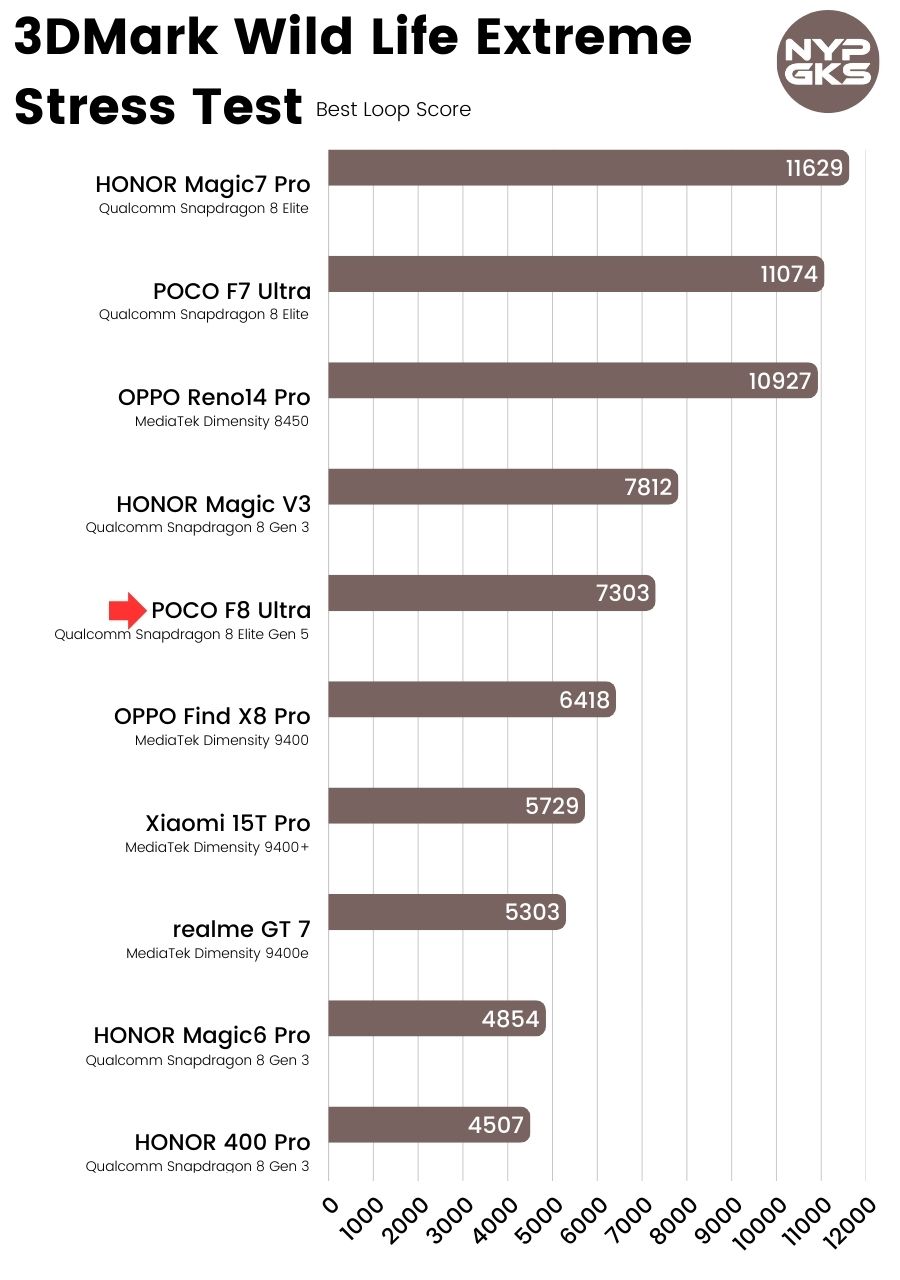

The F8 Ultra also has a VisionBoost D8 chipset that enables 120fps gaming at 1.5K resolution, enables AI Super Resolution, and manages the CPU and GPU load distribution to ensure power-efficient gaming with less heat.
Day-to-day performance is fast and breezy — no surprises there, considering that it has one of the fastest chips on a mobile device today. The thermal management could be better, as seen in our 3DMark Stress Test, but the temps were pretty manageable in our real-world tests of playing games.
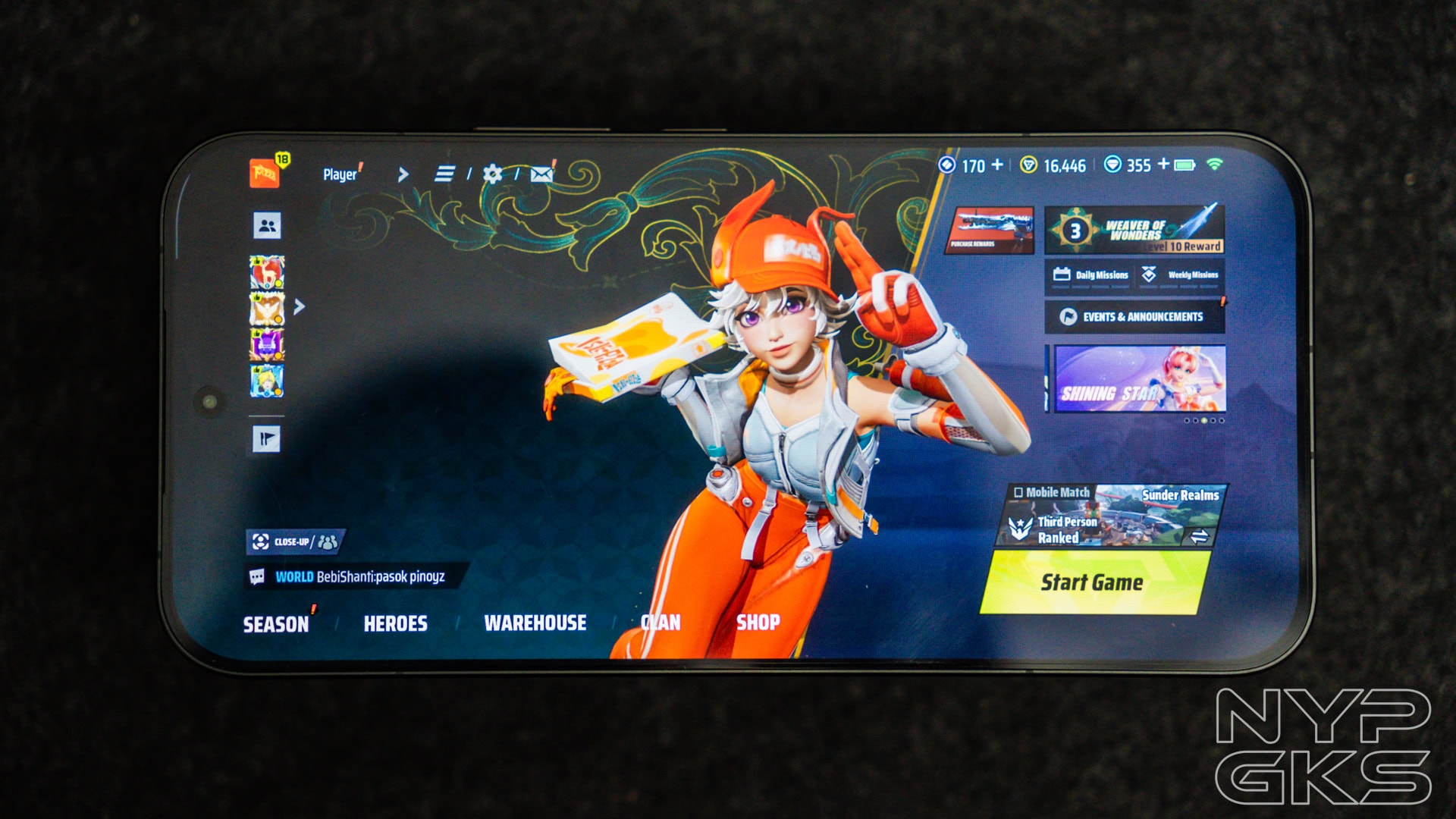
Genshin Impact was very smooth under the Highest preset at 60fps.
Paired with the large display and beefy speakers, PUBG Mobile was very enjoyable under HDR graphics and Extreme frame rates, Call of Duty Mobile with Max graphics, and Farlight84 at Peak graphics with 60fps.
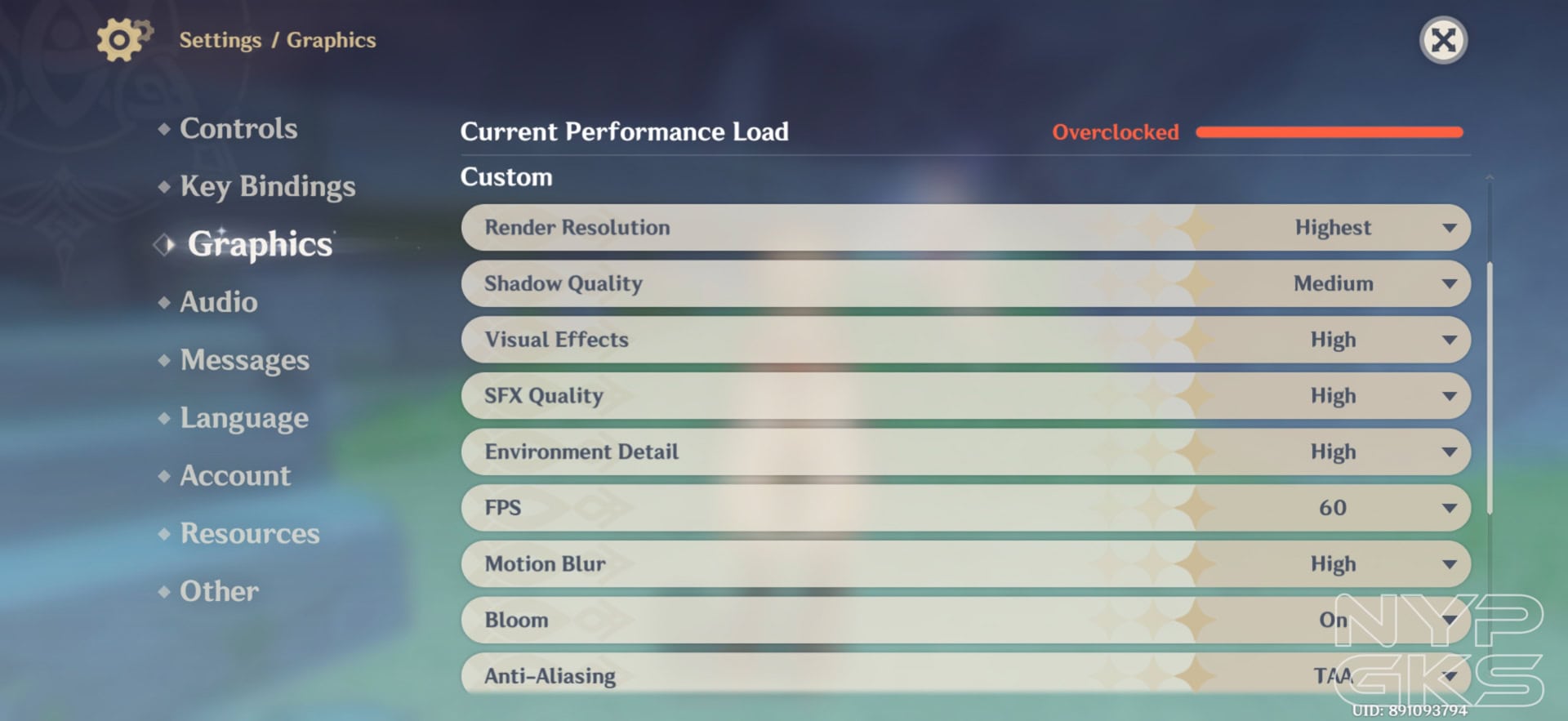

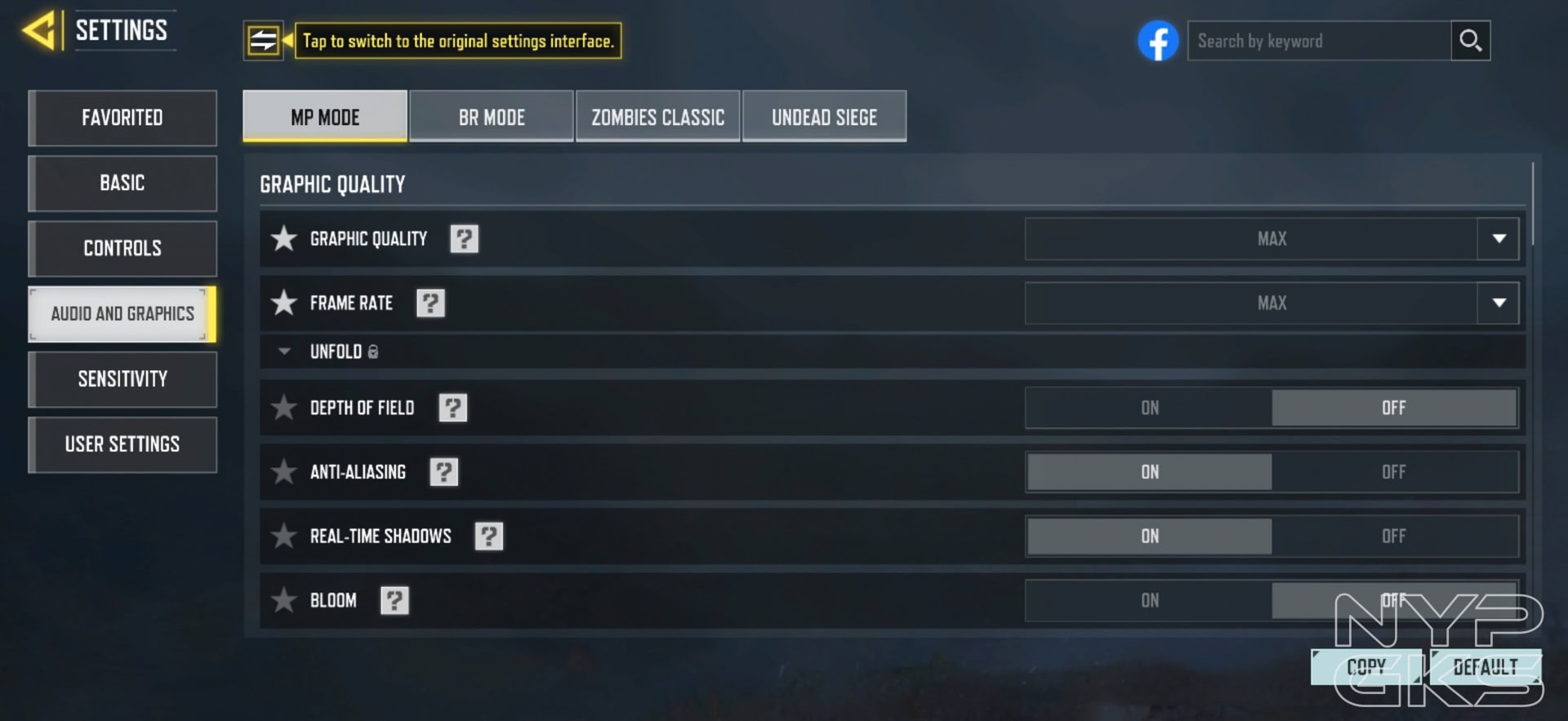
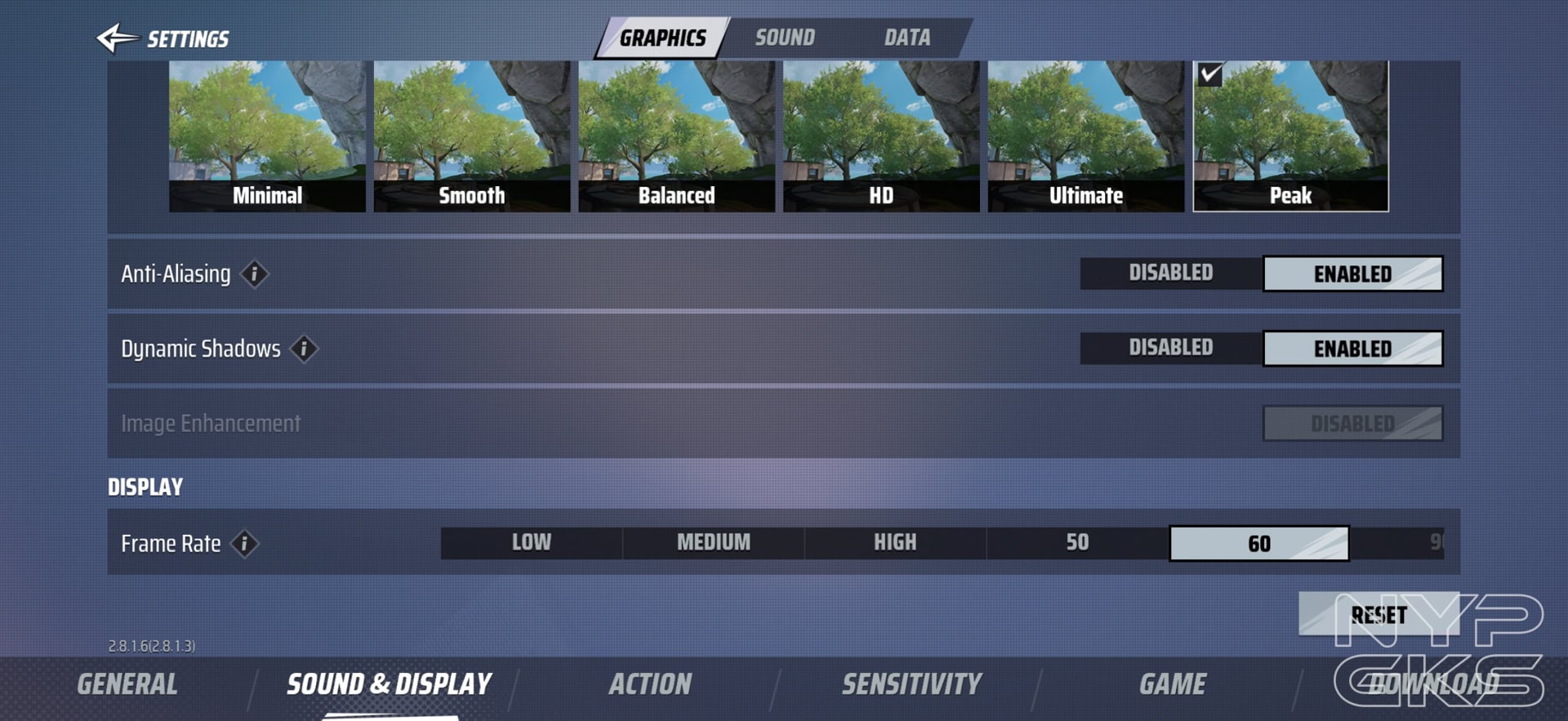
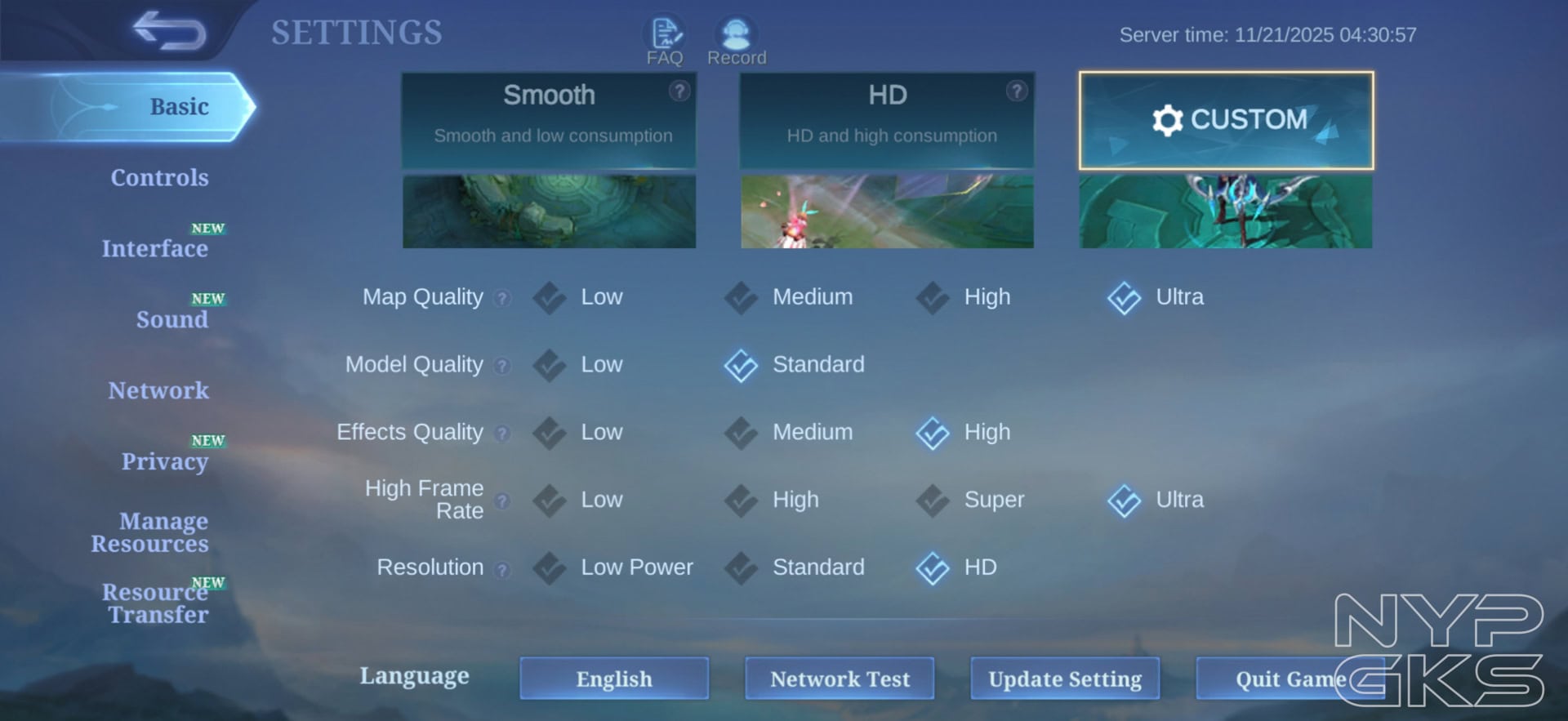

Mobile Legends: Bang Bang was very smooth under the highest settings, and the same goes with Asphalt Legends Unite at High Quality with 120fps. Overall, performance has been pretty solid.
| Game | Graphics Settings |
| Genshin Impact | • Render Resolution: Highest • Visual Effects: High • SFX Quality: High • FPS: 60 |
| PUBG Mobile | • Graphics Quality: HDR • Frame Rate: Extreme |
| Call of Duty: Mobile | • Graphics Quality: Max • Frame Rate: Max |
| Farlight84 | • Graphics Quality: Peak • Frame Rate: 60 |
| Mobile Legends: Bang Bang | • Resolution: HD • Frame Rate: Ultra |
| Asphalt Legends Unite | • Visual Quality: High Quality • Frame Rate: 120 |
Software and User Interface
The POCO F8 Ultra runs on the latest Android 16 operating system with HyperOS 3 on top. It will receive 4 years of software upgrades and 6 years of security patches, not bad for a value-oriented flagship phone.


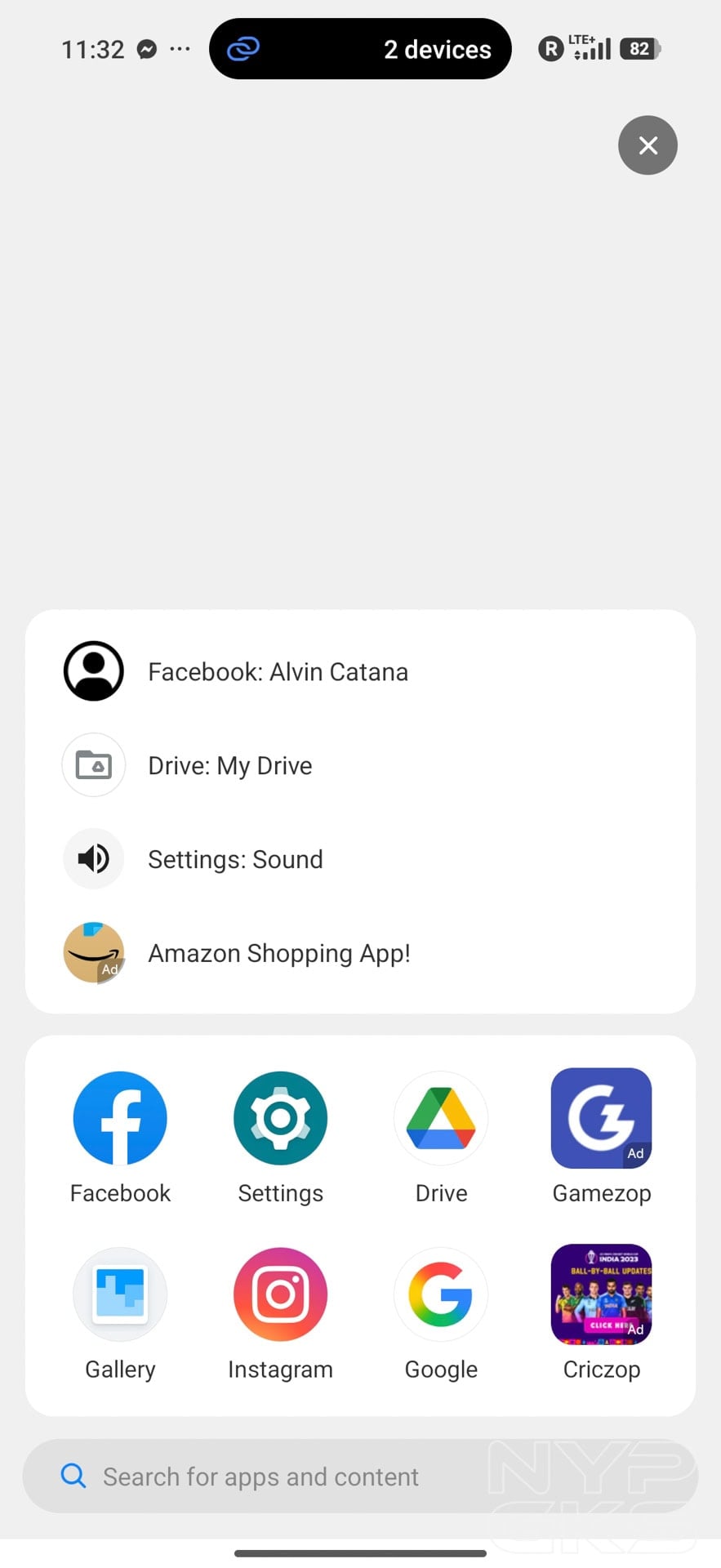

It can be overwhelming for some, but once you get used to it, you’ll appreciate how it has everything you need to take advantage of the hardware.
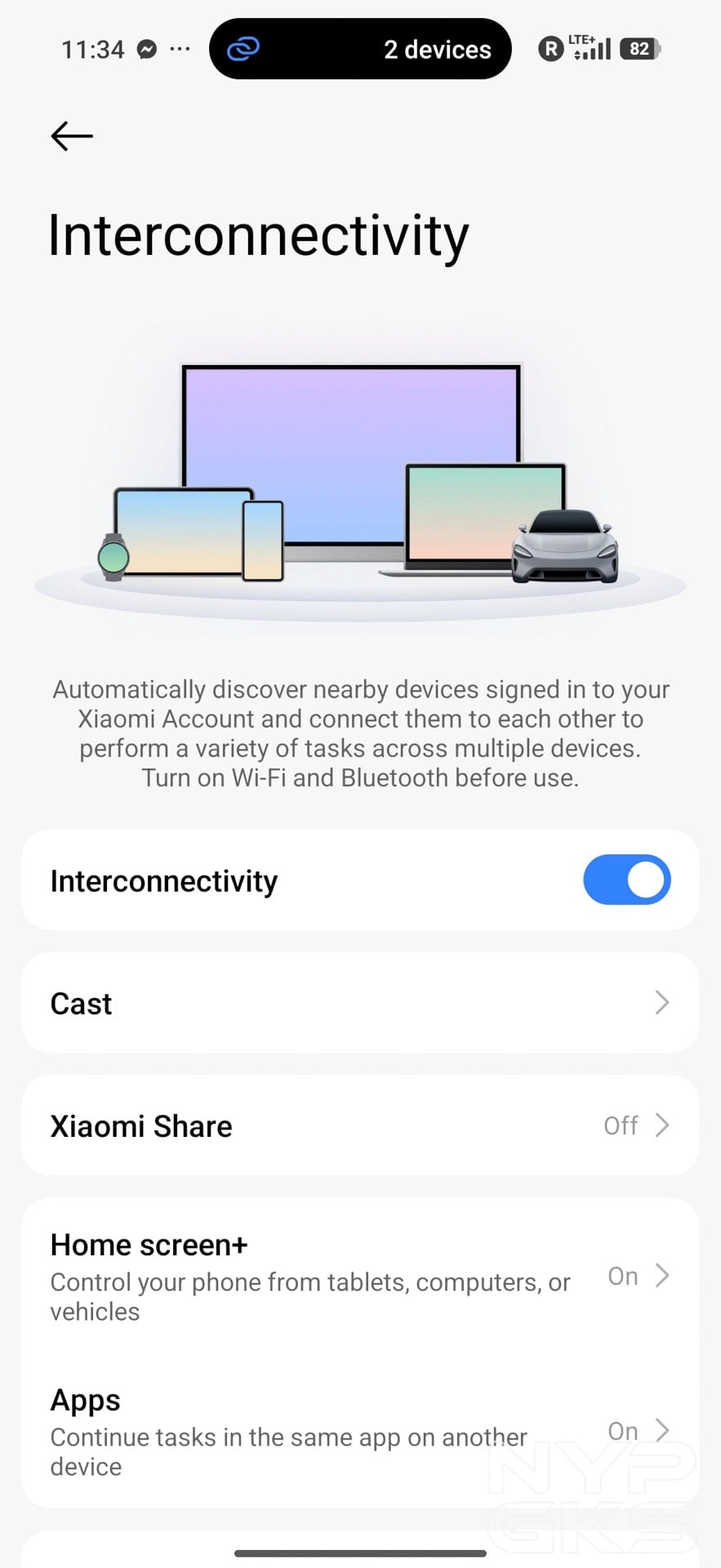
A big highlight of HyperOS is its seamless pairing with other Xiaomi products. From casting to Xiaomi screens and syncing and controlling your phone from a tablet, computer, or even a vehicle.
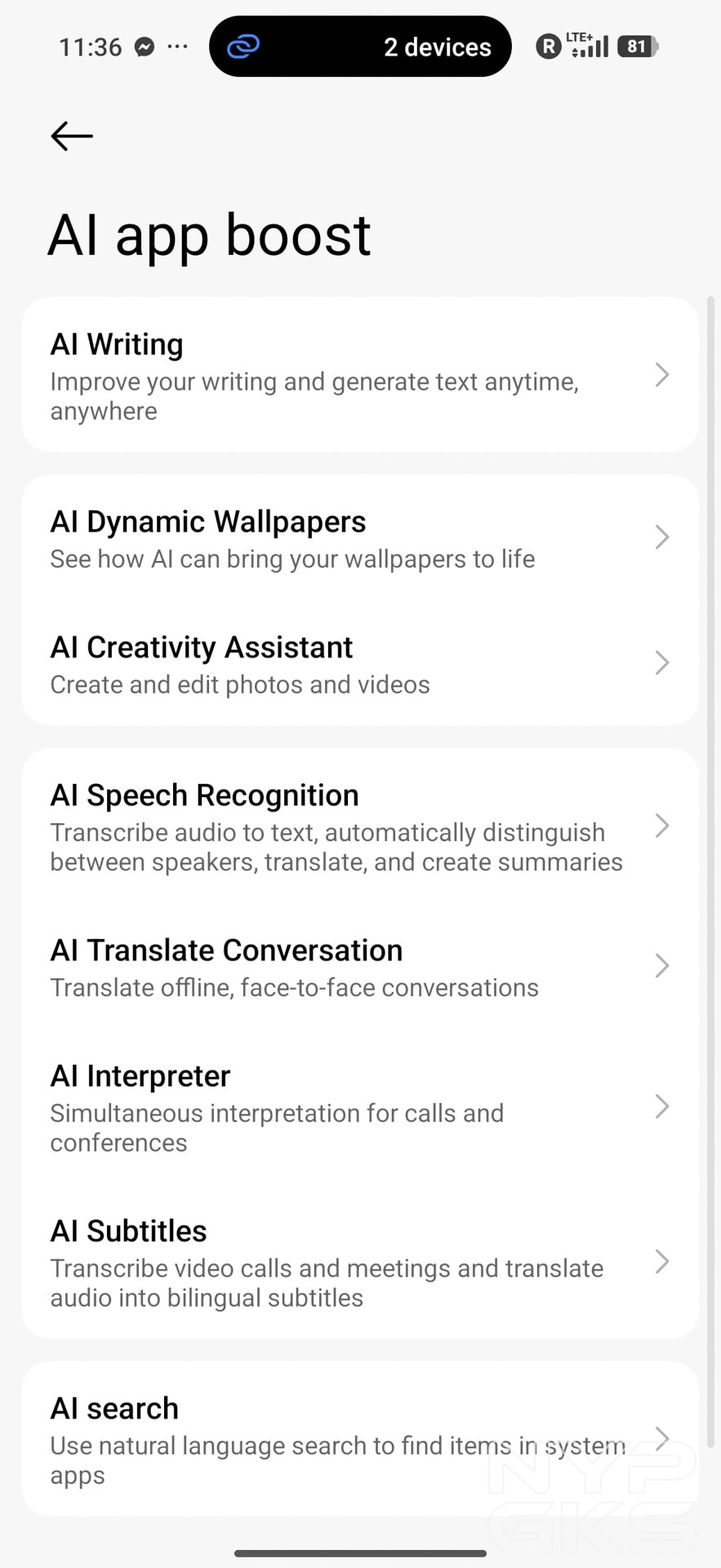
It is also rich in AI features. It’s got Google Gemini as the default assistant, has an AI Writer, AI Dynamic Assistant, AI Translator, and more.
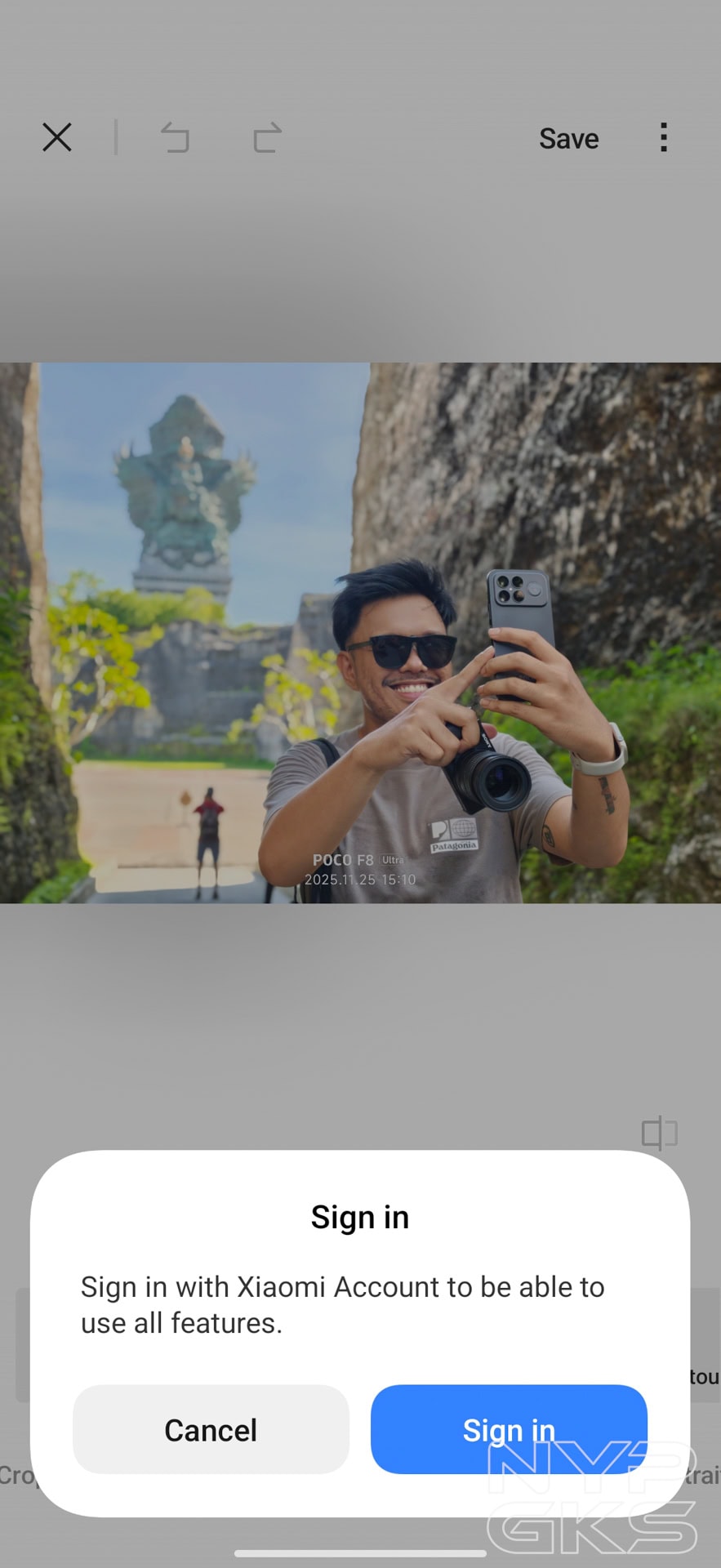
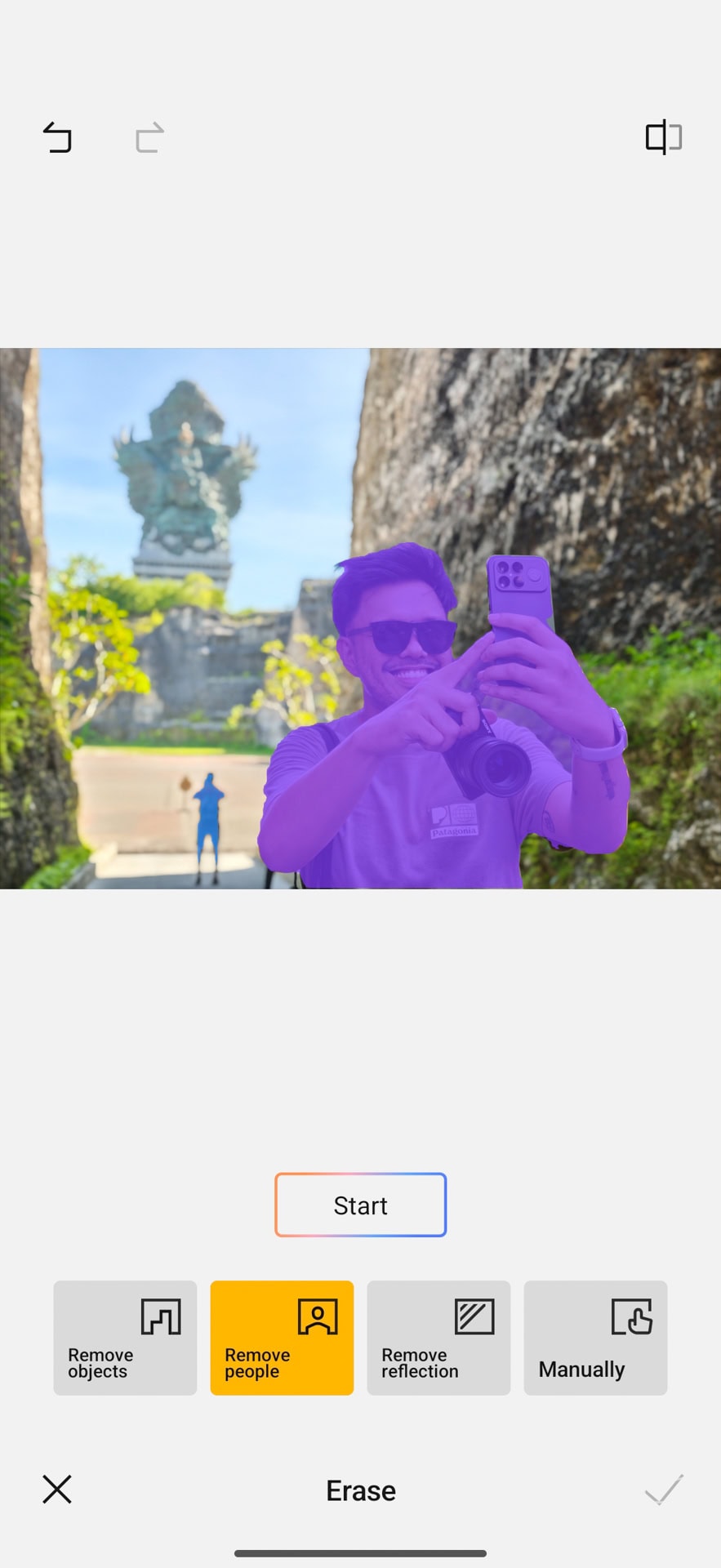
Many AI features are also present in the settings: Ultra HD (quality upscaler), AI Beautify, image expander, and AI Eraser. However, the requirement to sign in to a Xiaomi account to use these features is a little annoying.

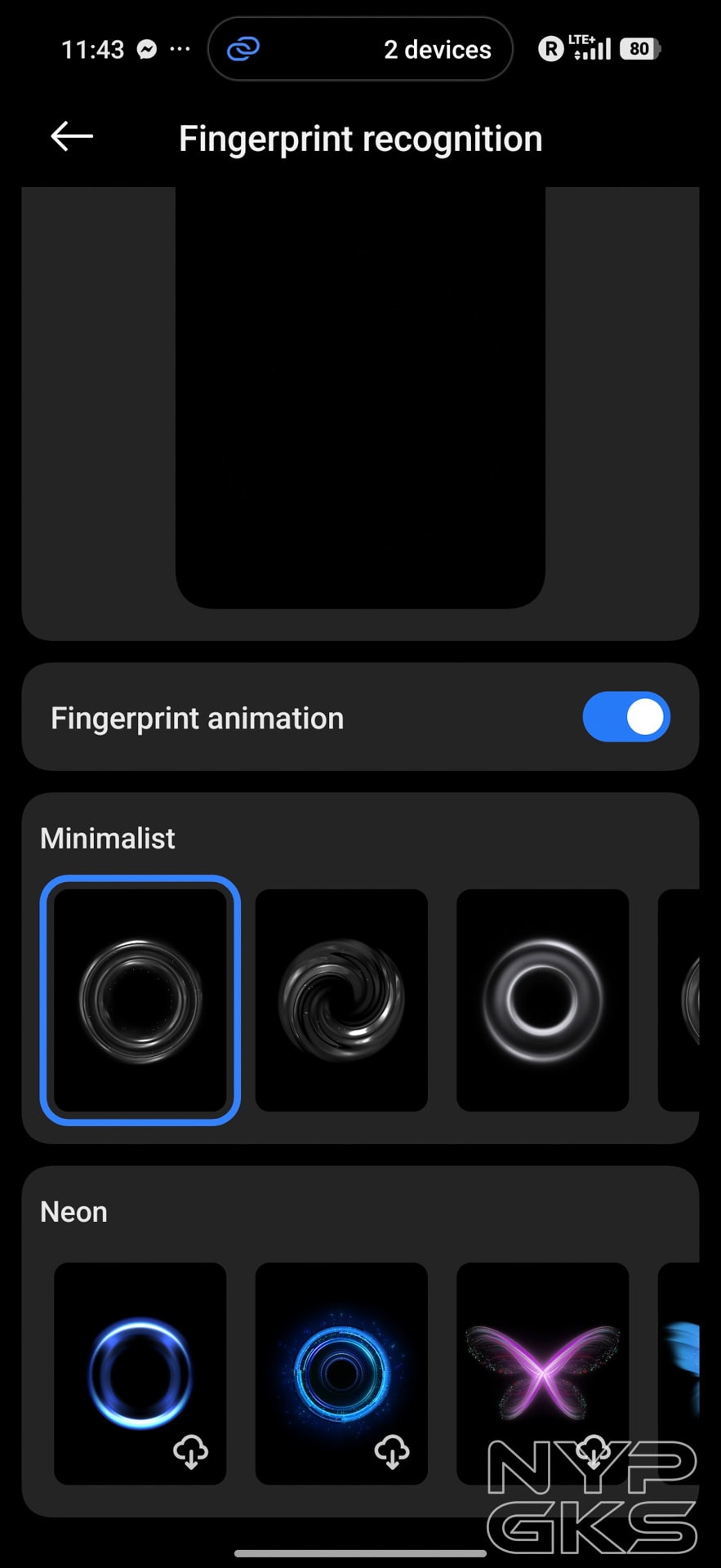
As with most interfaces today, HyperOS has an iOS-like lockscreen option with large texts and clocks. It looks really nice, though, especially if you have the right wallpaper for it.
The ultrasonic fingerprint scanner and face unlock worked blazing fast in our tests. There are tons of animations to choose from, some are even available for download.


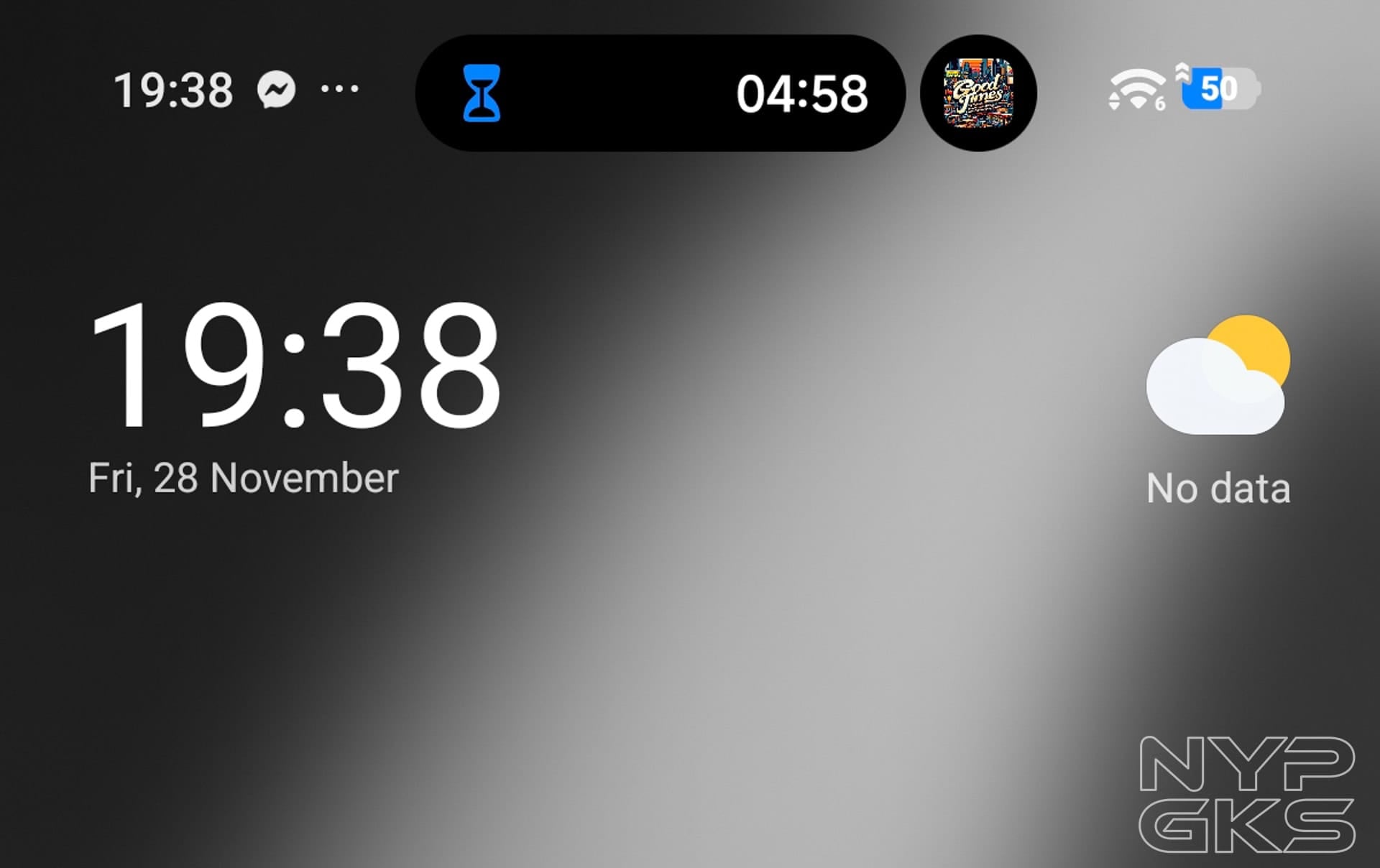

Of course, Xiaomi also has a take on Apple’s Dynamic Island. The Hyper Island improves multitasking and supports media player, timer, shows you how many devices are connected to the hotspot, and a few more.

Virtual RAM Expansion is also here. Although we doubt its effectiveness, we just leave it as is on the recommended value.
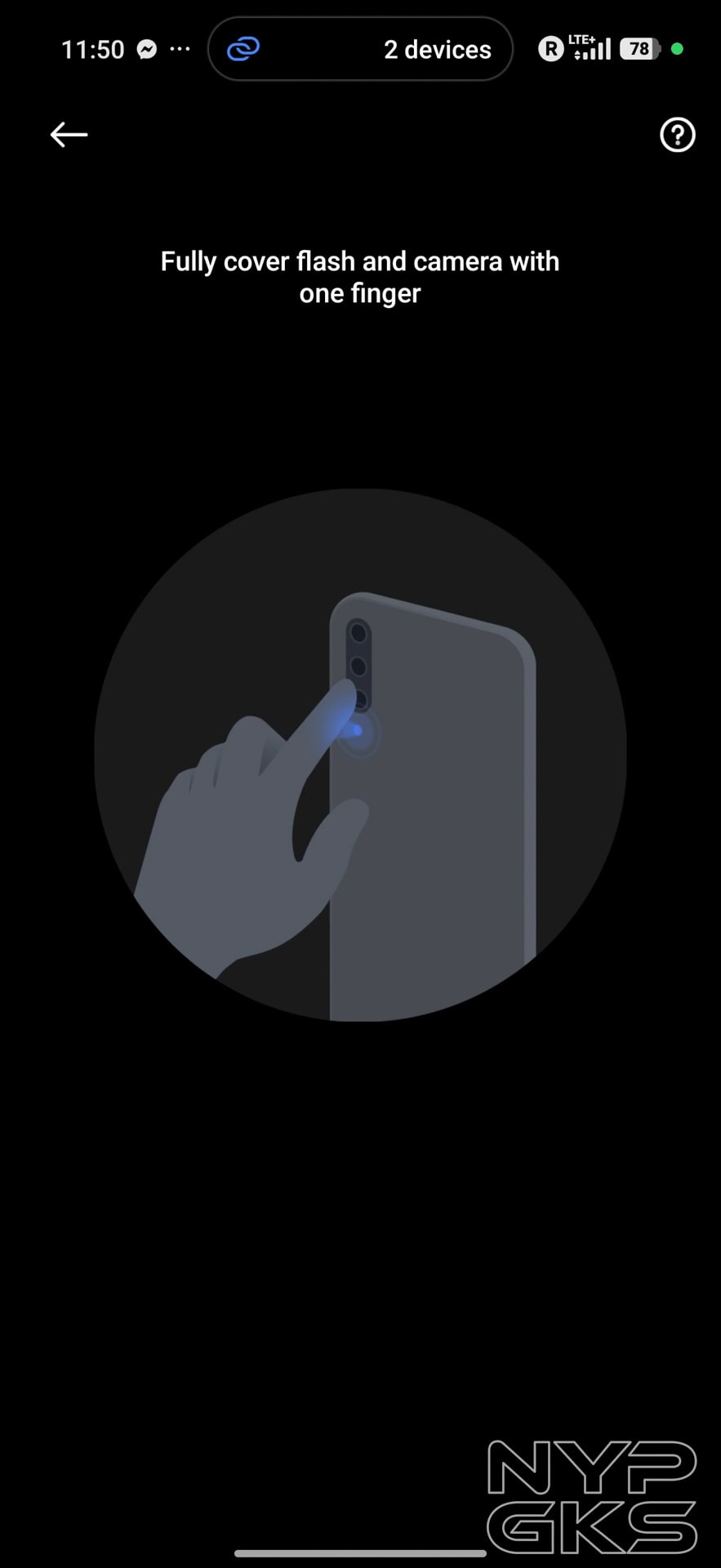
There’s also a built-in heart rate sensor. But since the LED flash and the camera are in a weird position from each other, getting a reading can be really finicky.
Cameras
The POCO F8 Ultra has upgraded cameras. It now uses a 50-megapixel Light Fusion 950 1/1.31-inch main sensor, with an f/1.67 aperture, and optical image stabilization. It also has a 50-megapixel periscope telephoto lens with f/3.0 aperture, 115mm equivalent, and OIS.
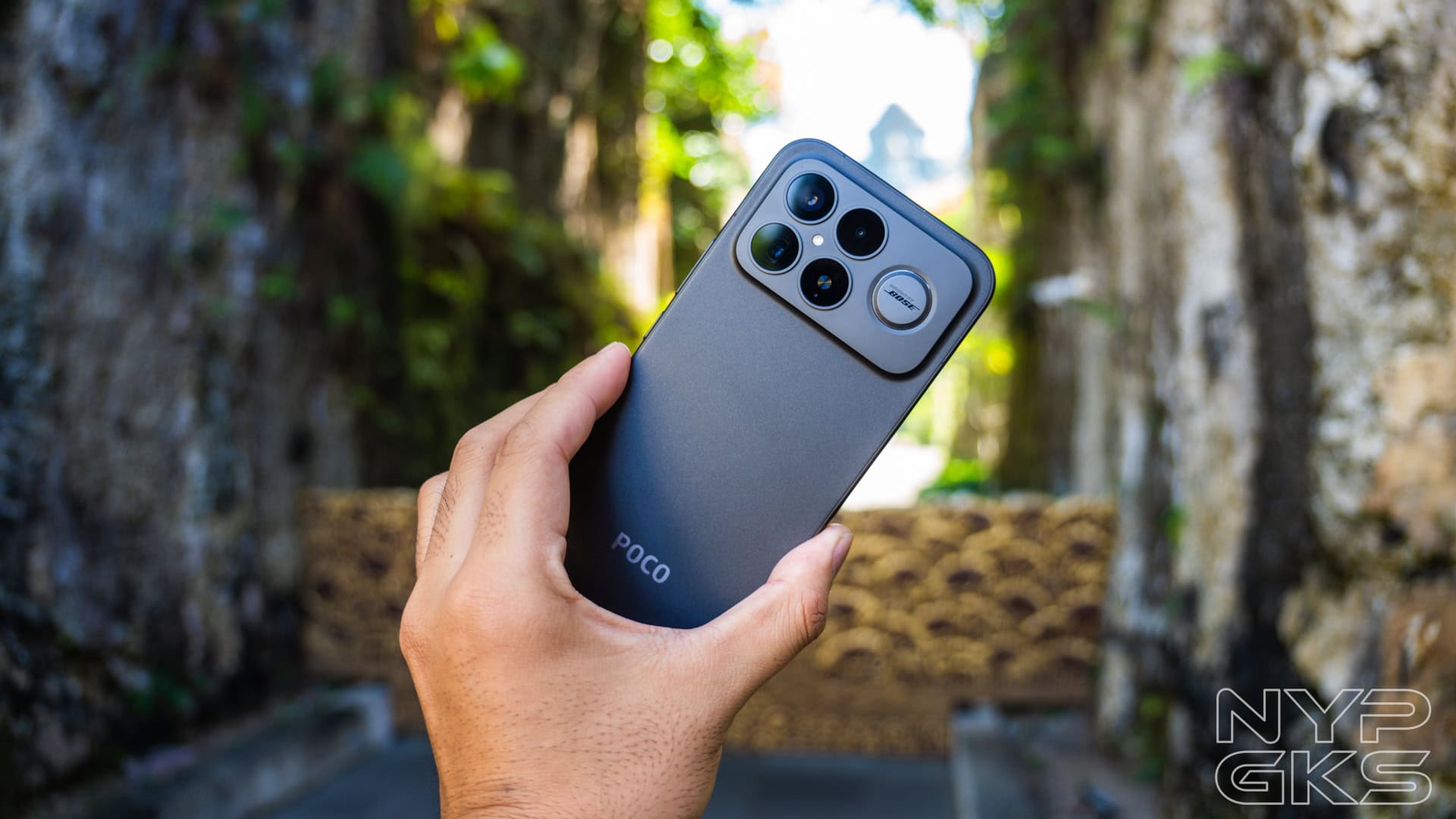
Also here are the 50-megapixel ultra-wide lens and 32-megapixel for selfies. Teleprompter mode is supported for content creators.
For video recording, it can shoot in 8K@30fps, 4K@30/60fps, 1080p@30/60fps, and 720p@30fps. Slow-mo recording is also available at 720p@120/240/480/960/1920fps and 1080p@120/240/480/960.

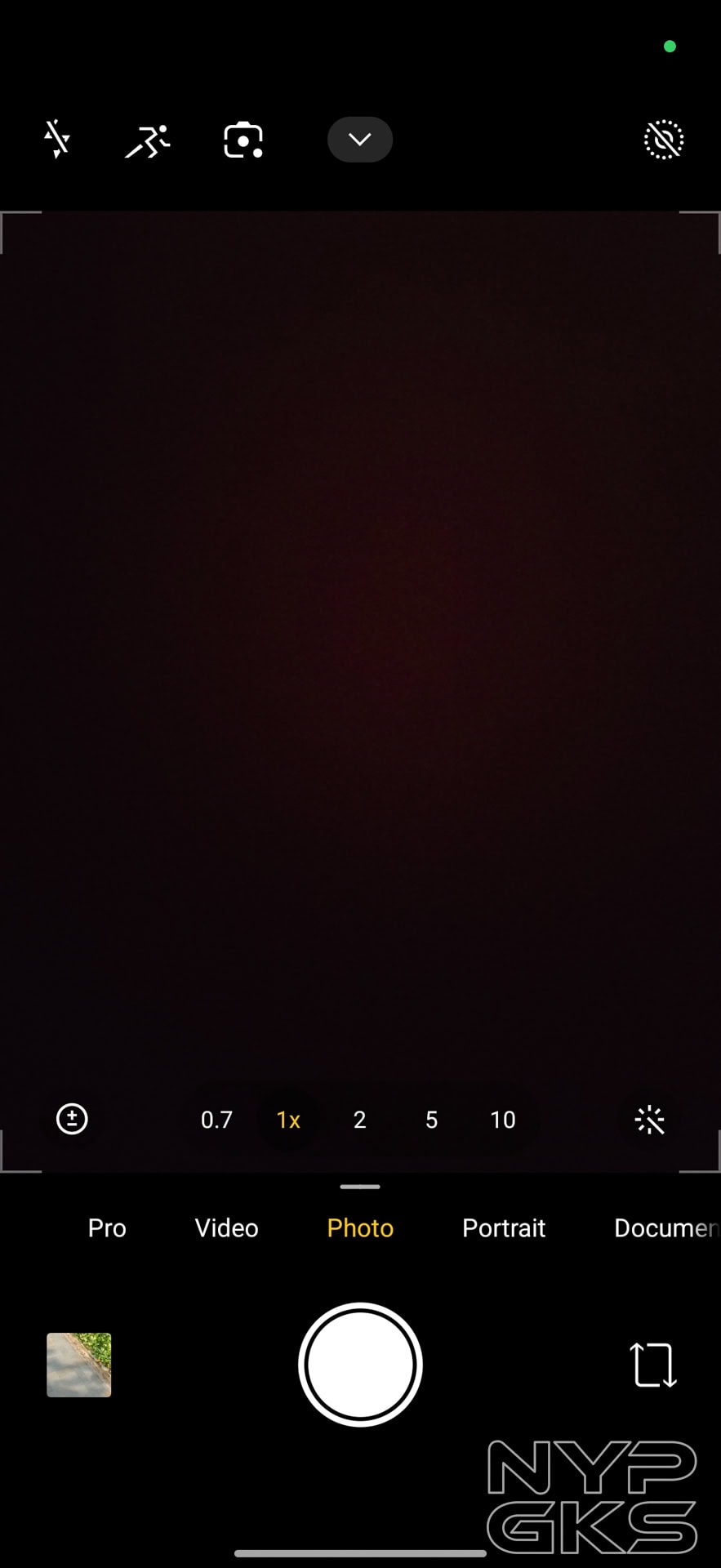
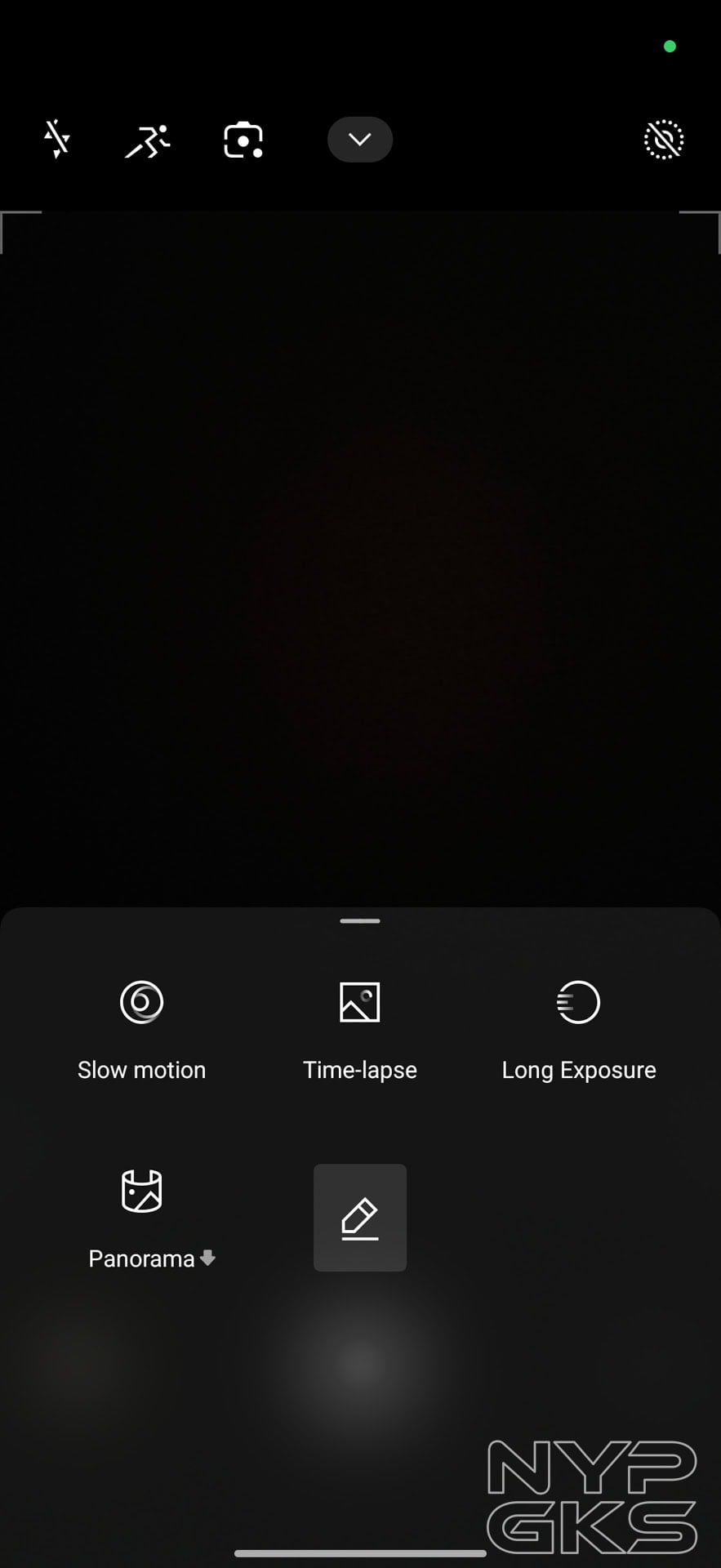

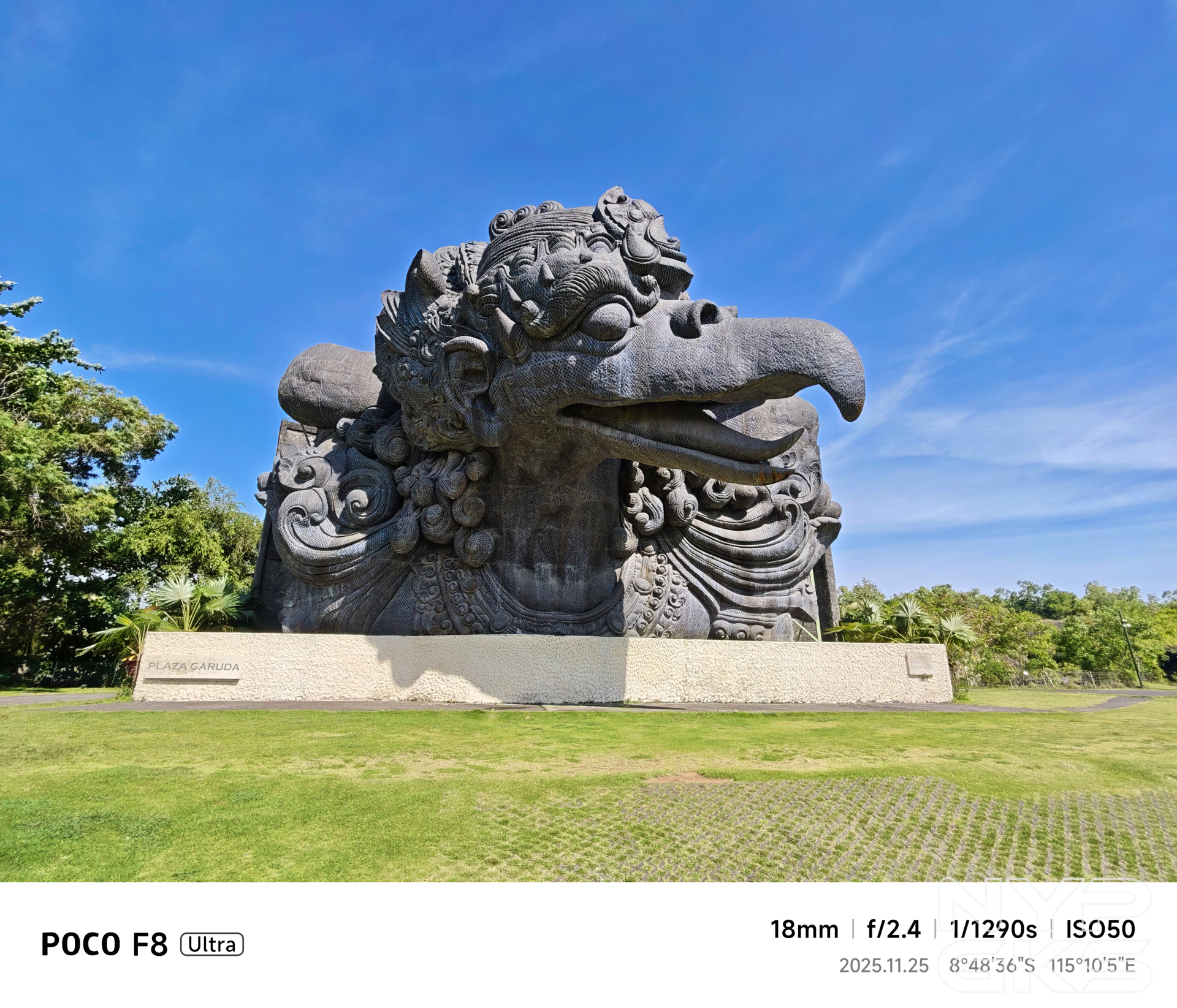
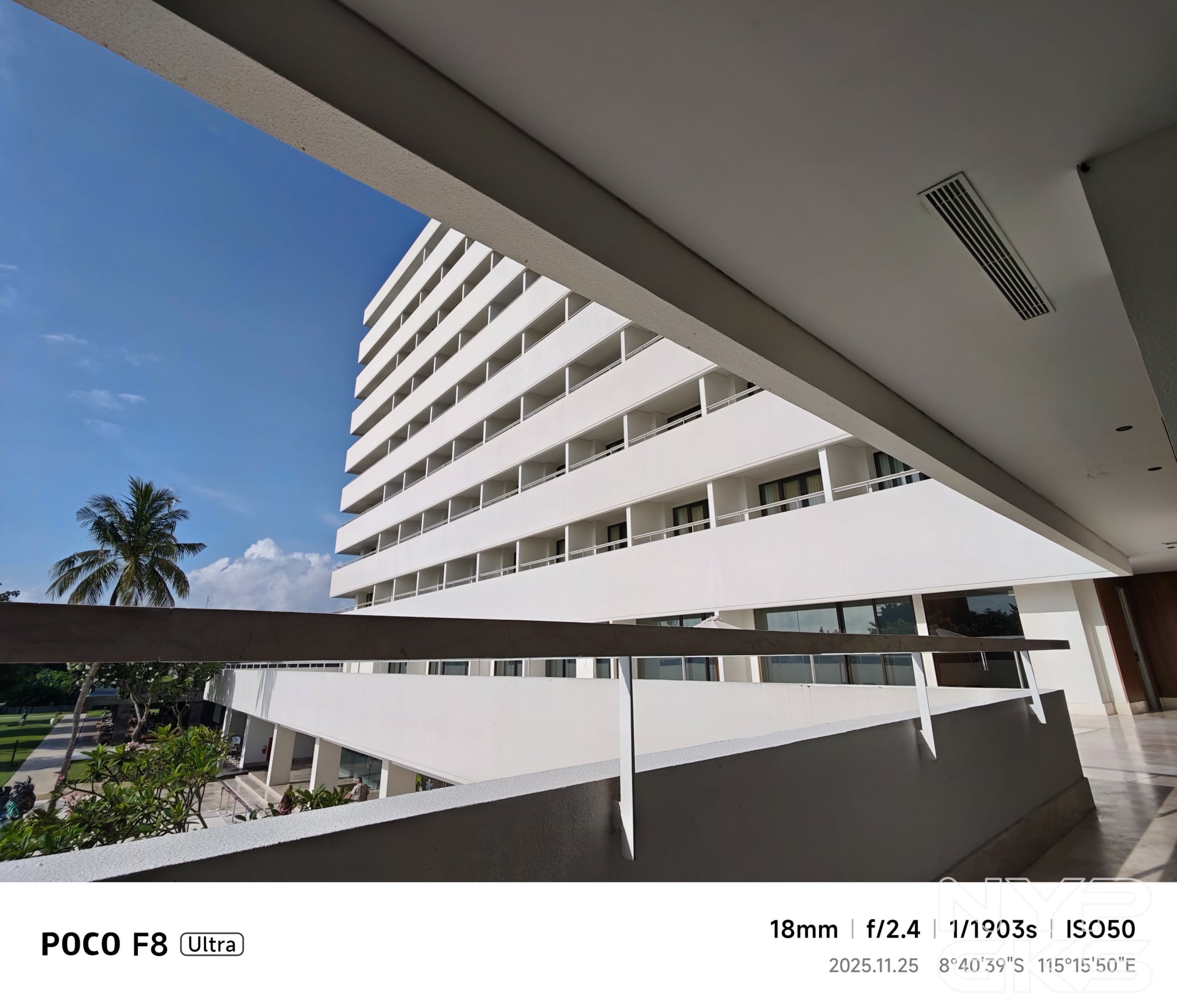
The dynamic range and colors look a little off before you take the photo. But after a hefty amount of processing, you’d get a far more impressive image than what you originally captured. We just wish the live viewfinder had a better representation of what the final image would look like.
Other than that, we’re really impressed with the cameras. The dynamic range is incredible, and the details look sharp when you zoom in. Colors look a tiny bit extra vibrant, but we’re not complaining, as it made the photos more Instagram-ready.
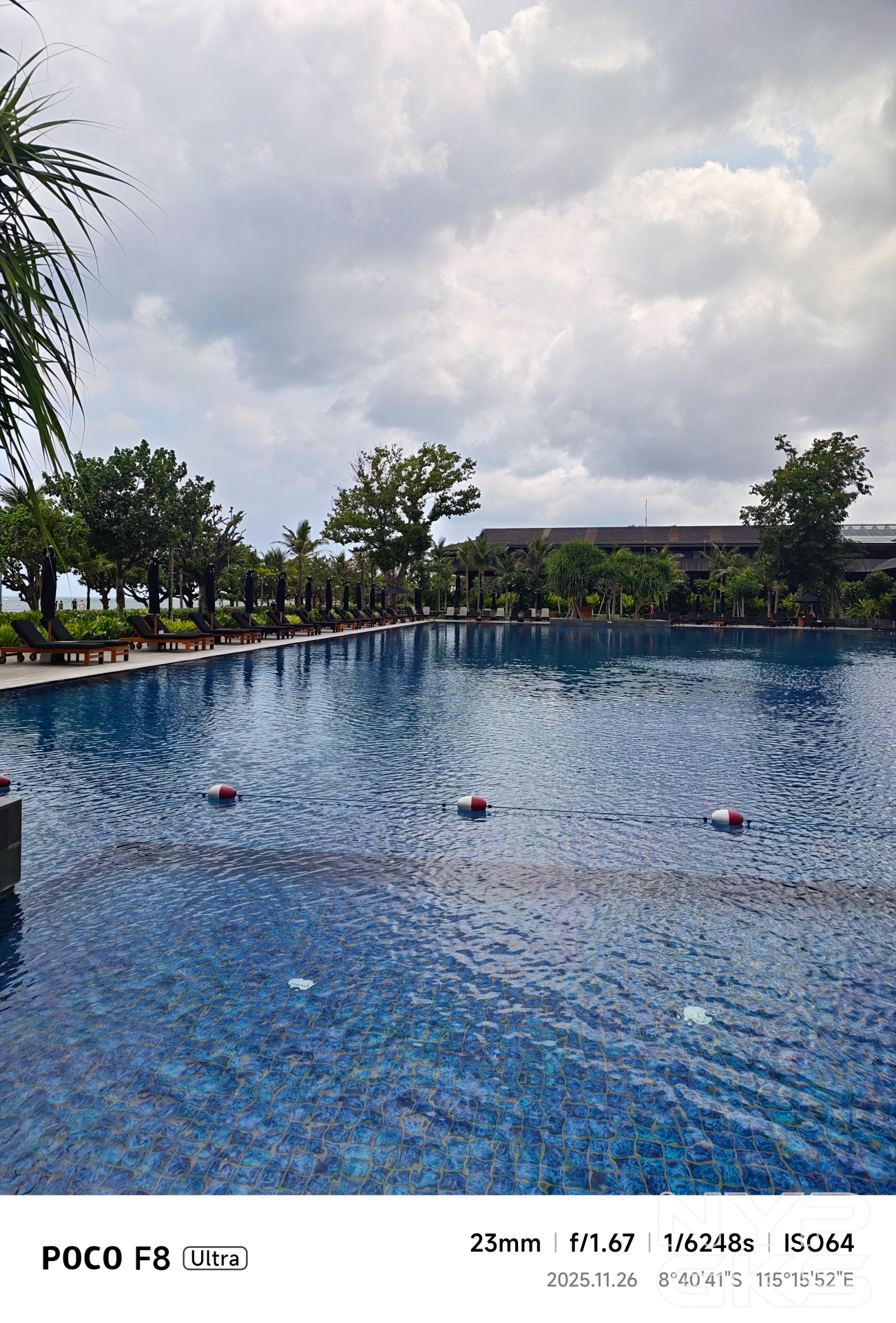




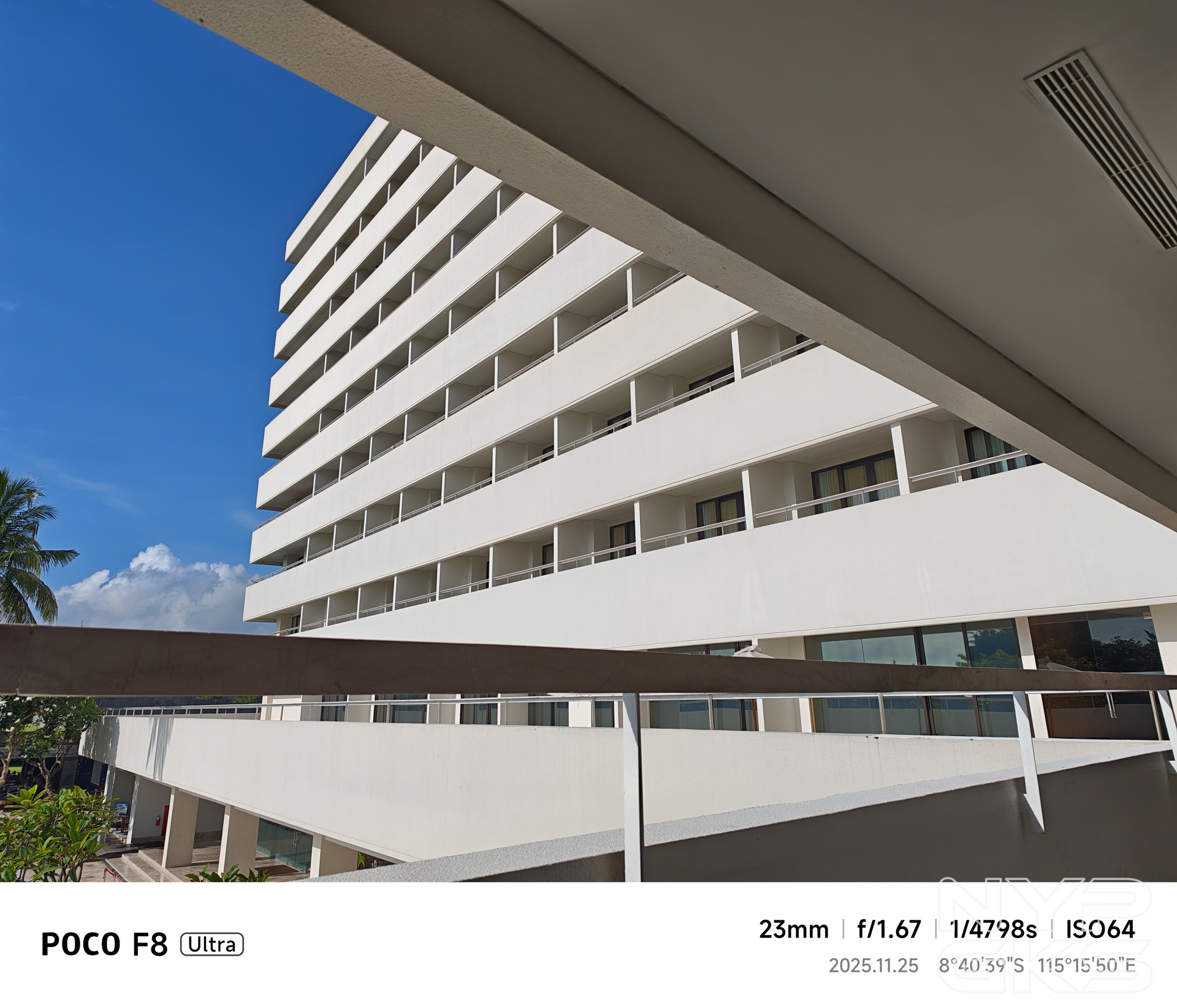


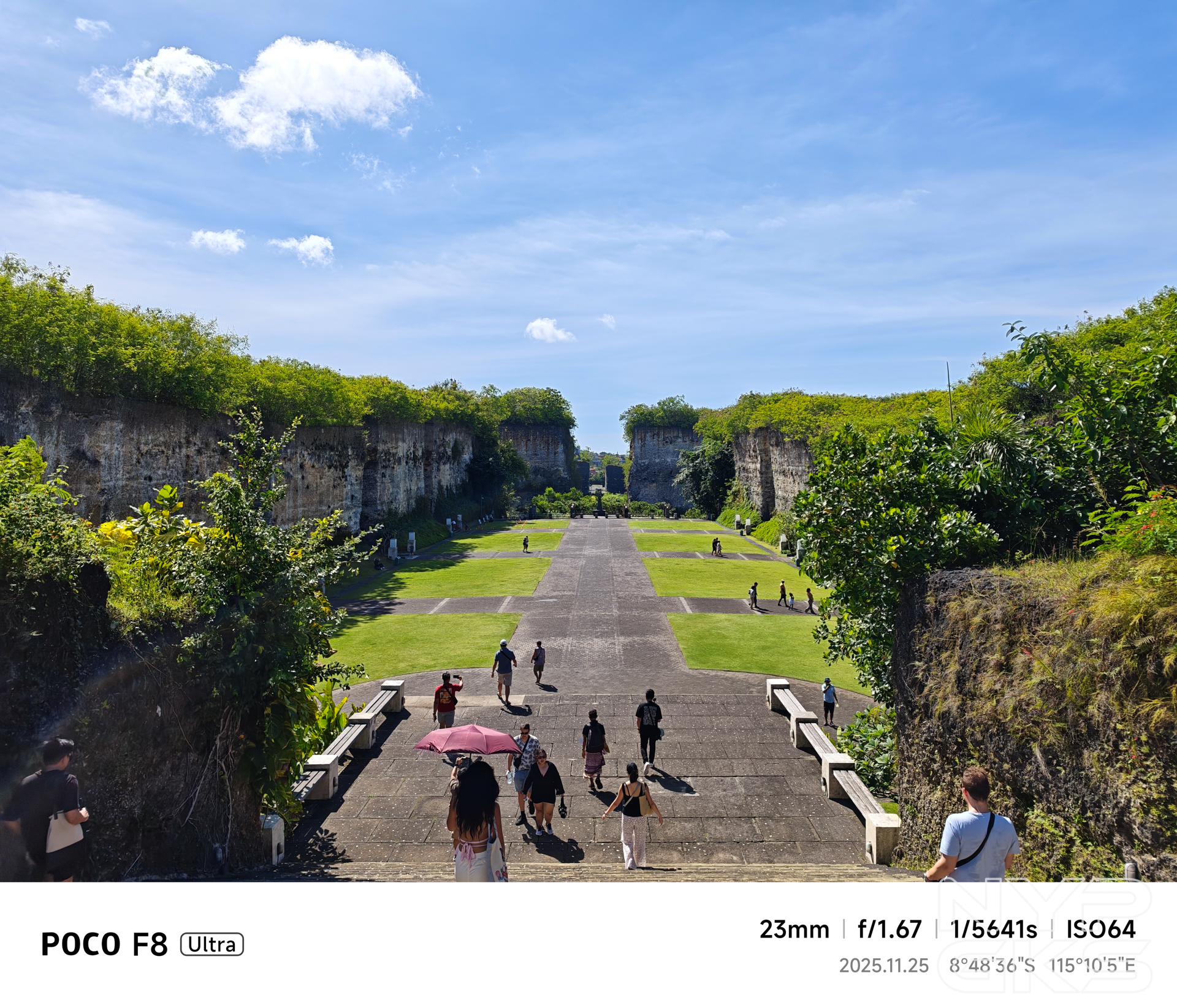
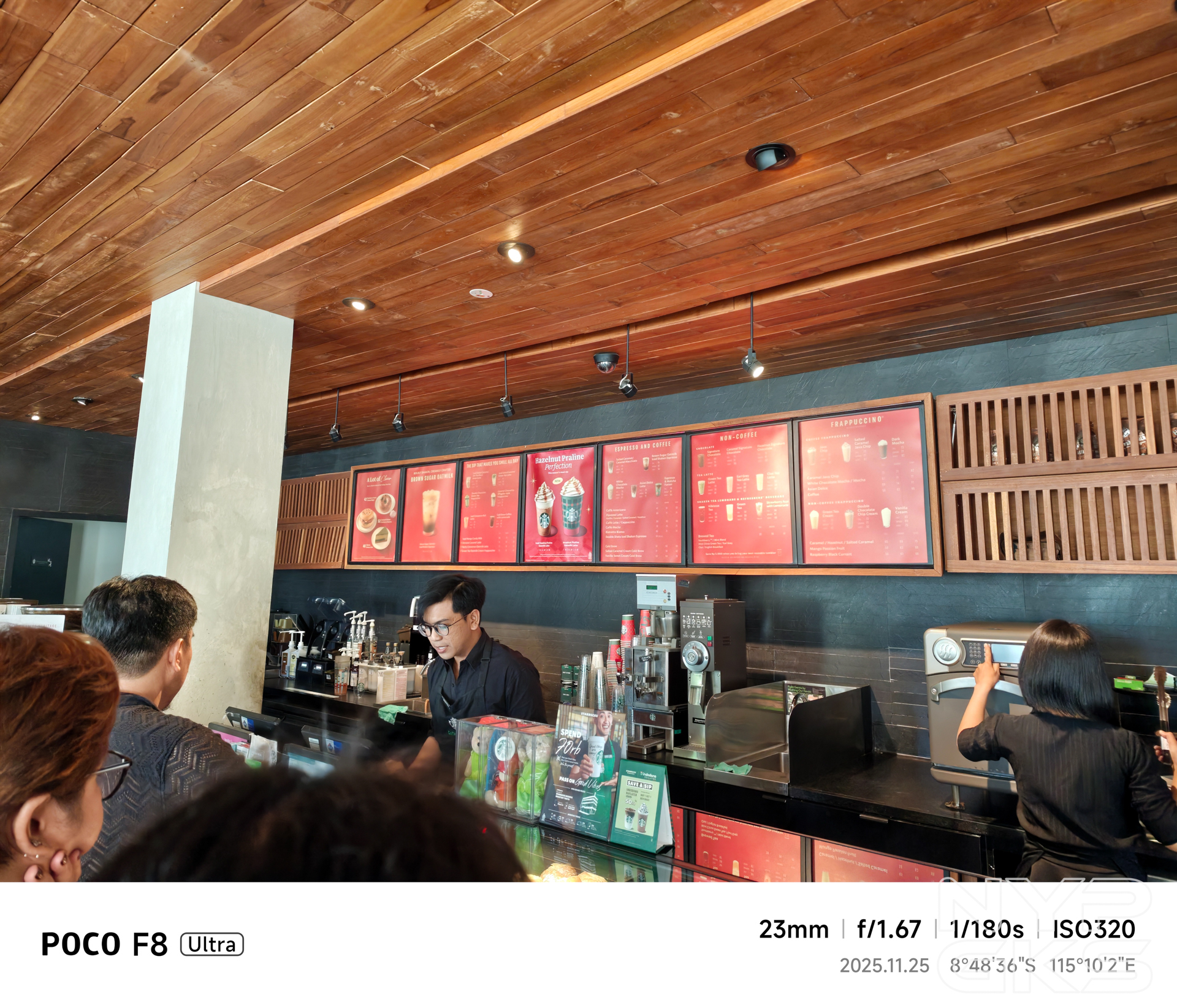
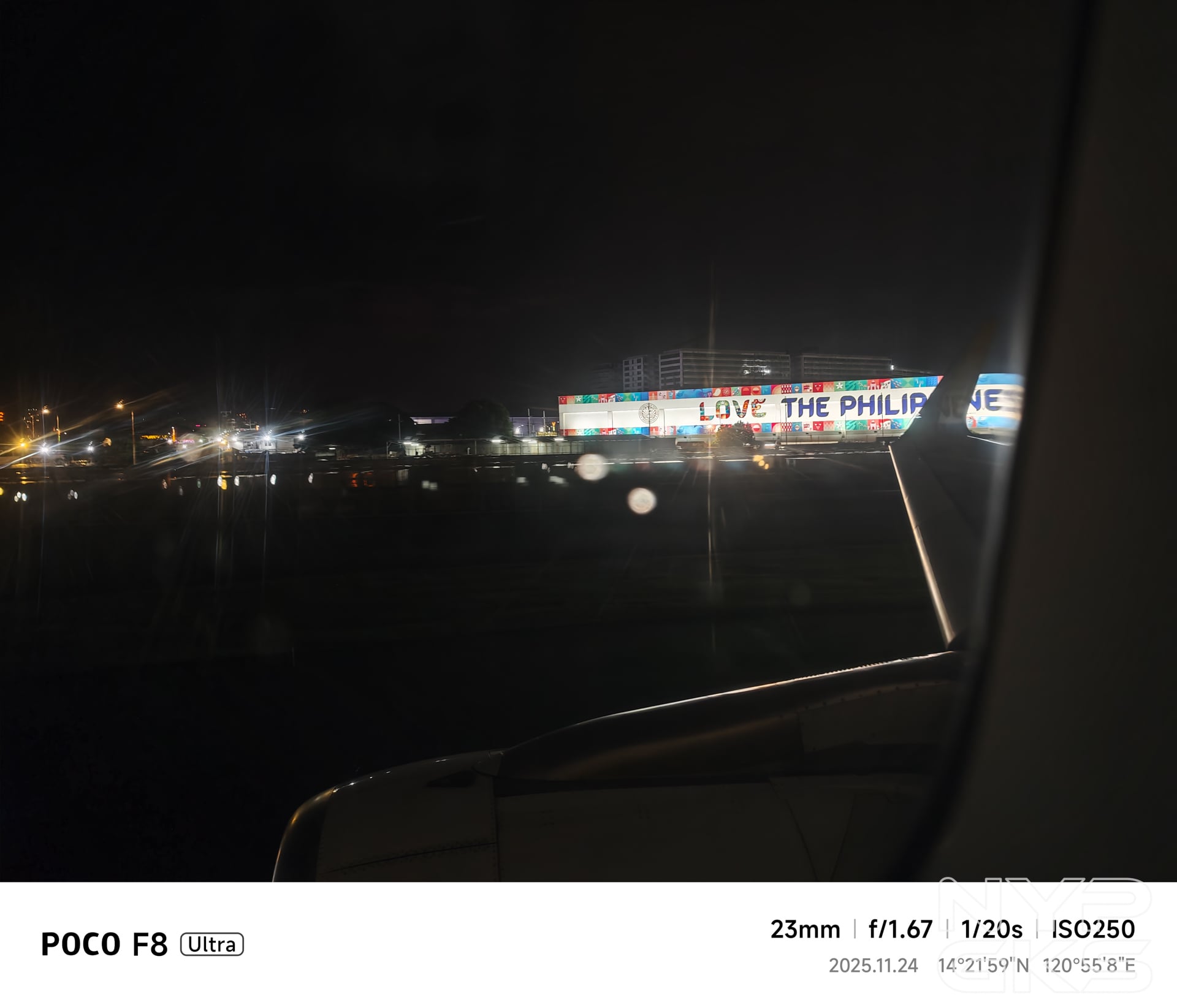
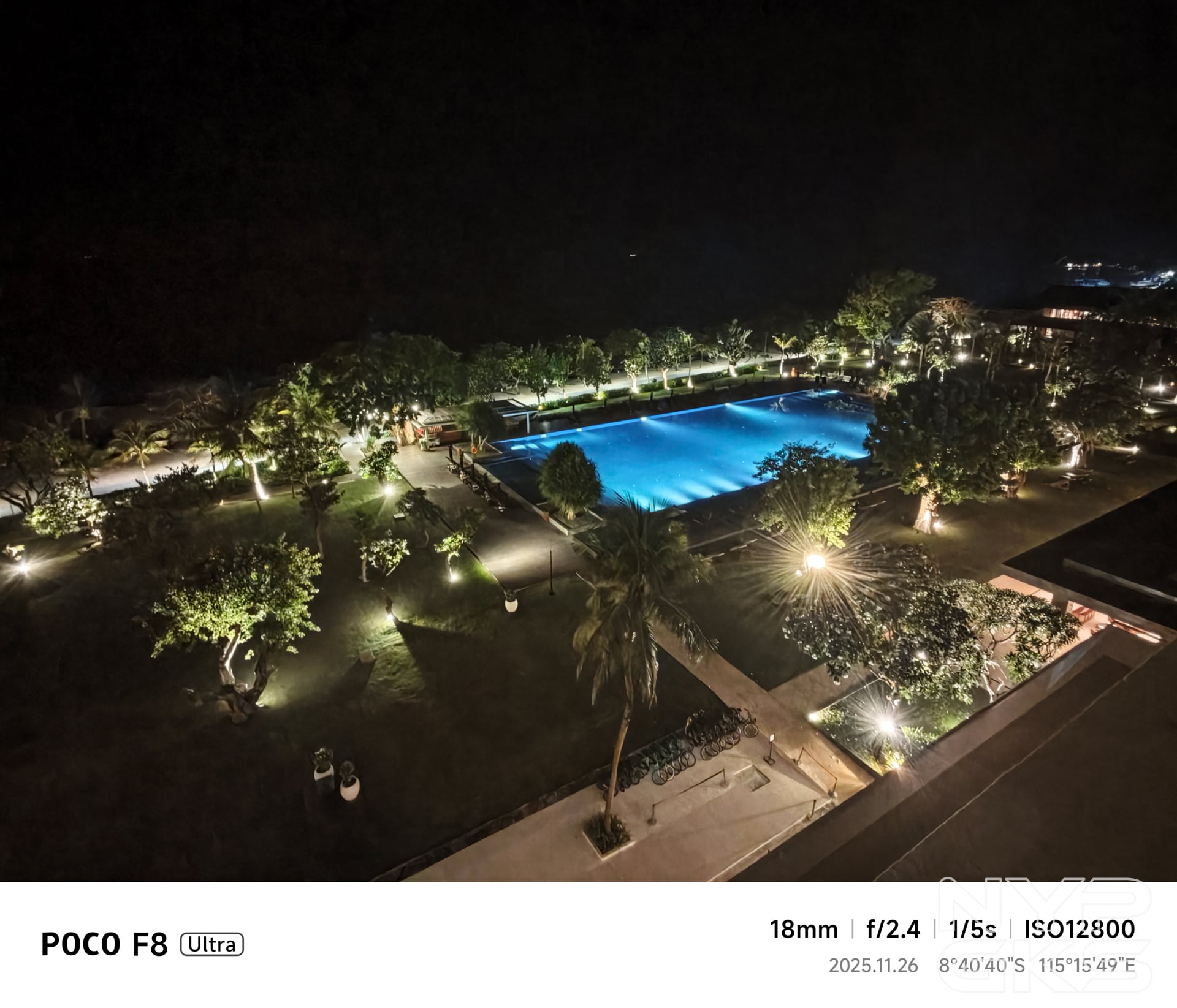
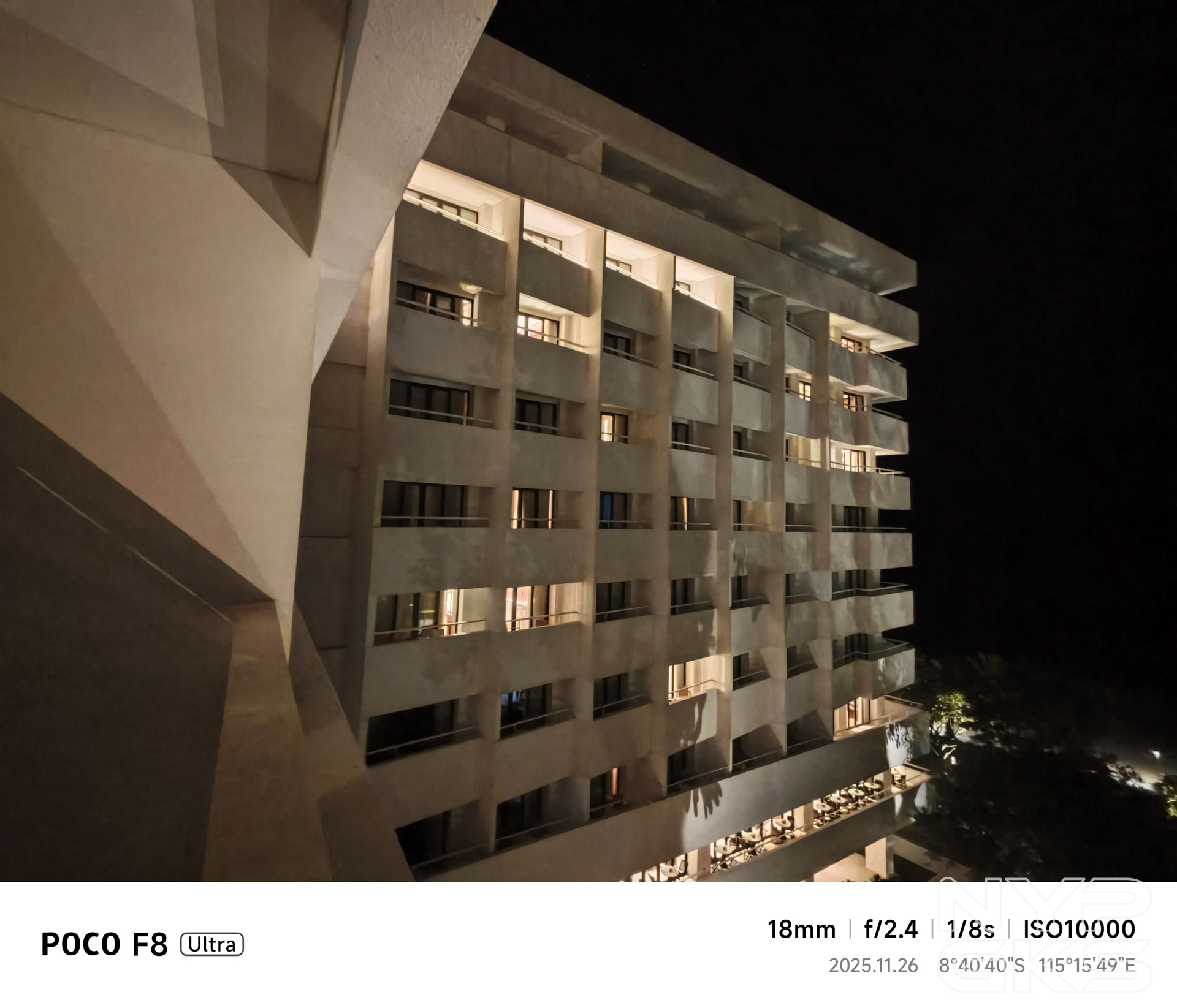
Photos taken at night still look impressively well-detailed, with good dynamic range and colors. But as with most cameras, shutter speed can get slow at times, so make sure you keep it steady to avoid blurry photos.


Tap the 2x button and you’re staying with the 50-megapixel main camera. Thanks to the capable sensor, images still look sharp despite the digital crop.





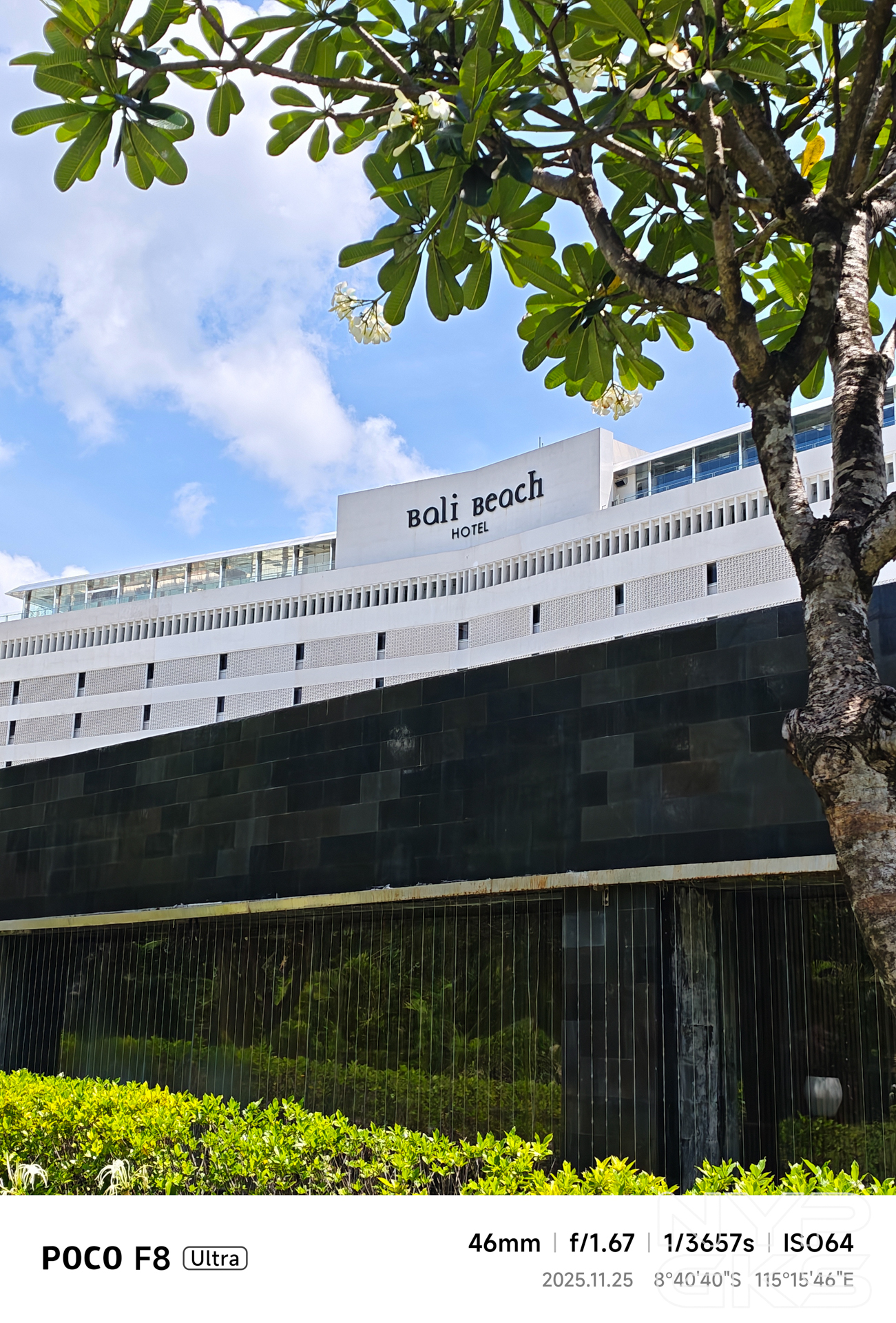


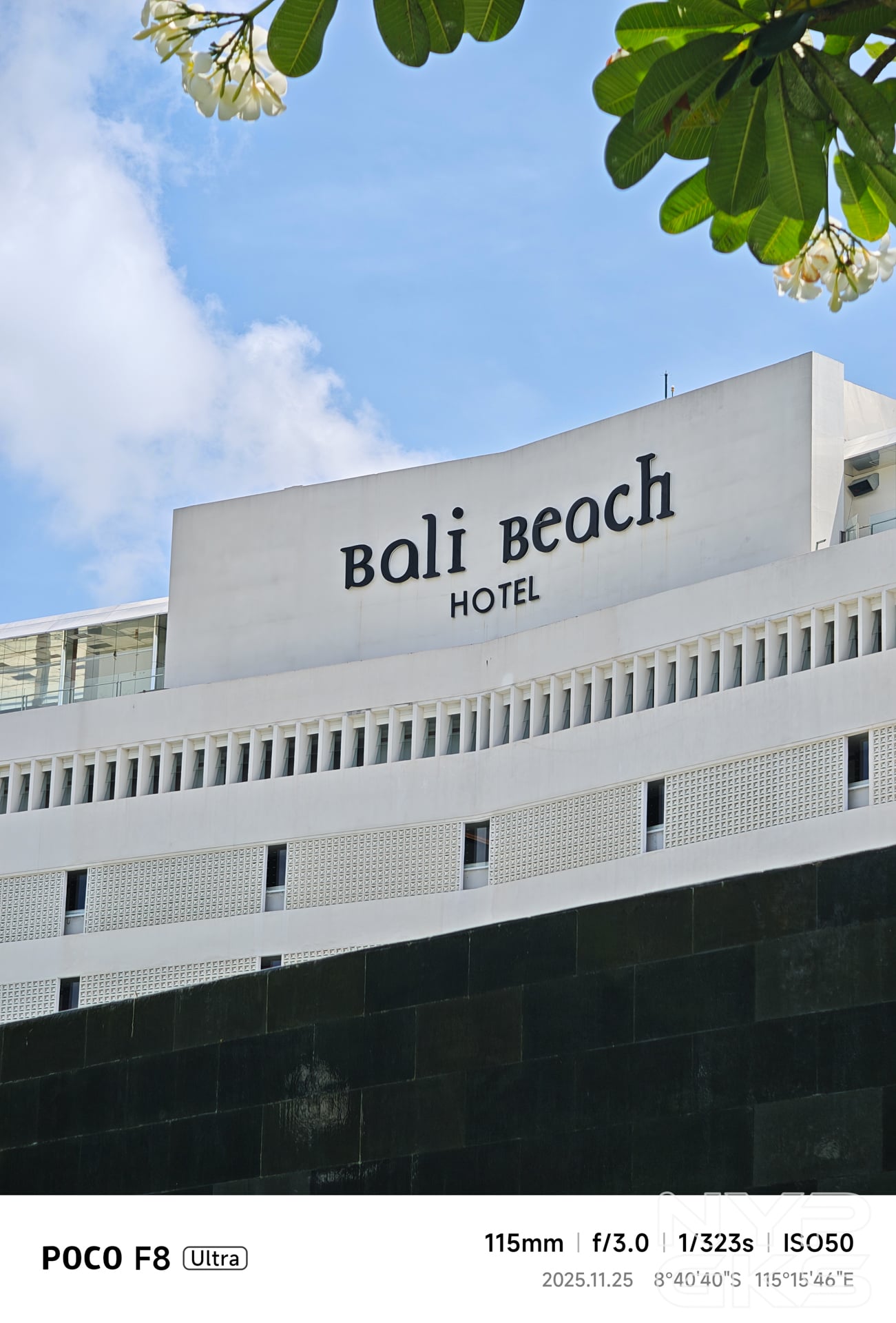
The POCO F8 Ultra also has a 5x periscope telephoto camera, offering 115mm of focal equivalent.
It retains the same impressive colors and dynamic range. Details remain sharp, but closer examination shows noticeable oversharpening. Noise management in low-light conditions could also be better.





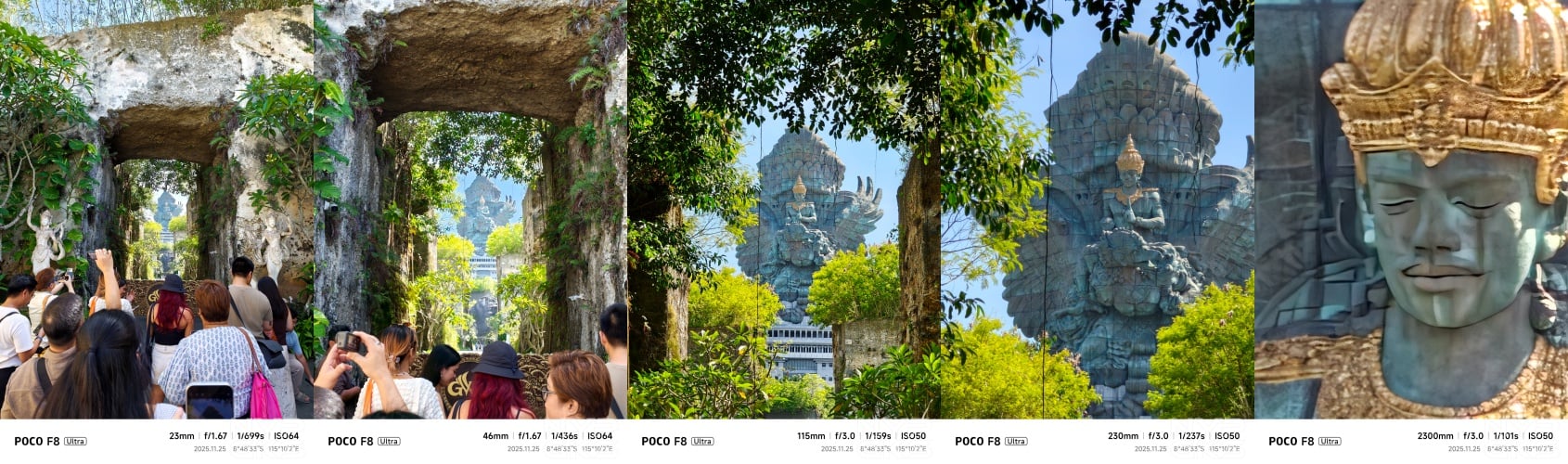
That same sensor is used for the 10x zoom, offering a focal length equivalent of 230mm. Shots under this range are still very respectable, perfect for touristy shots or music festivals.
If you’re curious, the photo below shows the quality of the 100x zoom (2300mm). AI and heavy post-processing pretty much do all the legwork here, which is fine considering how they make the shot usable despite the distance.
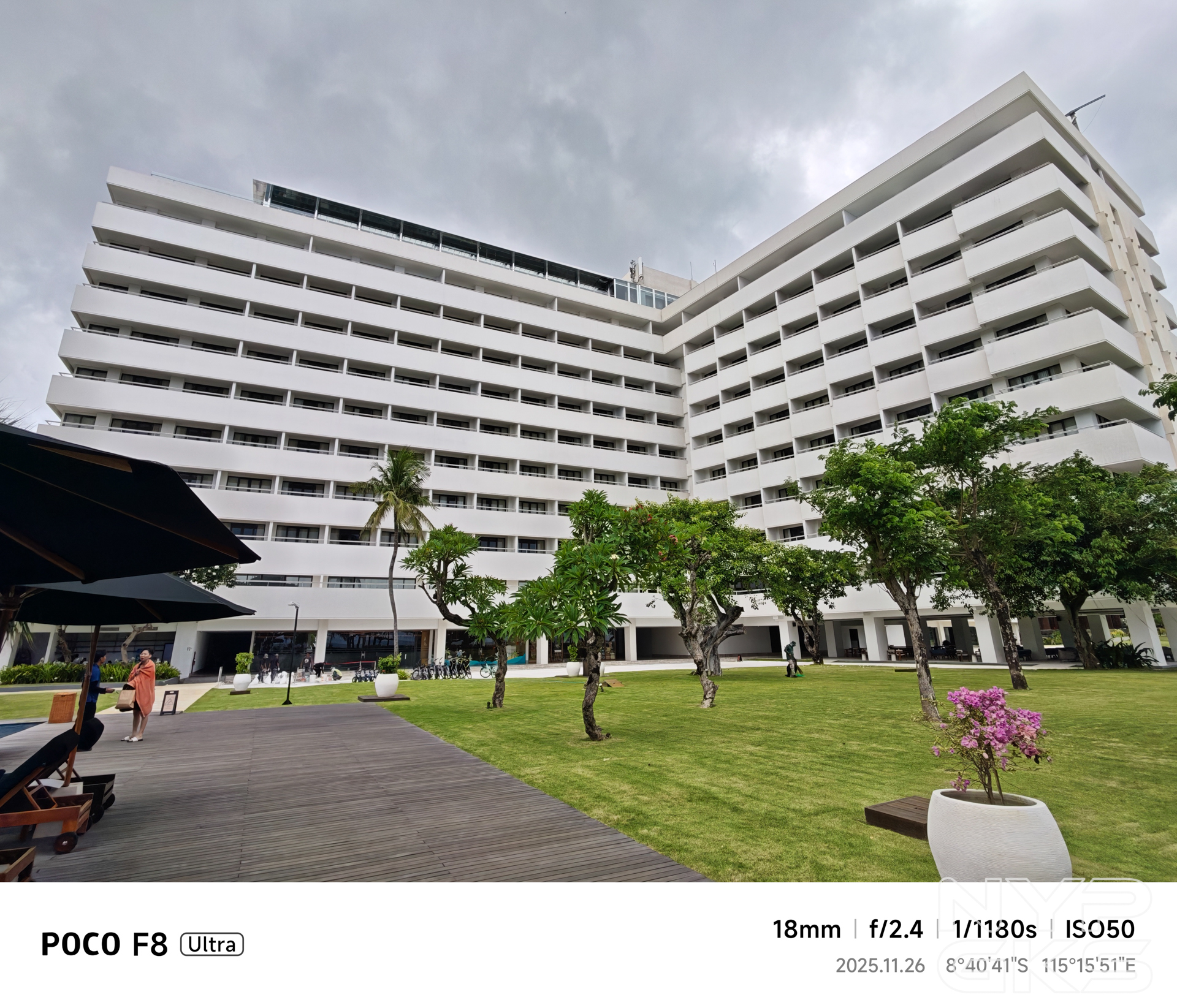
The ultra-wide lens takes decent photos, but disappointing for a camera with a sharp 50-megapixel sensor.
Daylight shots are passable, offering realistic colors and well-managed dynamic range, but the details look soft. It then fumbles hard in low light with tons of noise and grain.



Battery and Charging
The POCO F8 Ultra has one of the biggest batteries in its segment. In fact, they even made a big deal about how much bigger its 6,500mAh battery is than the more expensive Galaxy S25 Ultra (5,000mAh).
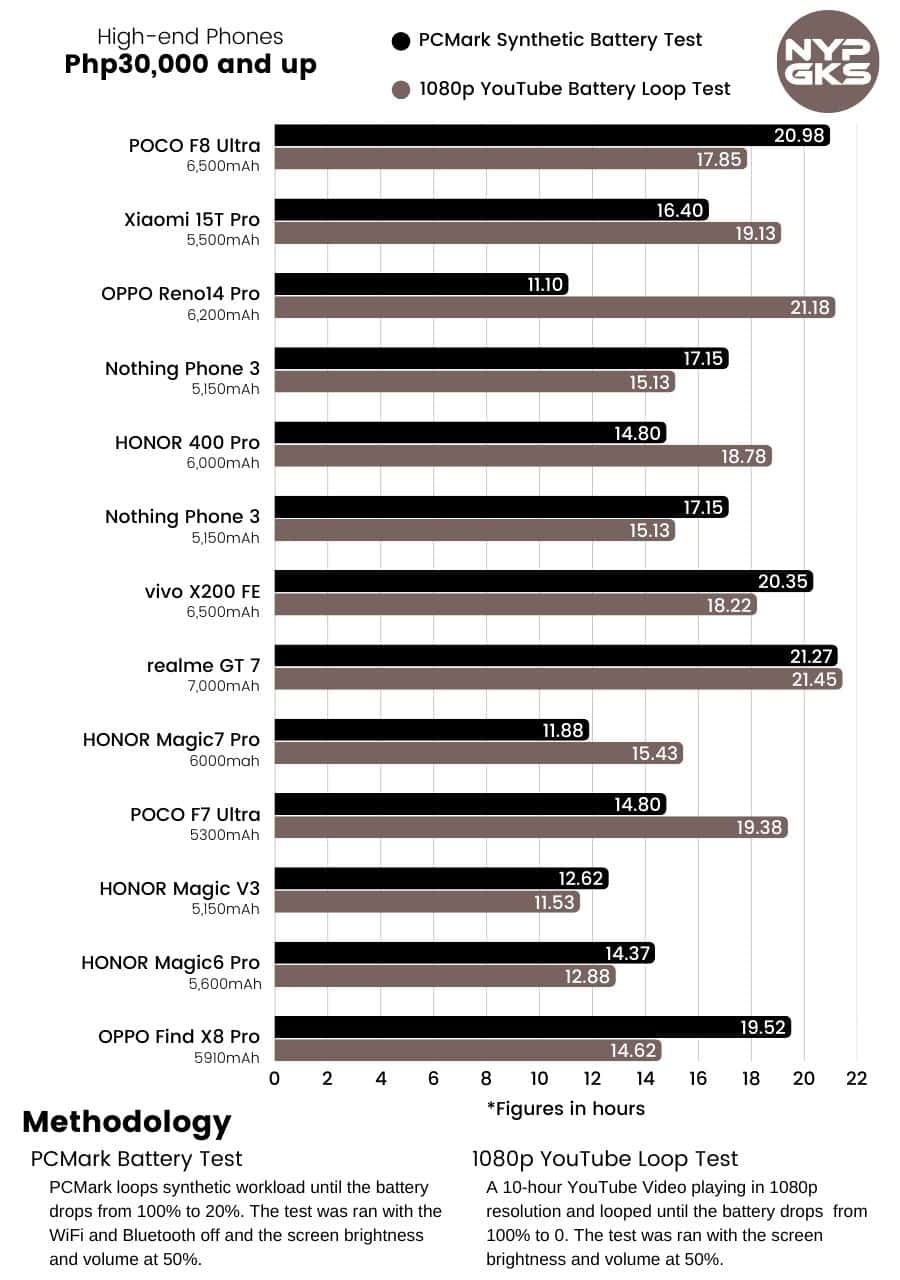

It has one of the best battery scores in our tests, and should translate to 2 to 3 days of light to moderate usage on a single charge.
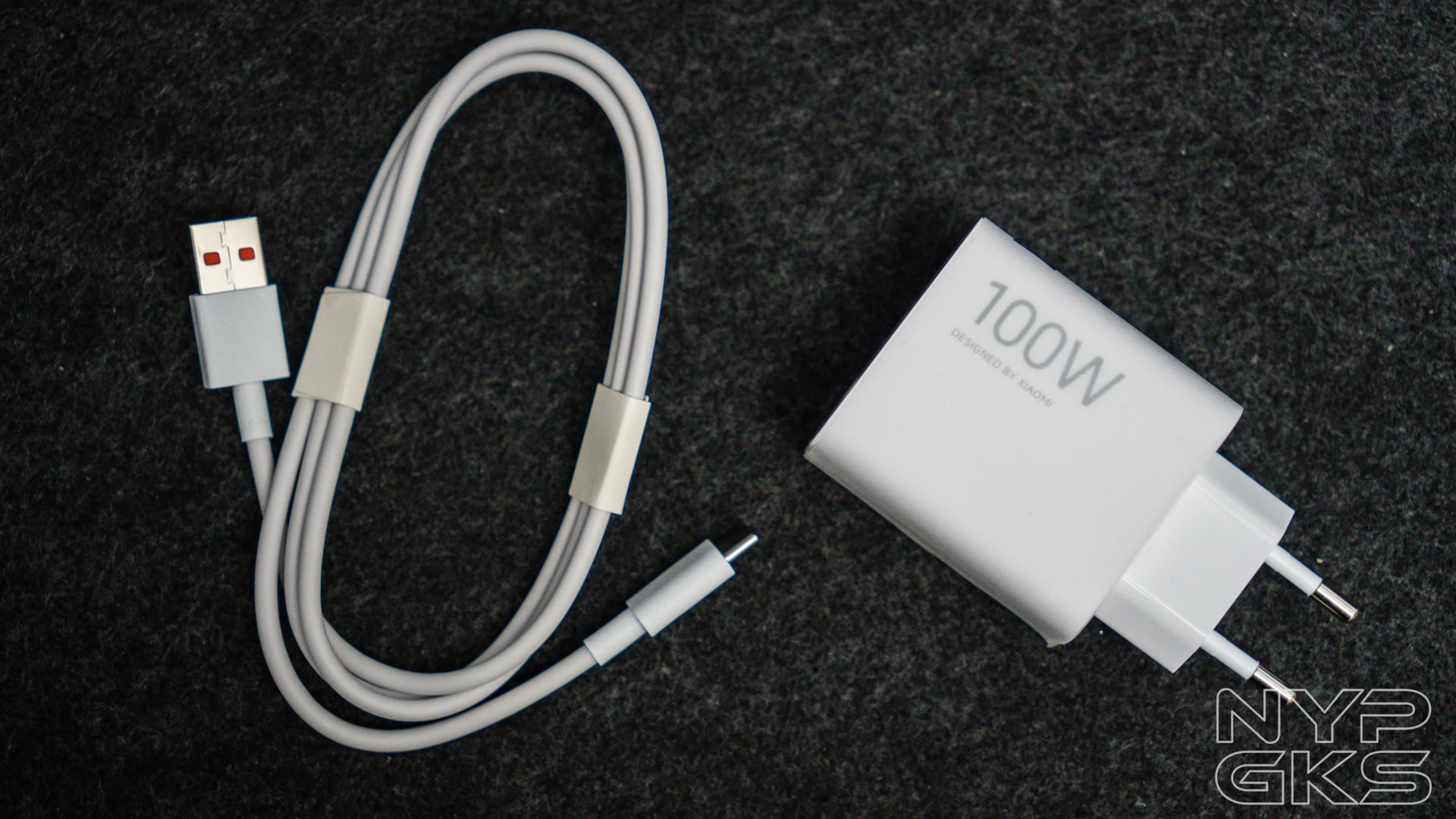
The F8 Ultra also outshines Samsung’s latest flagship with its 100W wired and 50W wireless charging support. The Galaxy S25 Ultra only has 45W and 15W, respectively. In our test, a full charge took less than an hour. See the full test below:
- 15mins: 0-41%
- 30mins: 74%
- 45mins: 99%
- 58mins: FULL
Verdict
The POCO F8 Ultra proves that the series is still a reliable choice for those looking for a feature-rich and powerful flagship phone at a fairly affordable price. In fact, it even beats other more expensive smartphones in terms of features.
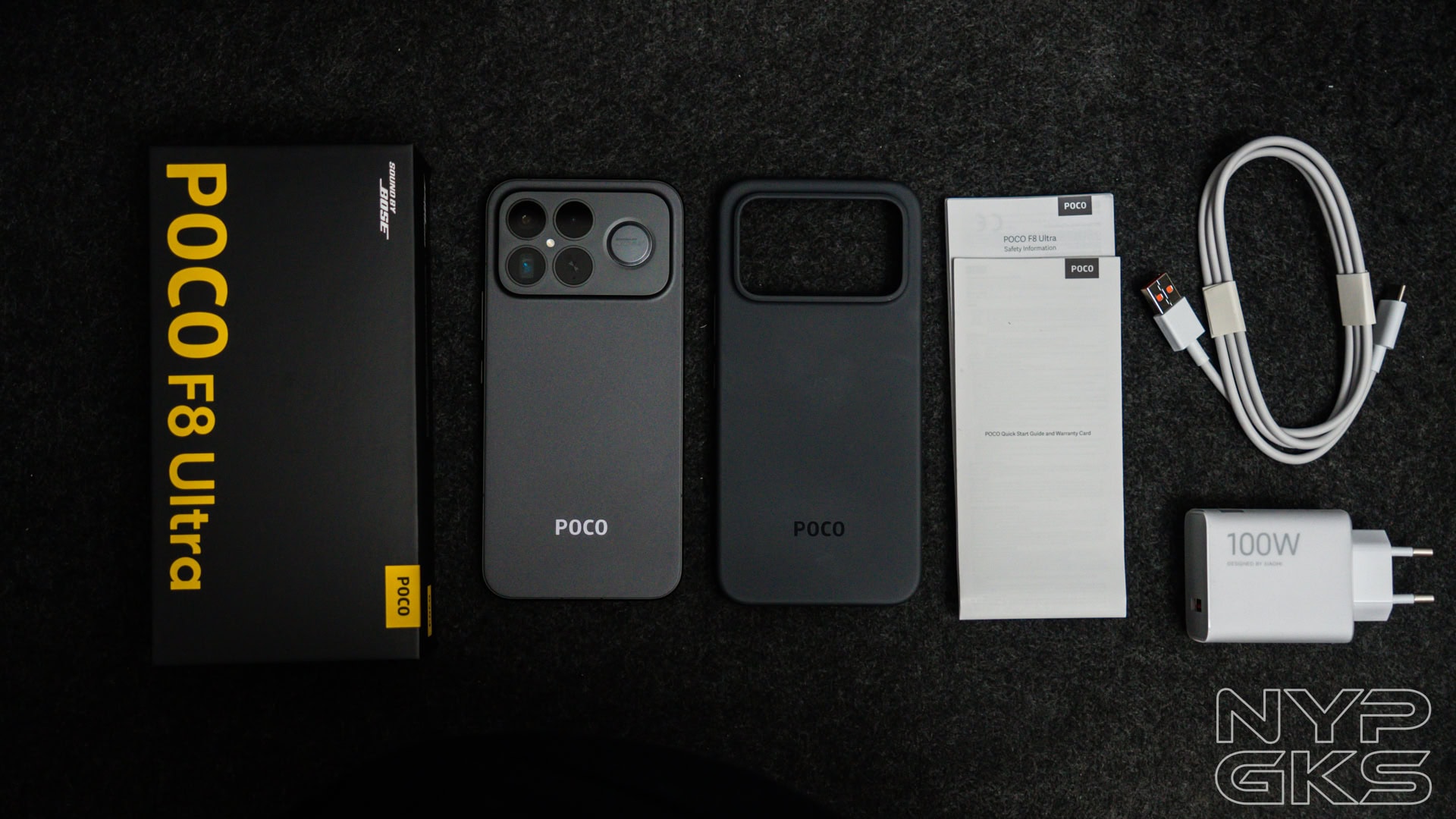
Sporting one of the fastest chipsets out in the market today, it handles every task with utmost speed and reliability. The solid build quality and extensive software support also ensure long-term use, paired with the large battery and fast wired and wireless charging.
You also get a great display, cameras, and of course, a 2.1 speaker system that’s definitely not just a gimmick.

The compromises caused by cost-cutting are definitely felt. The design is forgettable, still no LTPO for the screen, and thermal management can be improved. We’re also hoping that a software upgrade can fix the viewfinder so it can represent the final image better.
Still, the POCO F8 Ultra is one of the best smartphones for its price. A true flagship experience for under Php40,000? Count as in.
POCO F8 Ultra pricing and availability details
The POCO F8 Ultra has an SRP of Php39,999 for the 12GB/256GB base model and Php42,999 for the 16GB/512GB.
It is exclusively available through Lazada and comes with a free 4-month Spotify Subscription, 6 months of Google One with 100GB cloud storage, 6 months of screen breakage protection, and 2-year warranty and maintenance coverage.
Pros
- Solid flagship performance
- Sharp, colorful, bright display
- Superb audio with dedicated woofer, Sound by Bose
- Extensive software support
- Excellent cameras
- Long battery life
- Fast wired and wireless charger
Cons
- Boring design
- Screen is not LTPO
- Thermal management can be better
- Viewfinder could be more accurate