
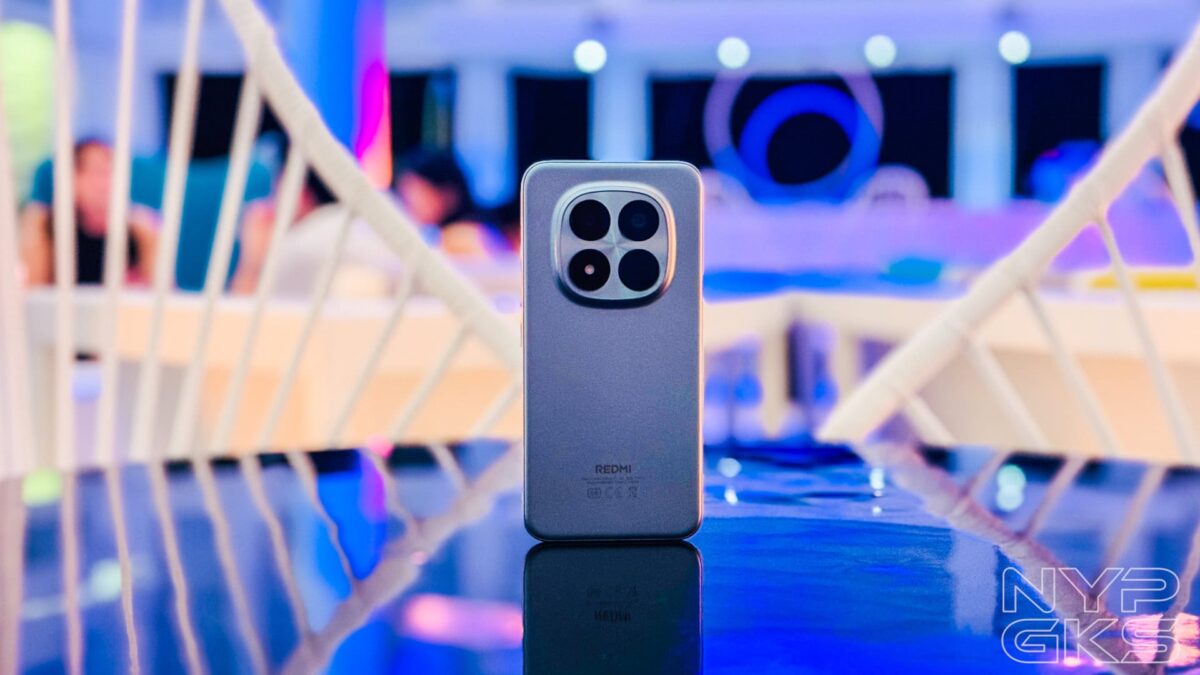

Xiaomi unveiled the Redmi Note 15 Pro Plus, alongside the whole Note 15 series, earlier than its predecessor.
Despite the earlier release, we should still expect big upgrades from the Redmi Note 14 Pro, especially now that it costs Php3,000 more. But is it really the case? Or is the price hike also due to issues with memory supply?
In our Redmi Note 15 Pro Plus full review, we’ll see if it’s still the best choice for users looking for the best value smartphone. Let’s begin.
Redmi Note 15 Pro Plus Specs
- Android 15, HyperOS 2 (up to 6 years of software updates)
- Dual SIM, Dual Standby
- 6.83-inch 1.5K AMOLED display, 2772 x 1220 pixel resolution, ~443ppi
- Corning Gorilla Glass Victus 2
- 120Hz adaptive refresh rate
- 3840Hz PWM dimming, 3200-nit peak brightness
- HDR10+, Dolby Vision
- 2.7GHz Qualcomm Snapdragon 7s Gen 4 octa-core processor
- 12GB RAM
- Adreno 810 GPU
- 256GB/512GB UFS 2.2 internal storage, non-expandable
- 32-megapixel front camera
- 200-megapixel (1/1.4″, f/1.7, PDAF, OIS) + 8-megapixel (ultra-wide) rear cameras, LED flash
- IP66/IP68/IP69/IP69K dust and water resistant
- Optical fingerprint scanner, Face unlock
- Stereo speakers, Dolby Atmos, Hi-Res certified
- Hi-Res Audio, Dolby Atmos
- HSPA+, 4G LTE, 5G
- WiFi 6E, dual-band
- Bluetooth 5.4
- dual-band GPS, GLONASS, GALILEO, QZSS, BDS
- NFC, IR blaster
- USB-C
- Dimensions: 163.3 x 78.3 x 7.9mm
- Weight: 210g
- Colors: Mocha Brown, Glacier Blue, Black
- 6,500mAh non-removable battery, 100W wired, 22.5W reverse wired charging
Design and Build Quality
Xiaomi has followed the moves of HONOR and also used numerous durability test videos to drive its marketing machine. Why? Because the Redmi Note 15 Pro Plus is now tougher.

From the Note 14 Pro Plus’s IP68 dust and water resistance rating, the Note 15 Pro Plus is IP66/68/69/69K rated. That should be enough to handle accidental water splashes, raindrops, or being submerged in the pool.
It also received a 5-star SGS certification for surviving drops from a height of up to 2.5 meters.
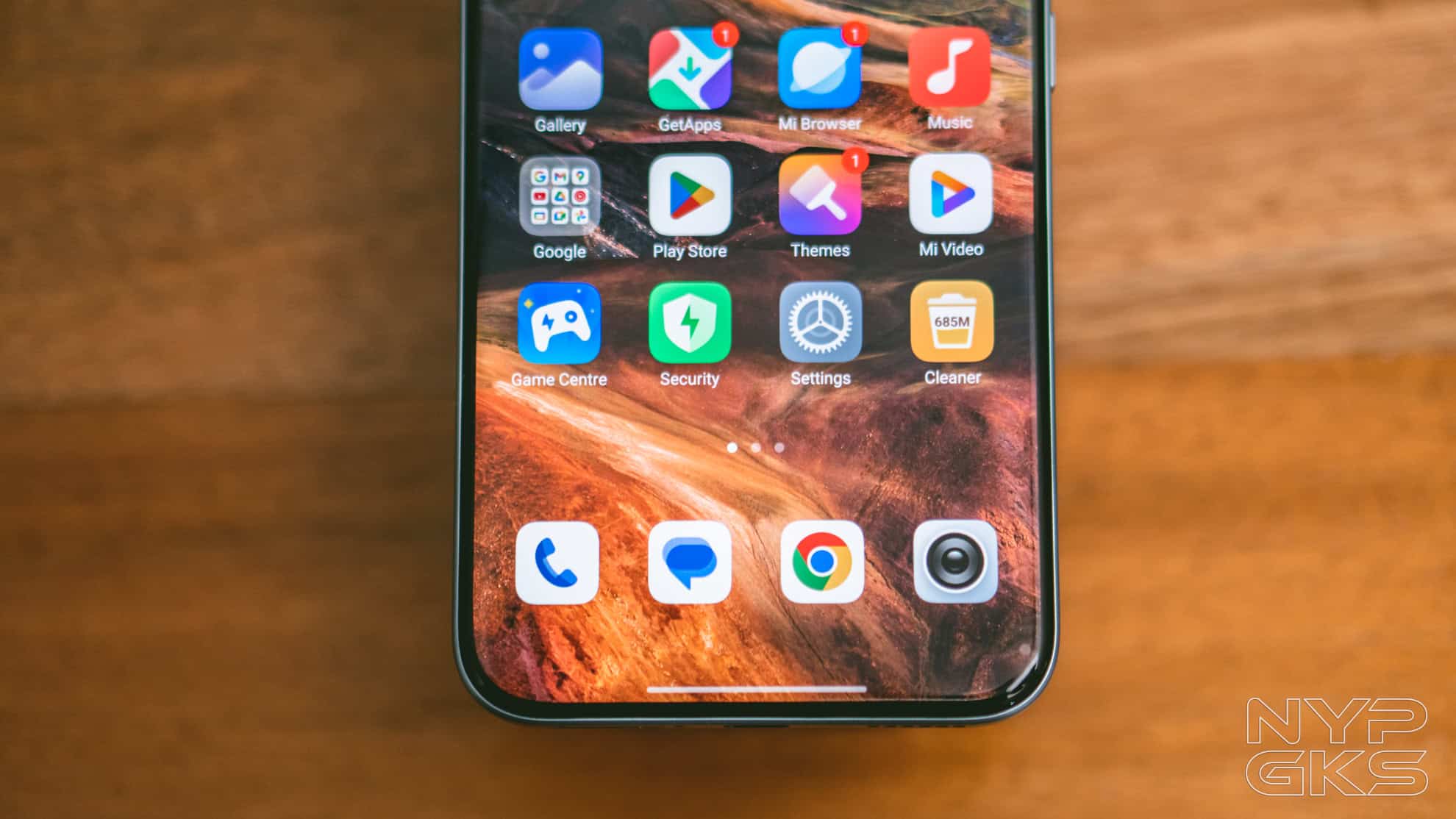
Xiaomi used a flagship-grade Corning Gorilla Glass Victus 2 for the screen, tough fiberglass material on the back that’s 10x tougher than its predecessor, and an aluminum alloy frame.
While it’s tempting, we don’t suggest attempting the durability tests you’ve seen from Xiaomi. What we do know is that the Redmi Note 15 Pro+ has a high chance of surviving daily challenges and possible accidents you might face in life.
The frame feels really solid and wouldn’t bend easily, the front and rear panel can survive scratches from the coins and keys inside your bag, and the device still works with no issues after being accidentally dropped in water.
It also has an AI Wet Touch 2.0 feature that lets you navigate the screen even when wet. The One-Touch Speaker Water and Dust Removal is also here and works as the name suggests by playing a high-frequency sound.

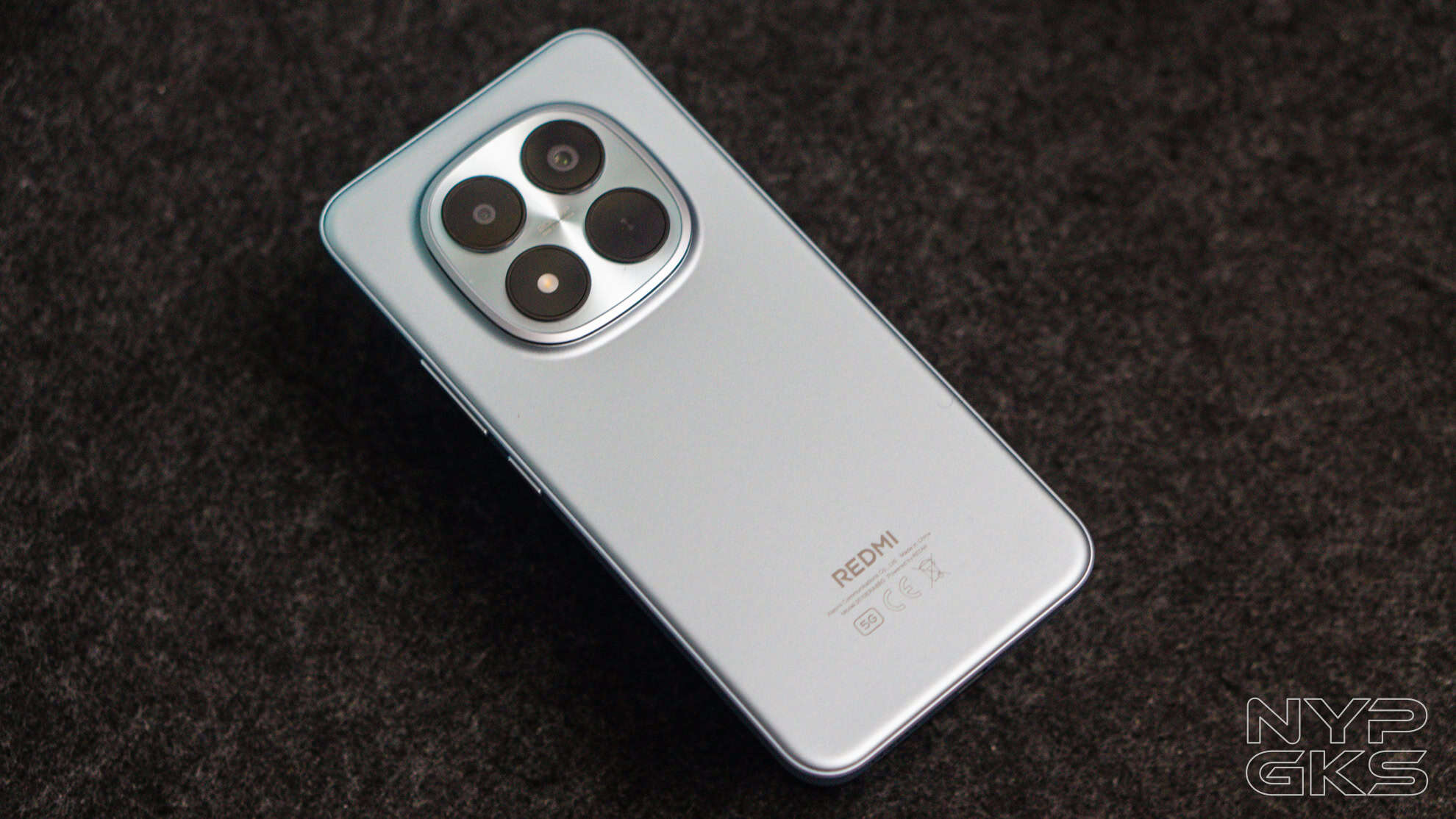
While it’s not tougher, the design looks almost the same as before. It still has a large square camera island with curved corners. The front and rear panels are curved, but the frame is flat for a comfortable grip.
We got the Glacier Blue colorway, with a frosted glass on the back like the Black variant. The hero color, called Mocha Brown, has a textured faux leather material on the back that looks very nice to the eye and to the touch.
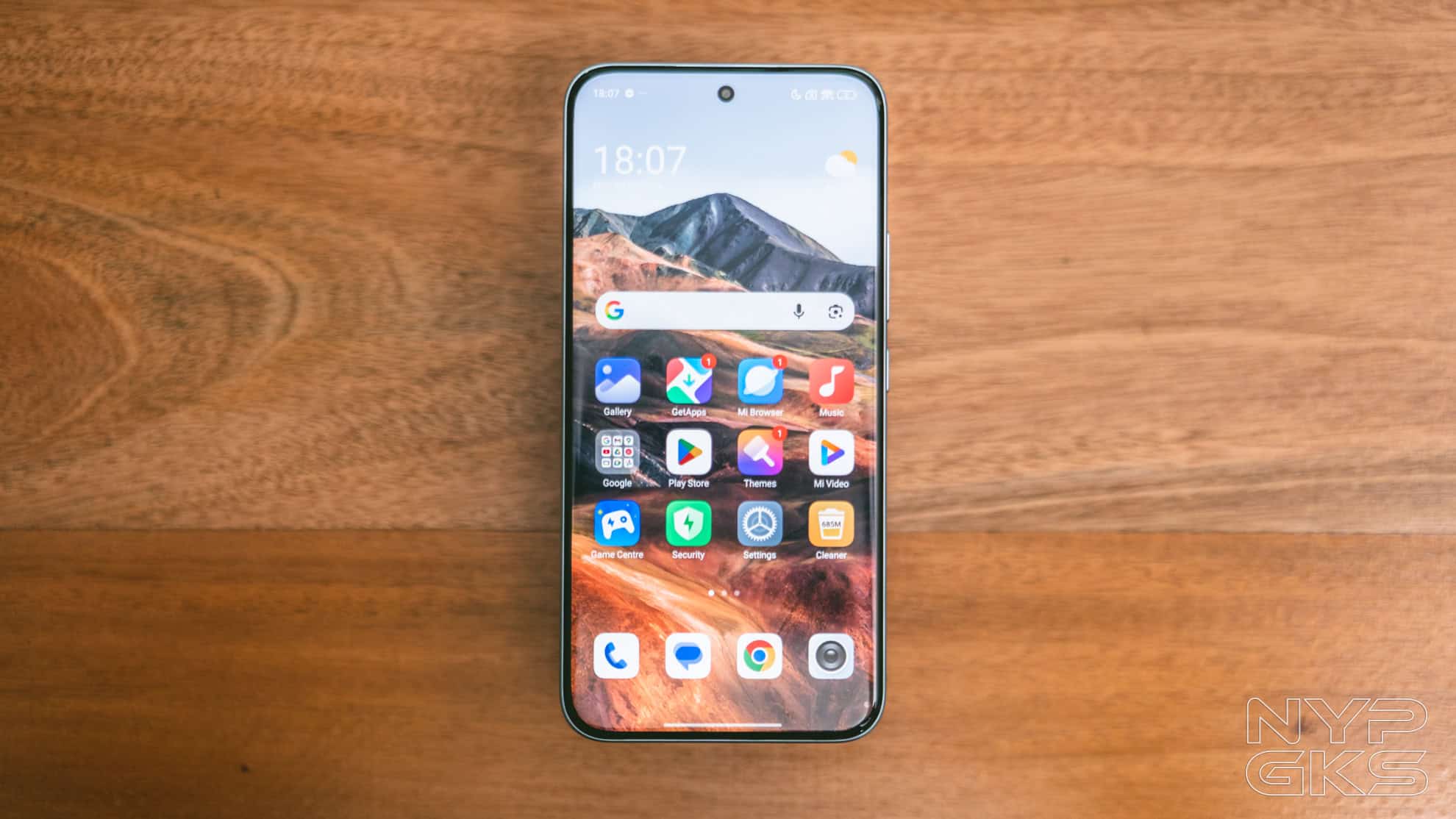
Taking a tour, there’s a 6.83-inch AMOLED screen on the front with a punch-hole for the 32-megapixel selfie camera. There’s a preinstalled screen protector, too. Bezels are very thin.
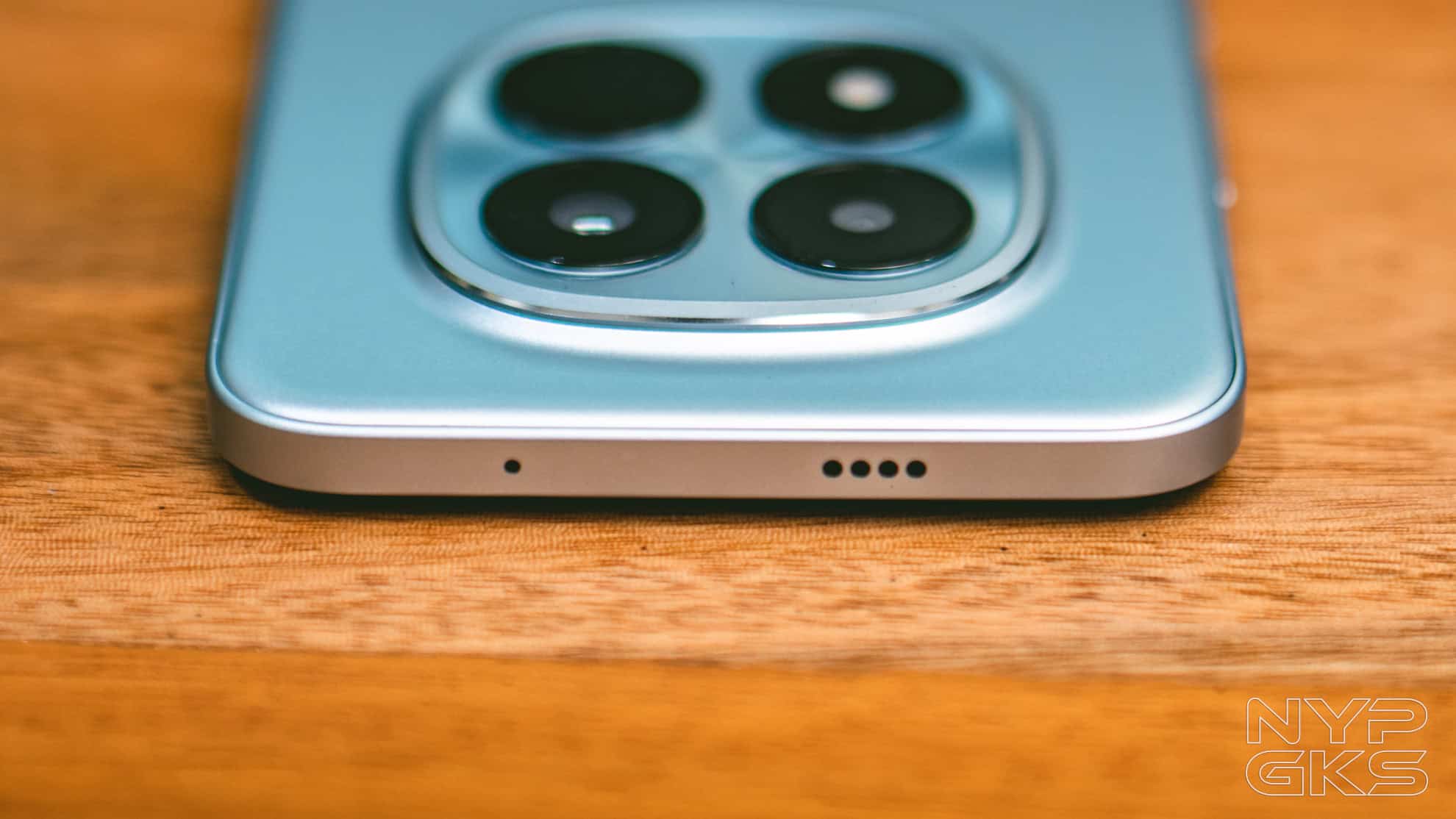
The top has the IR blaster and the speaker grills.
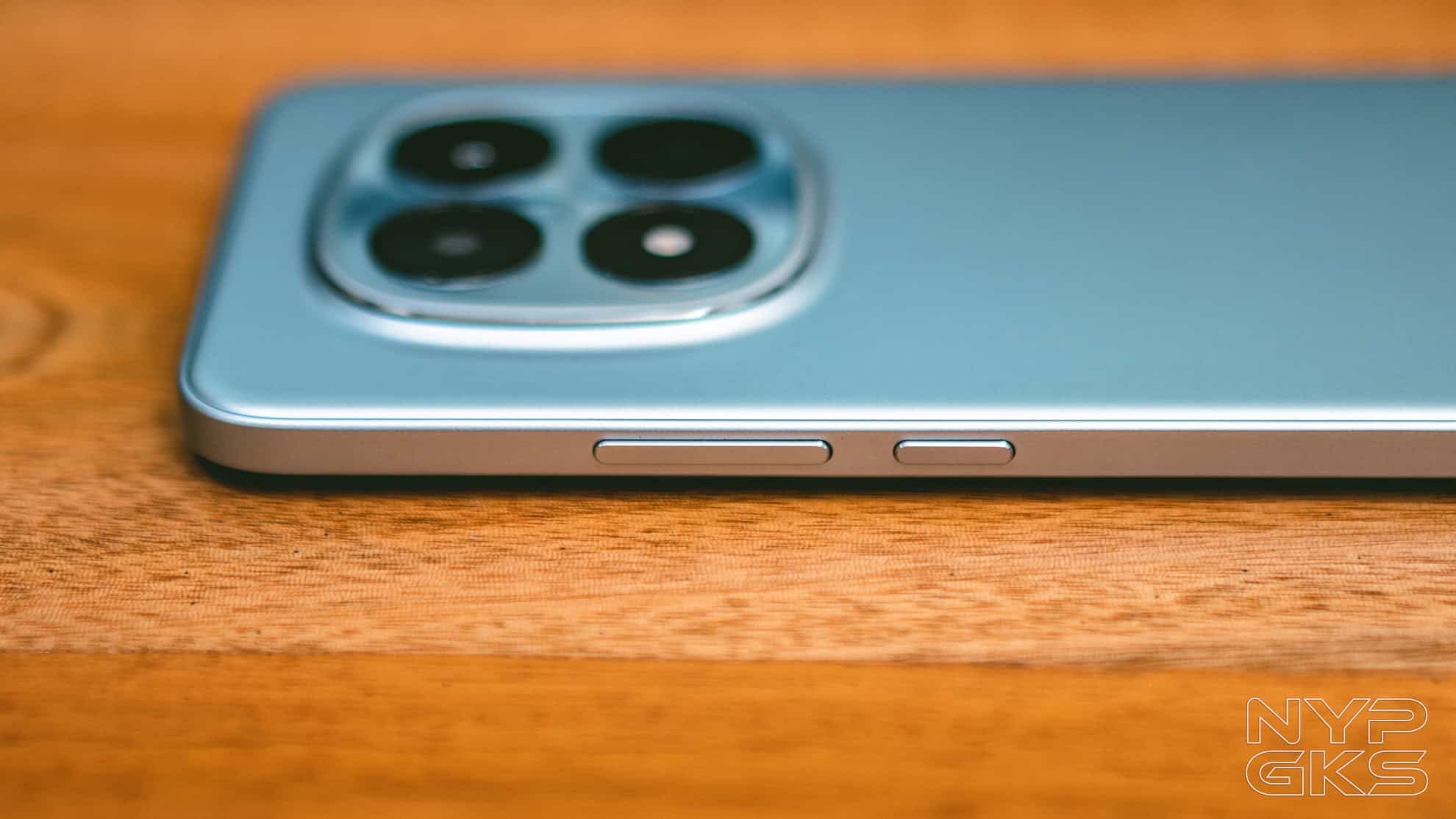
Left side is empty, while the right has the tactile physical button.
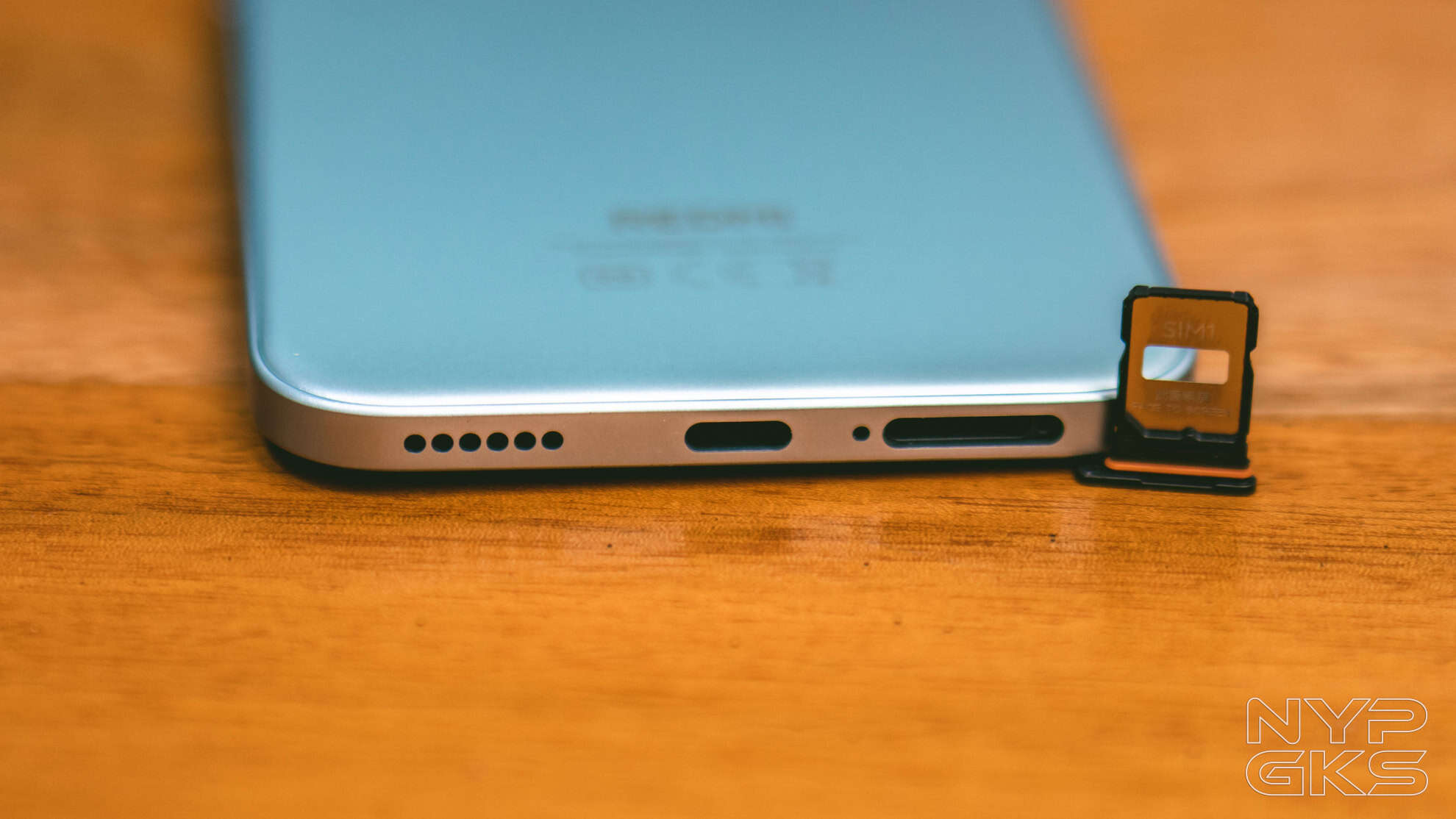
At the bottom, there’s the primary loudspeaker, USB-C port, microphone, and the SIM tray for housing two nano SIMs back-to-back. Sadly, no microSD slot for storage expansion.
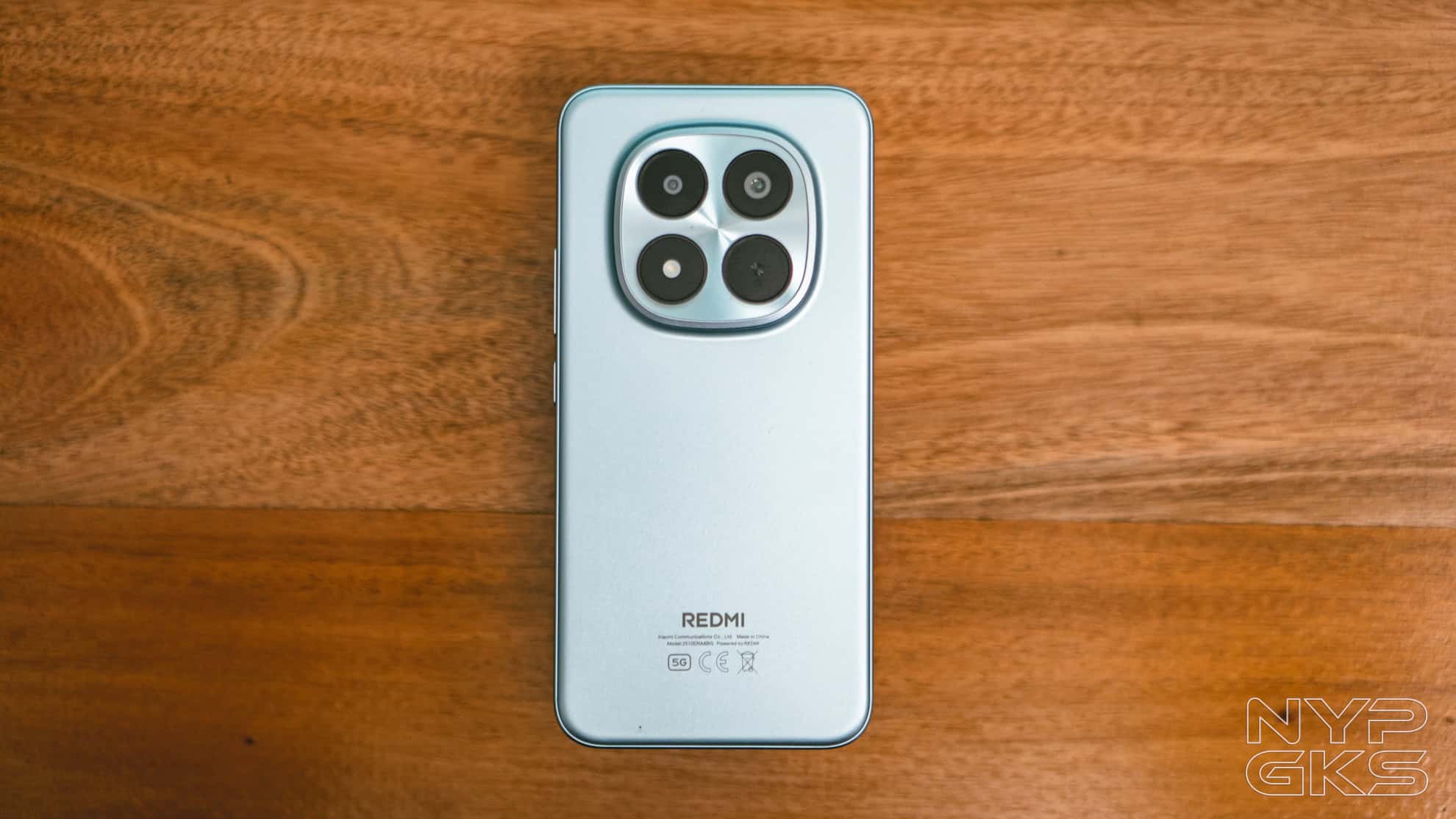
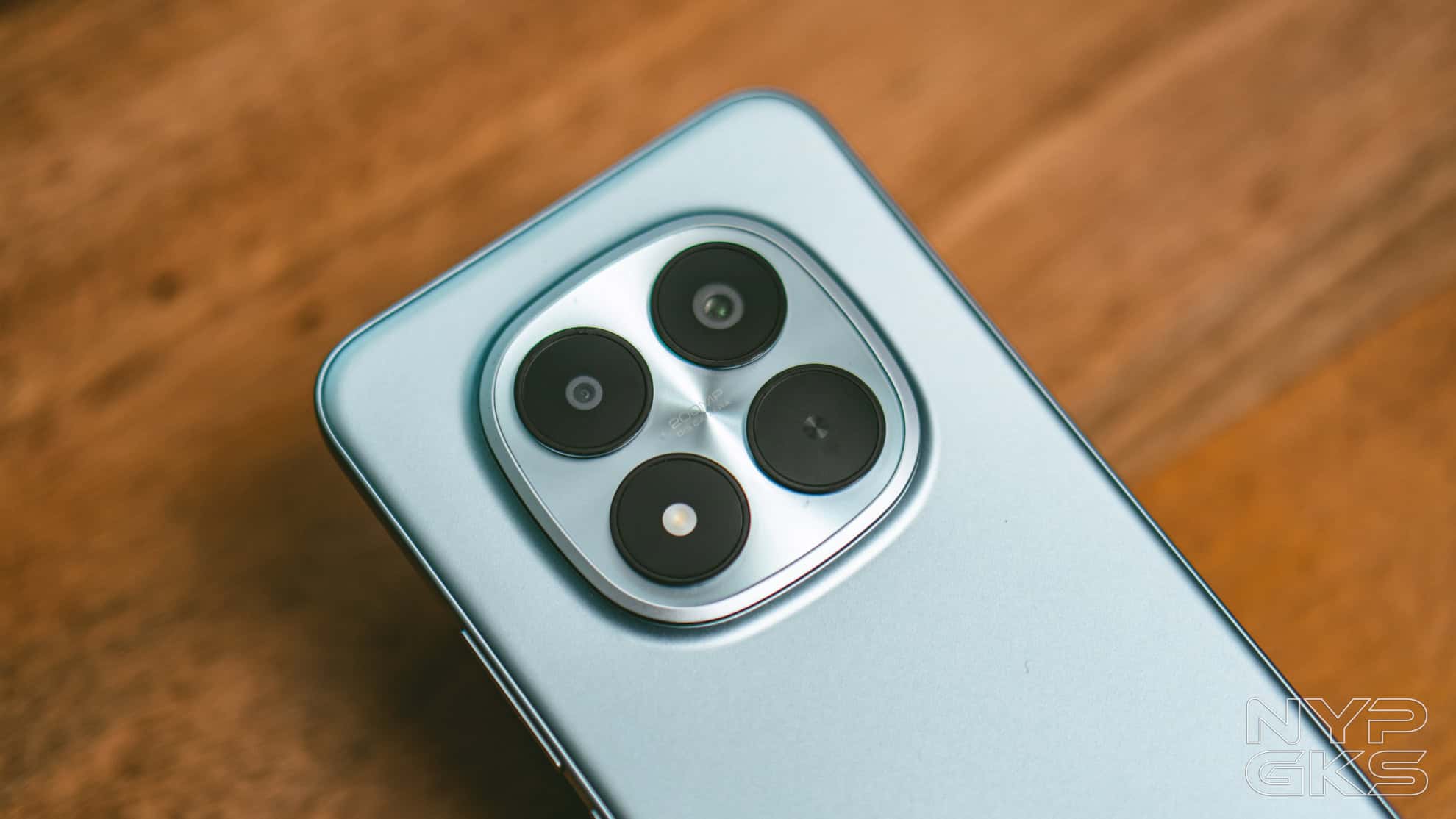
On the back, we have the 8-megapixel ultra-wide camera on the left, next to the 200-megapixel main shooter. Below are the LED flash and other relevant sensors.
The upgraded durability of the Redmi Note 15 Pro Plus is very much welcome, especially for those who plan on keeping the device for 3-5 years or more, and makes up for the recycled design.
Display and Audio
The Redmi Note 15 Pro Plus has a 6.83-inch 1.5K AMOLED display with a 2772 x 1280 resolution, and ~443ppi. It is complete with a 120Hz refresh rate, 12-bit color, support for HDR10+ and Dolby Vision, 3200-nit peak brightness, 480Hz touch sampling rate, and 2560Hz instantaneous touch sampling.
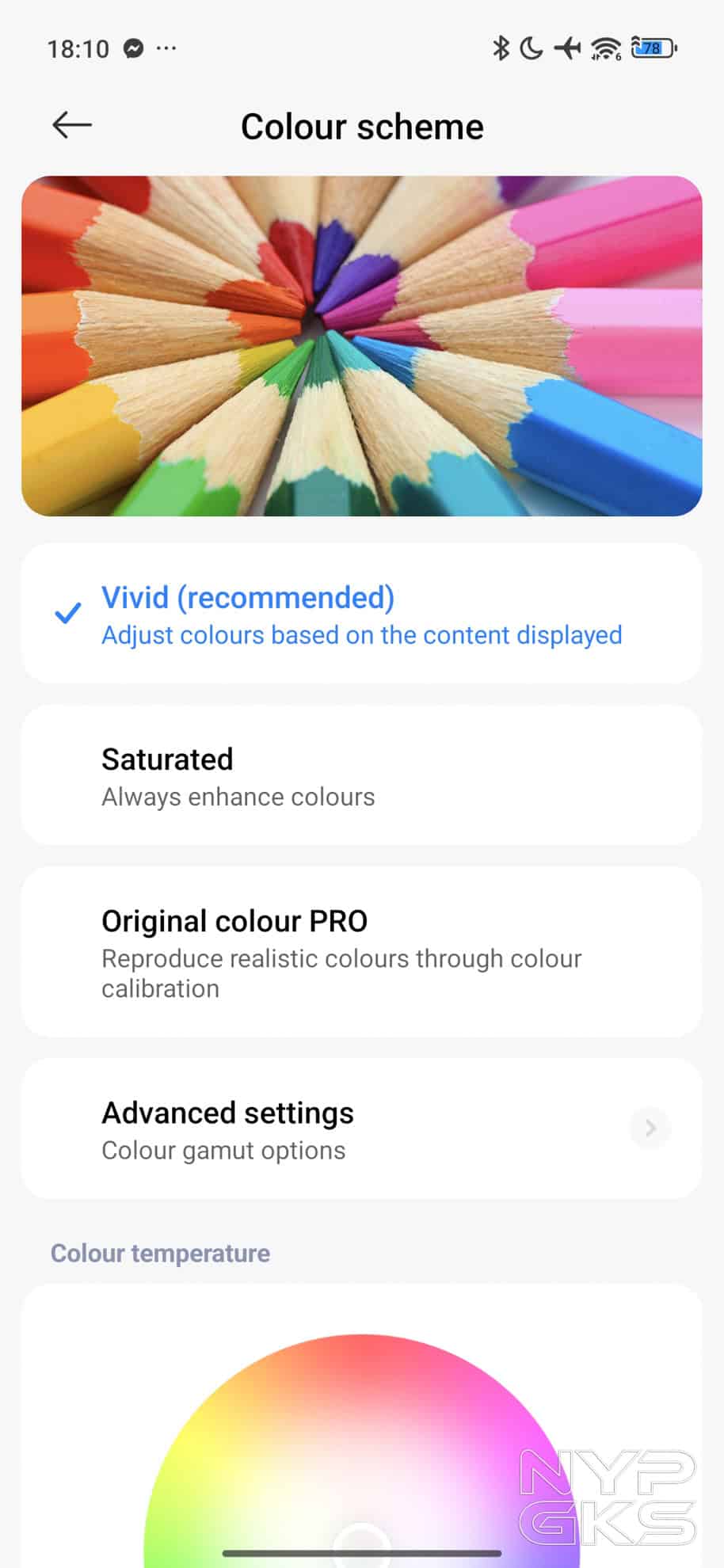
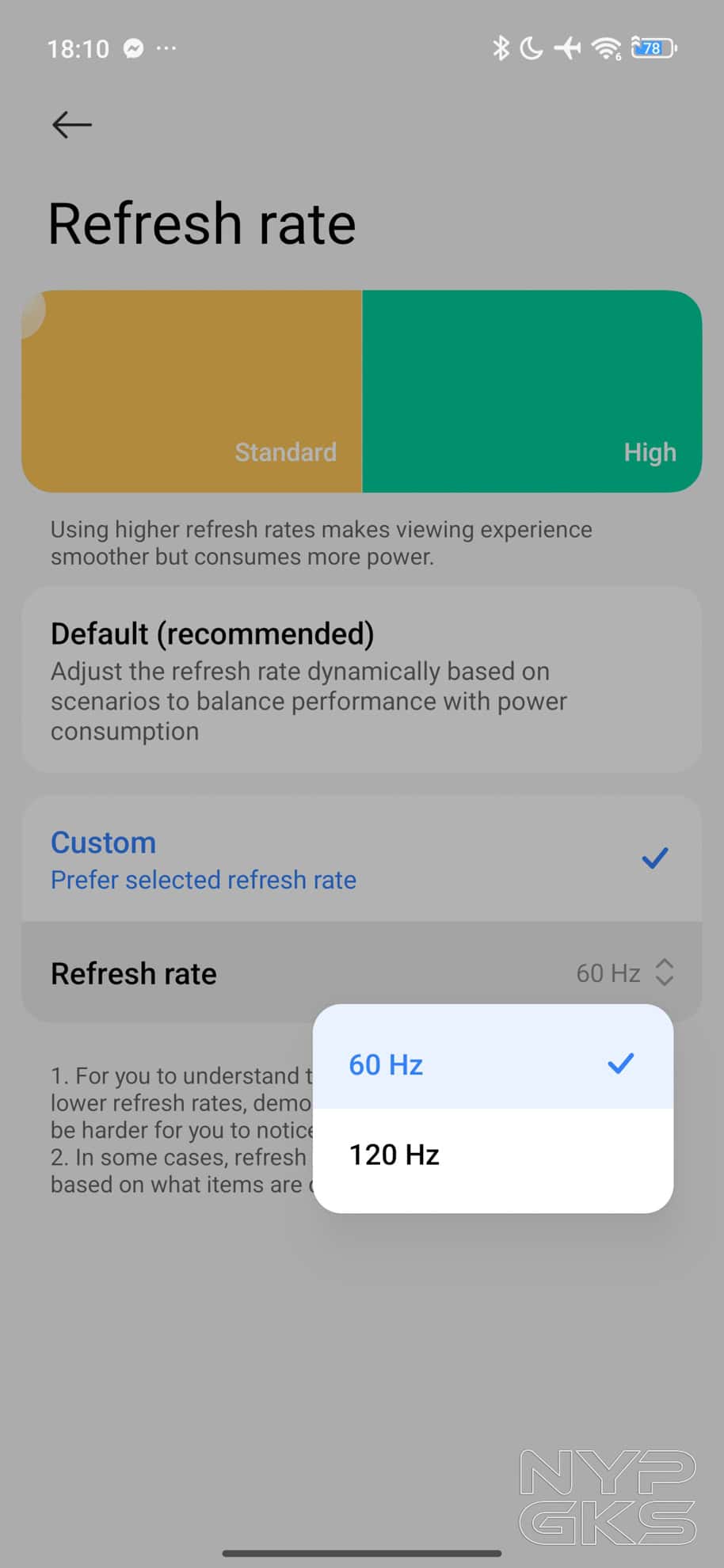
We’re fully satisfied with the display. Colors and details are as good as you might expect, Dolby Vision works well on Netflix, and the screen brightness is reliable for outdoor use. It’s also very comfortable to use at night when you’re scrolling before bed.

For audio, there’s Dolby Atmos and Hi-Res Wireless support. It also has stereo speakers with 200% and 400% volume boost, with the top driver doubling as the earpiece.
The speaker is already very loud at 100%, then even more so at 400%. Perfect if you’re playing music for a group or in a large room. The quality is decent, too. Bass is present, but the treble is slightly muffled.
Hardware and Performance
The Redmi Note 15 Pro Plus is powered by a 4nm Qualcomm Snapdragon 7s Gen 4. A marginal upgrade over its predecessor’s Snapdragon 7s Gen 3 with a 2.7GHz (from 2.5GHz) clock speed, and an Adreno 810 GPU that Qualcomm claims is now 7% better. It then has 12GB of LPDDR4X RAM and an option between 256GB and 512GB UFS 2.2 non-expandable storage.
Redmi Note 15 Pro Plus Benchmark Scores
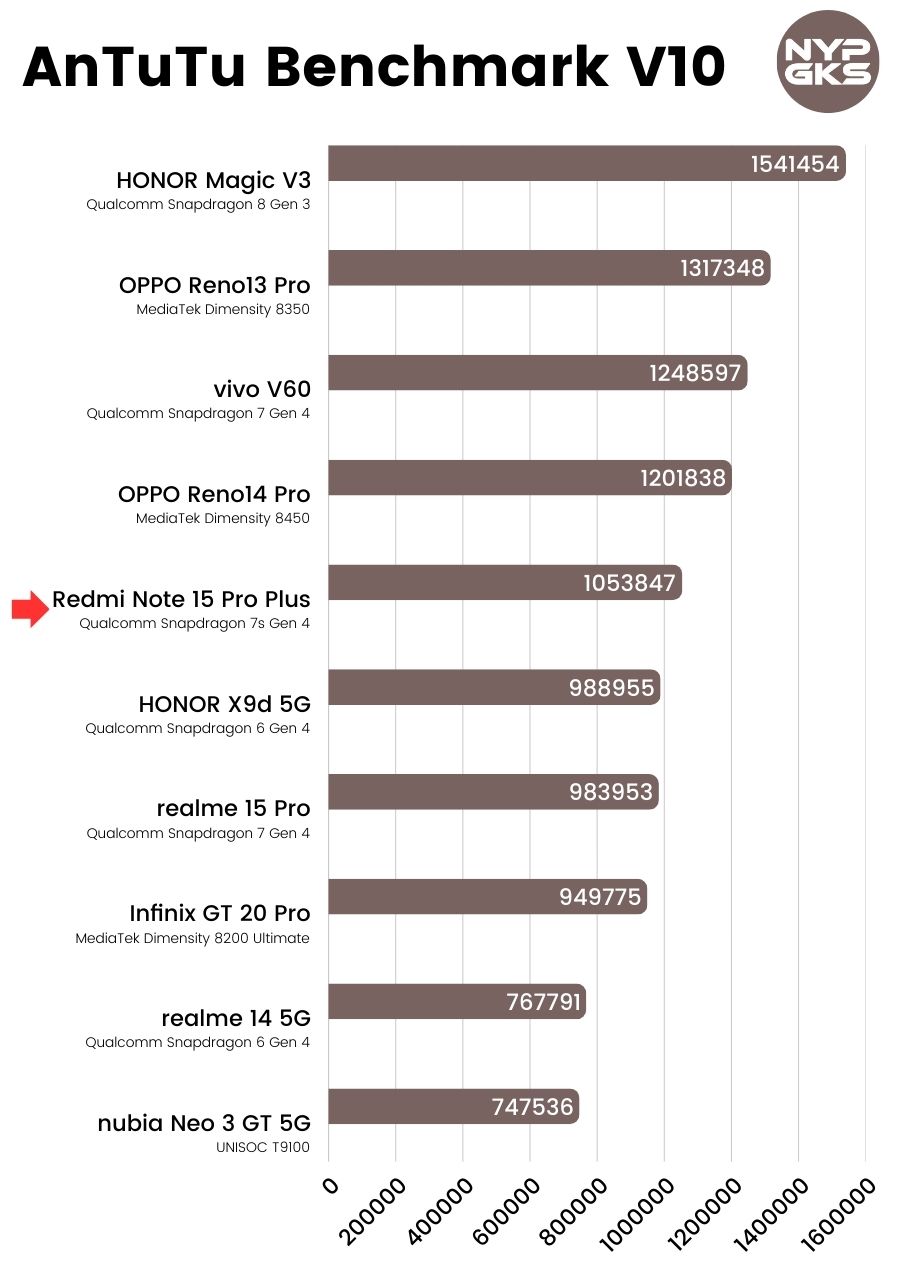


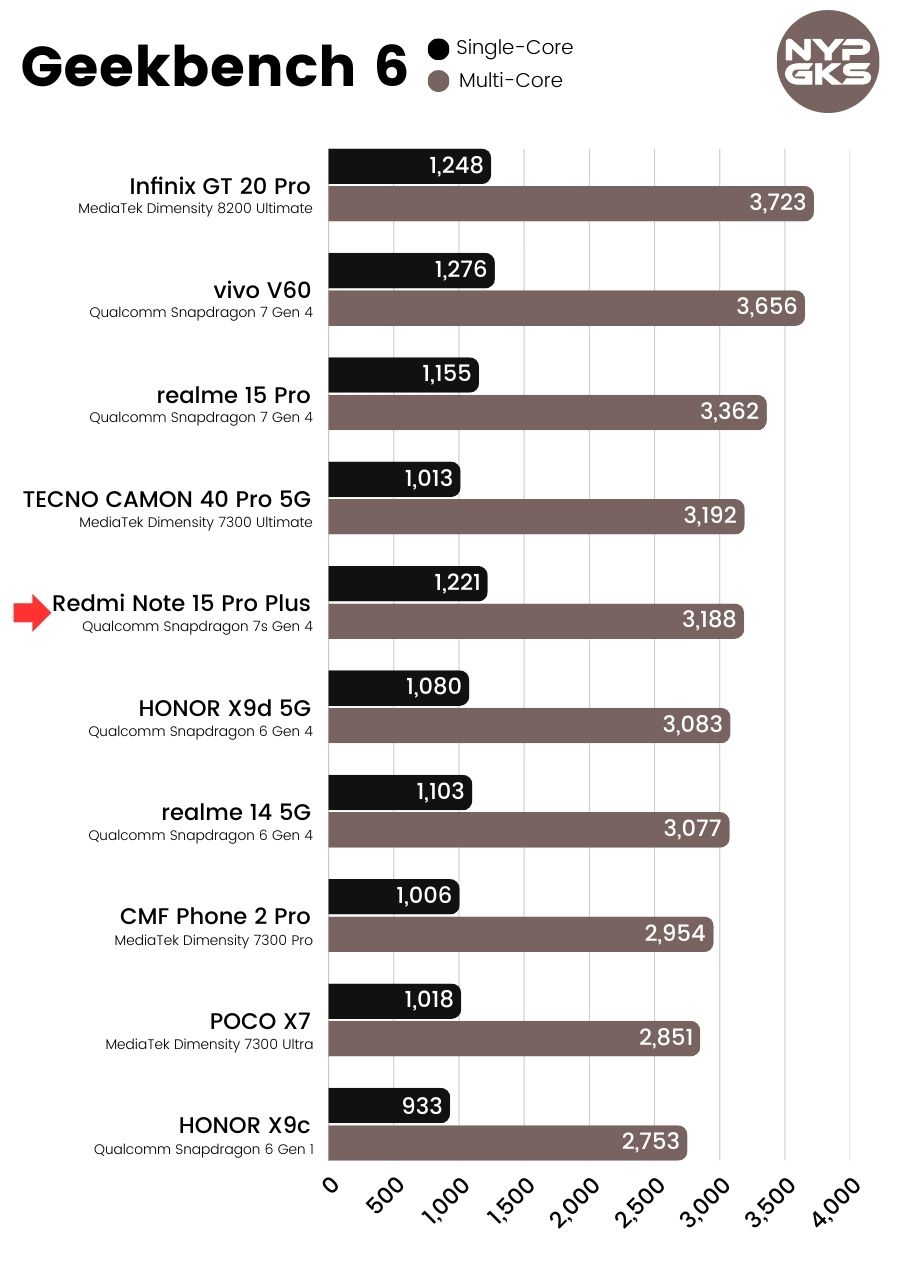
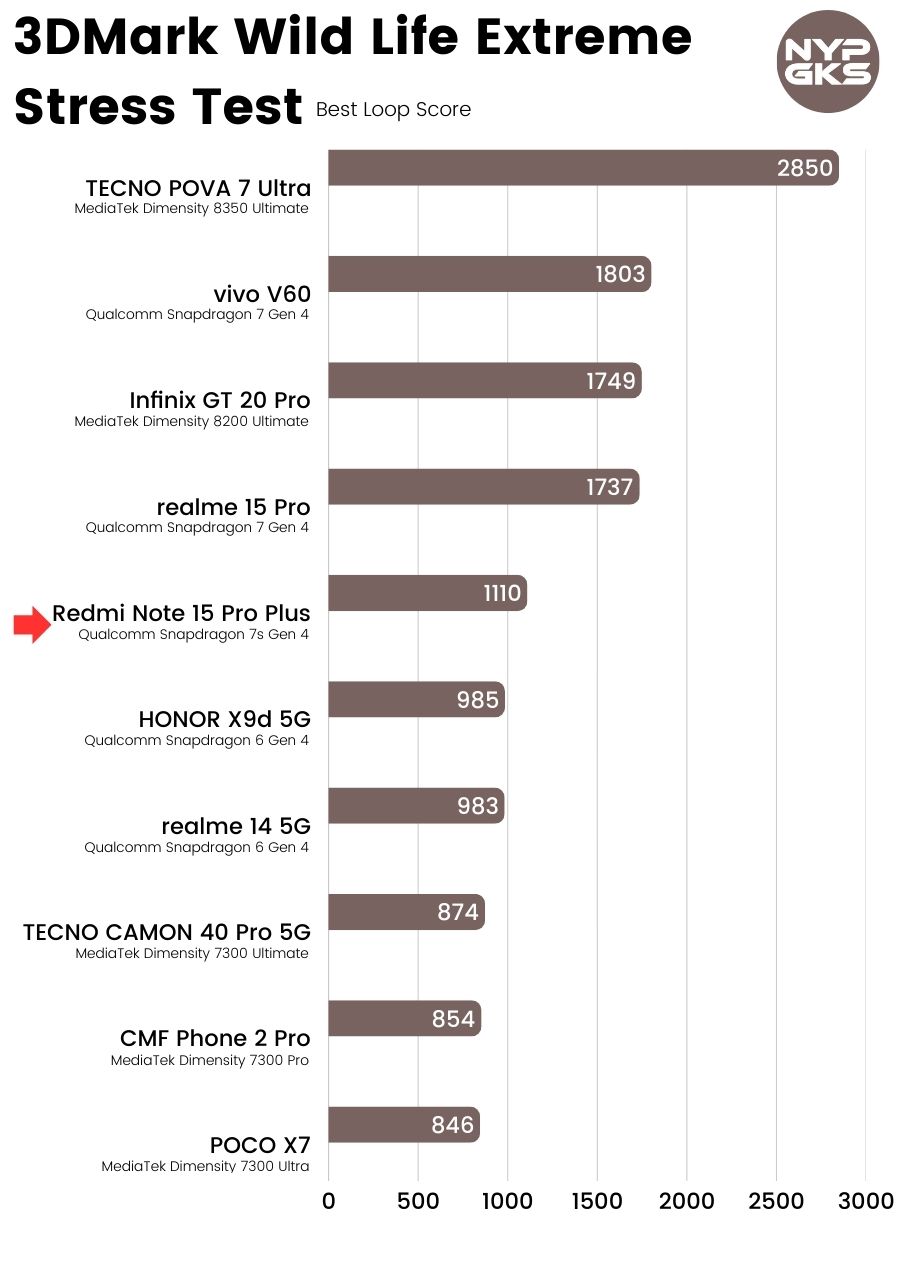
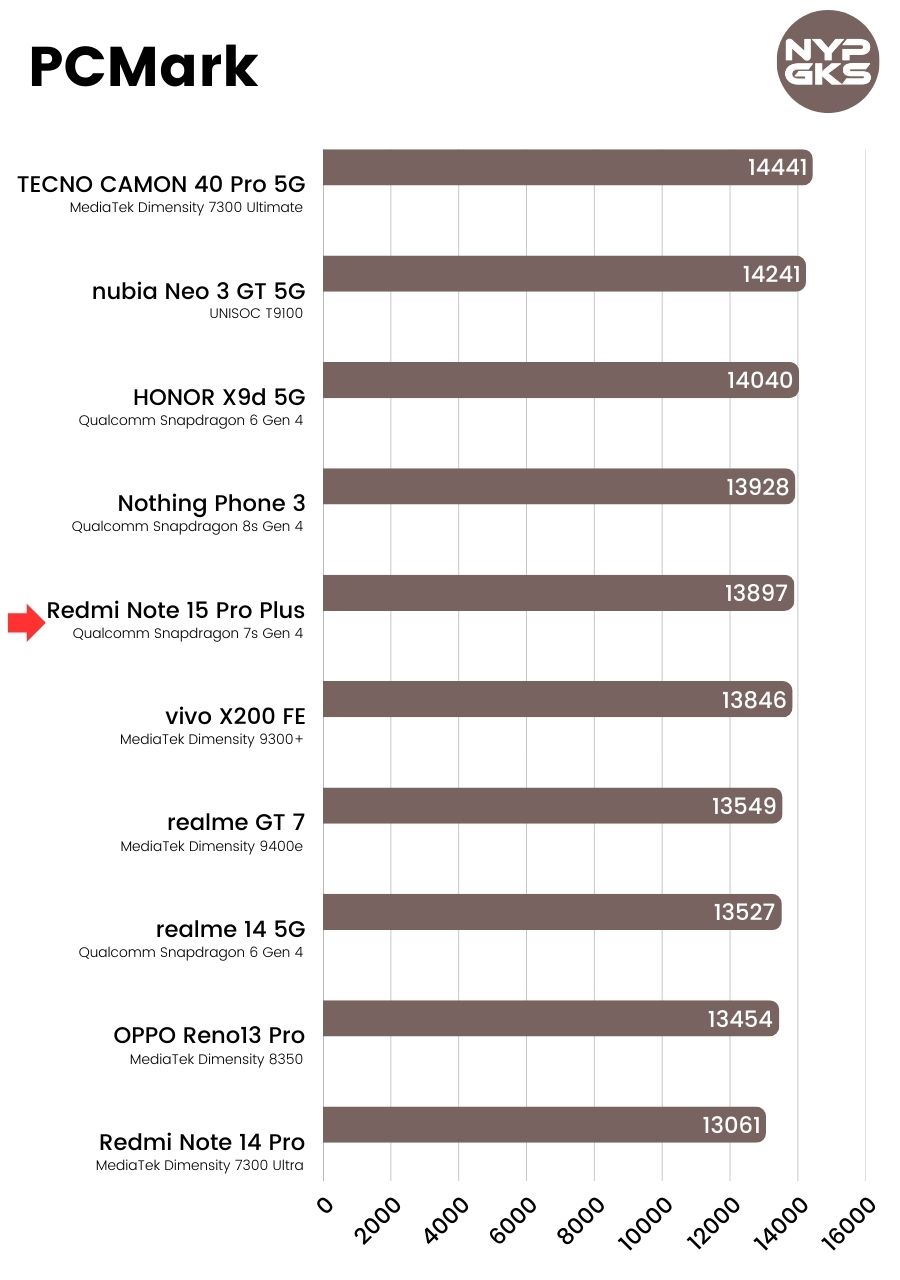
Day-to-day performance is nice and breezy, but a bit lacking for the price. It feels snappy when multitasking, web browsing, taking pictures, and more, but for what it costs, we expected more. Let’s see how it fares in gaming.

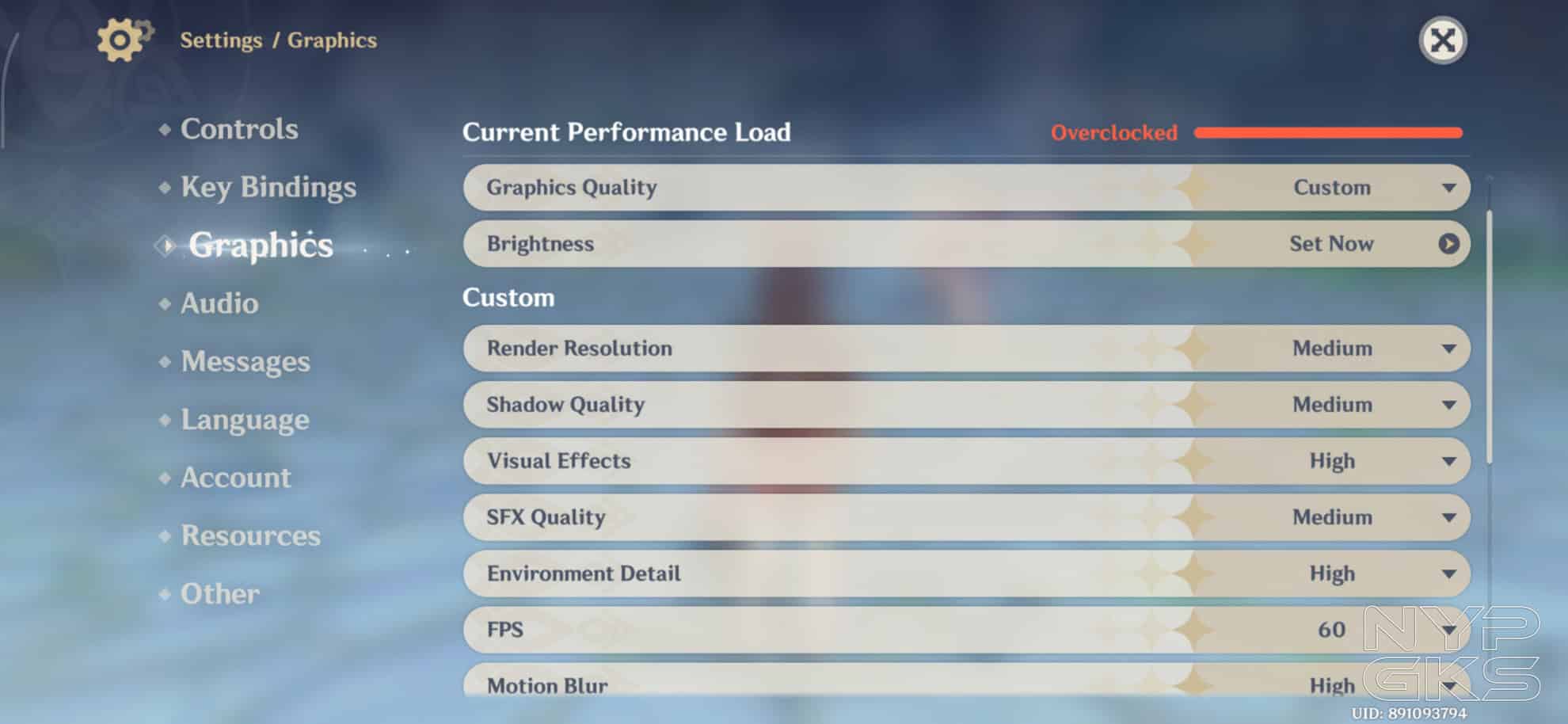
Genshin Impact was smooth under Medium settings at 60 frames with no noticeable overheating.
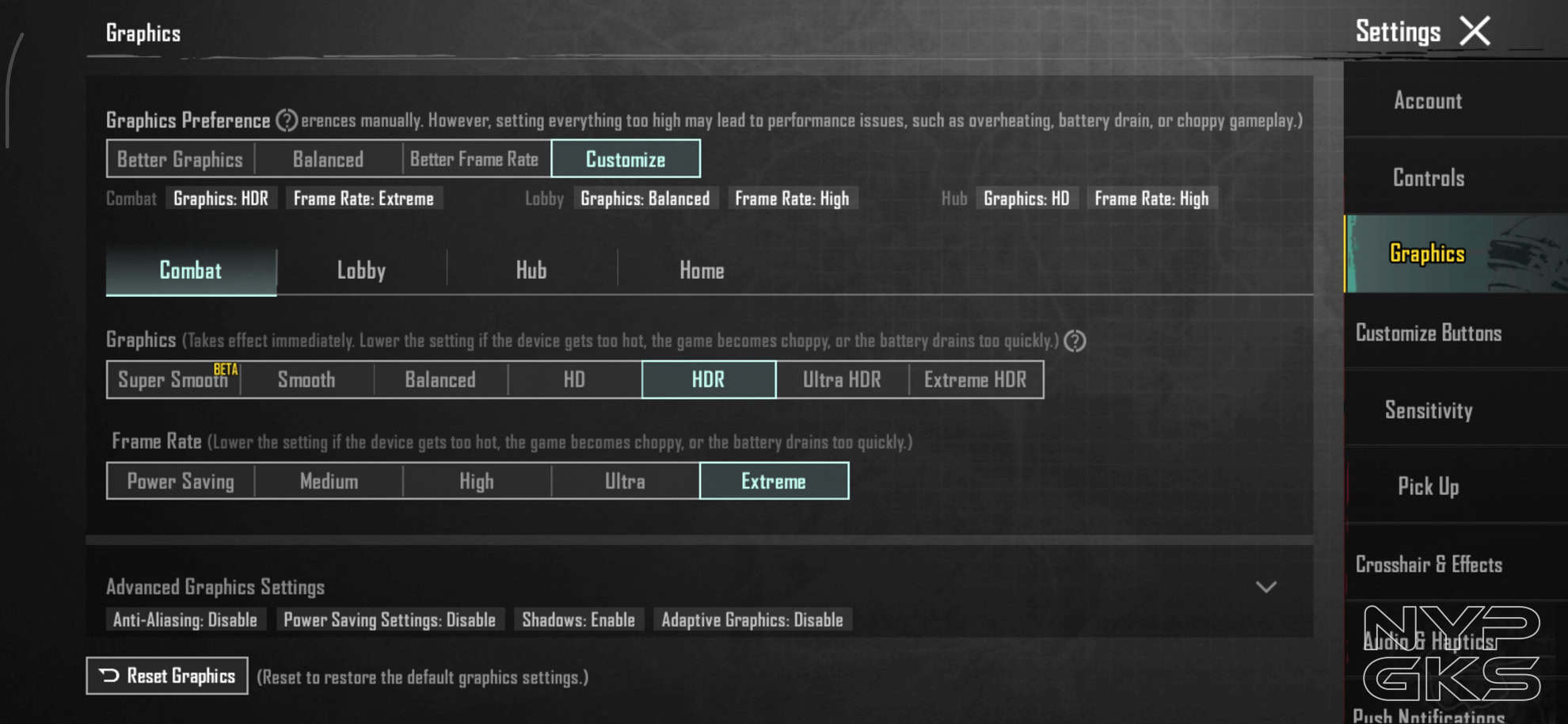
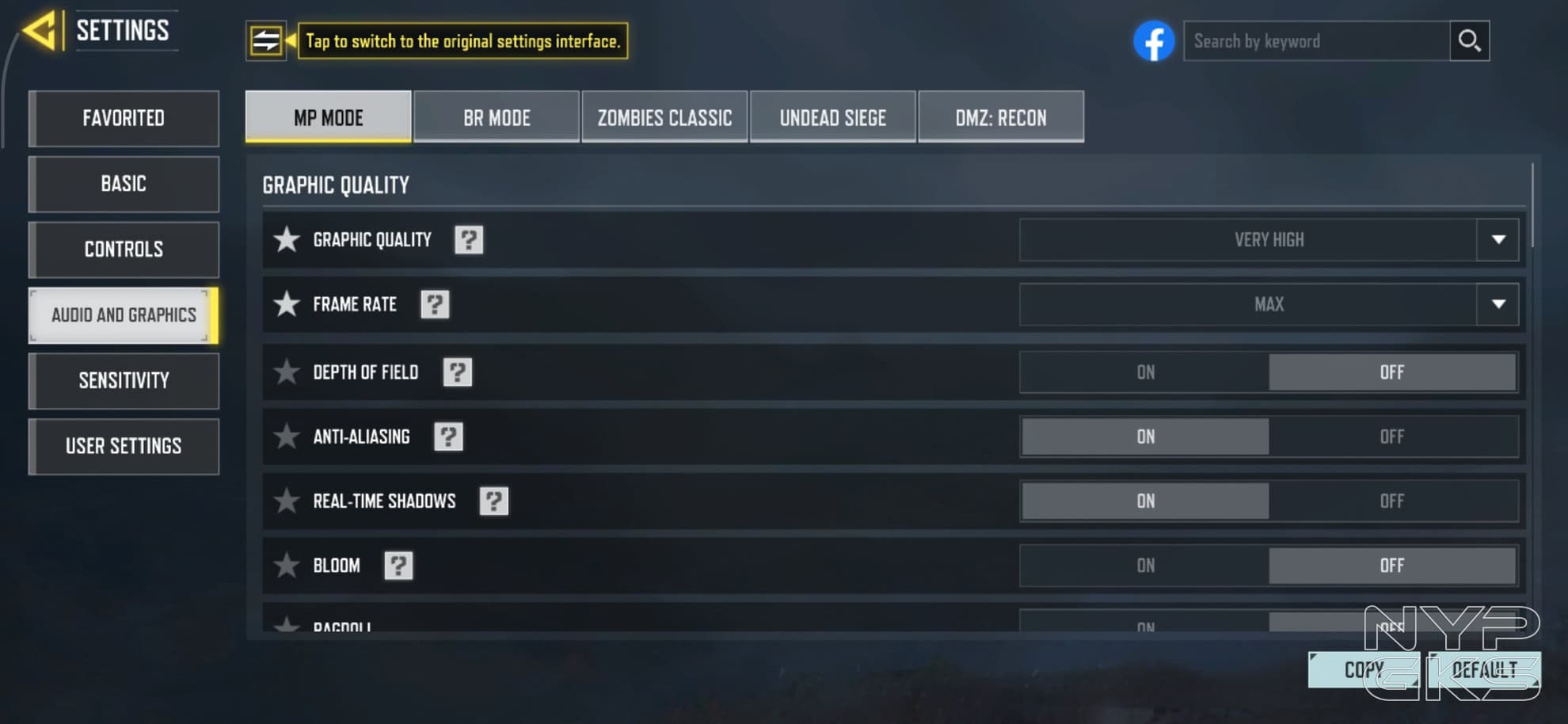
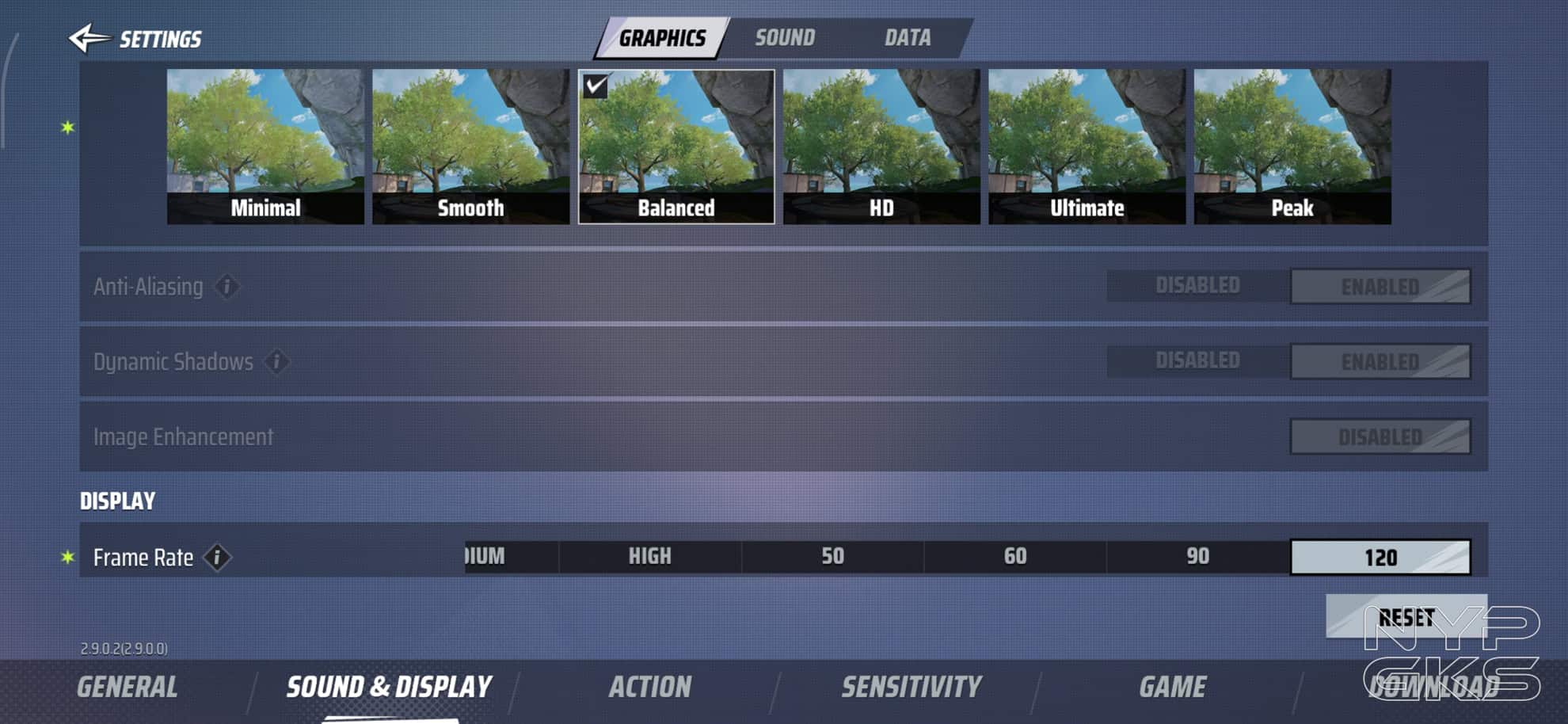
The Note 15 Pro Plus had no issues with popular shooter games. PUBG Mobile was seamless on HDR graphics with Extreme frame rates, and Farlight84 under Balanced to achieve 120 frames.
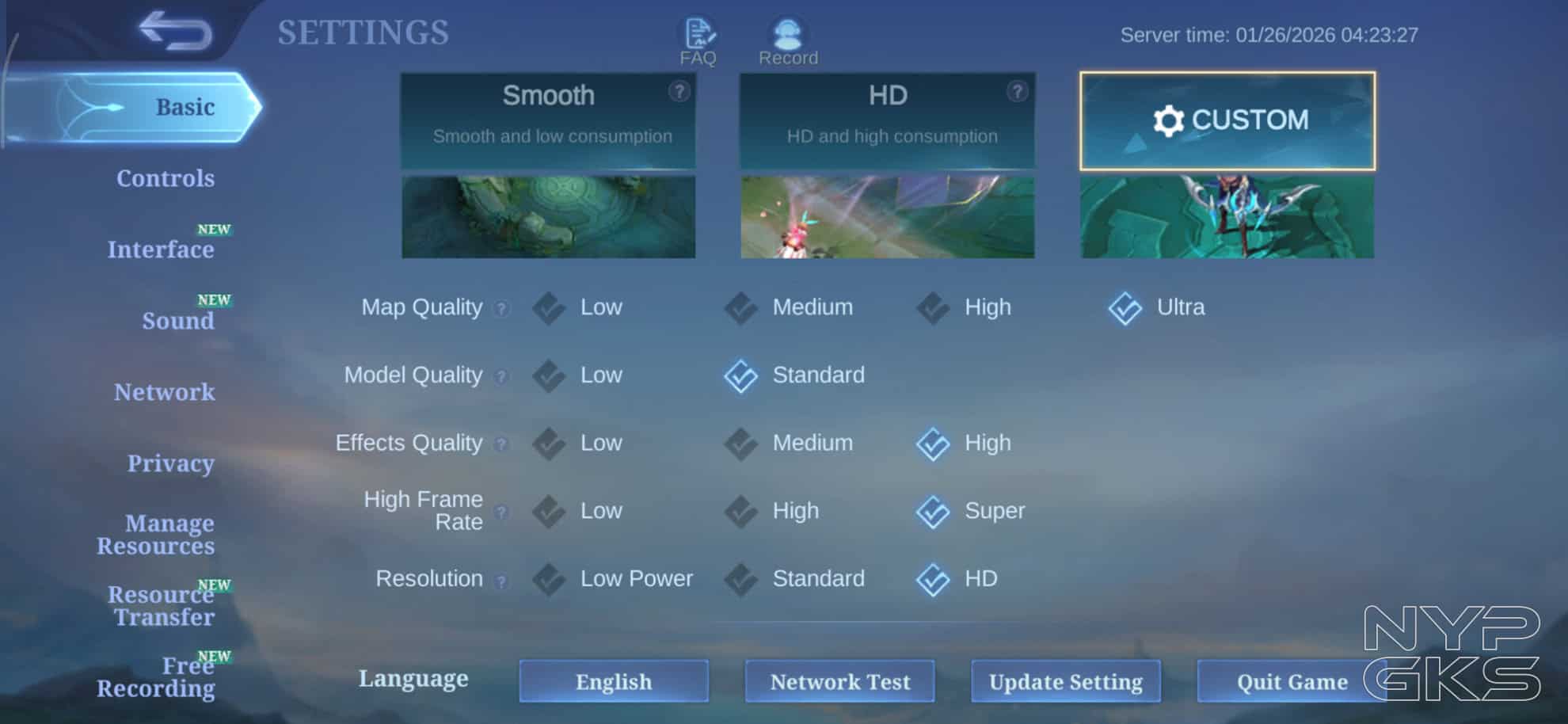
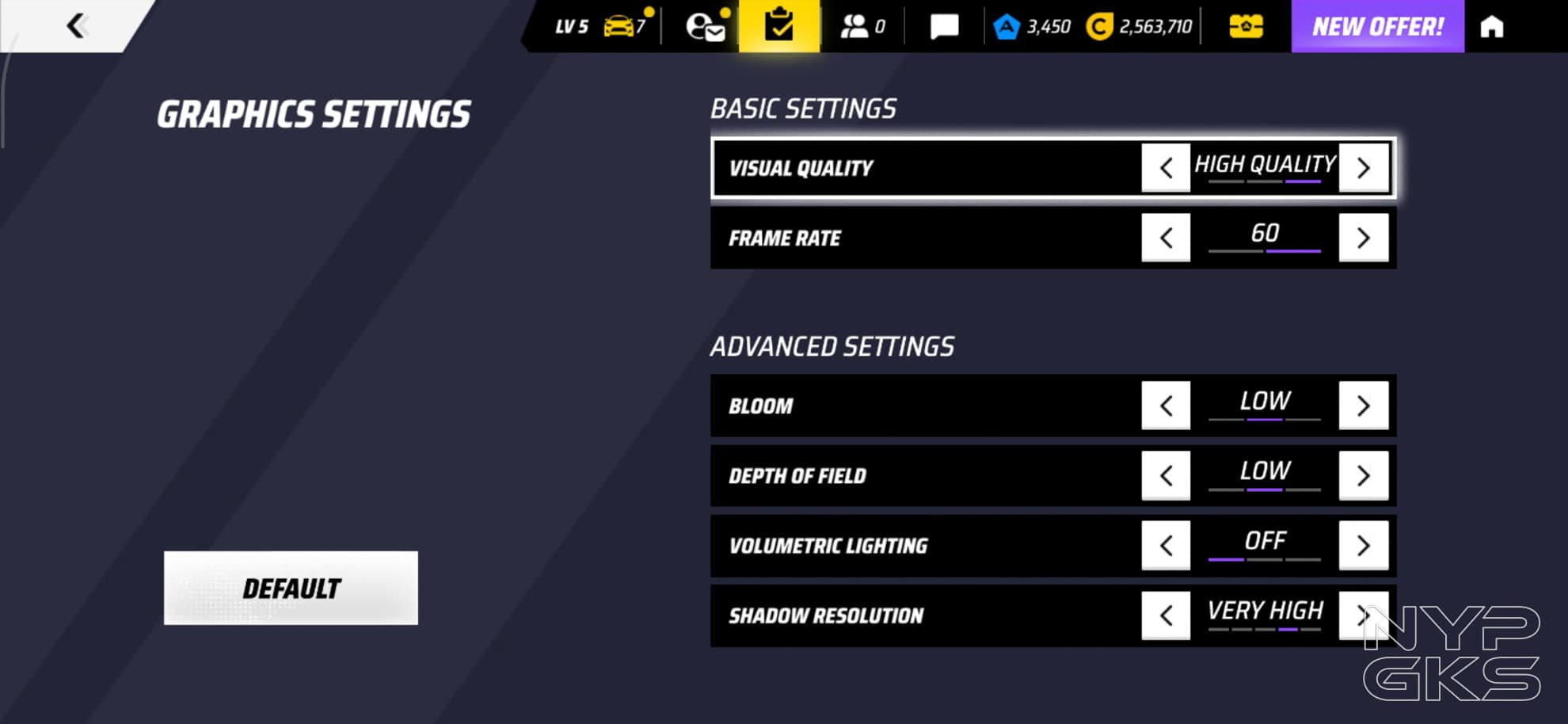
Mobile Legends was very smooth under Ultra map quality with Super frame rates, as Asphalt Legends Unite at High Quality graphics with 60 frames.
The Redmi Note 15 Pro Plus is definitely capable of gaming. But there are definitely other options in this price range already with a proper sub-flagship chip, like the POCO F8 Pro.
| Game | Graphics Settings |
| Genshin Impact | • Render Resolution: Medium • Visual Effects: High • SFX Quality: Medium • FPS: 60 |
| PUBG Mobile | • Graphics Quality: HDR • Frame Rate: Extreme |
| Call of Duty: Mobile | • Graphics Quality: Very High • Frame Rate: Max |
| Farlight84 | • Graphics Quality: Balanced • Frame Rate: 120 |
| Mobile Legends: Bang Bang | • Resolution: HD • Map Quality: Ultra • Frame Rate: Super |
| Asphalt Legends Unite | • Visual Quality: High Quality • Frame Rate: 60 |
Software and User Interface
Despite Android 16-based HyperOS 3 already existing for a while now, the Redmi Note 15 Pro Plus still ships with Android 15-based HyperOS 3. This could mean that Android 16 is already counted as one of the four OS upgrades this phone will get in the future.
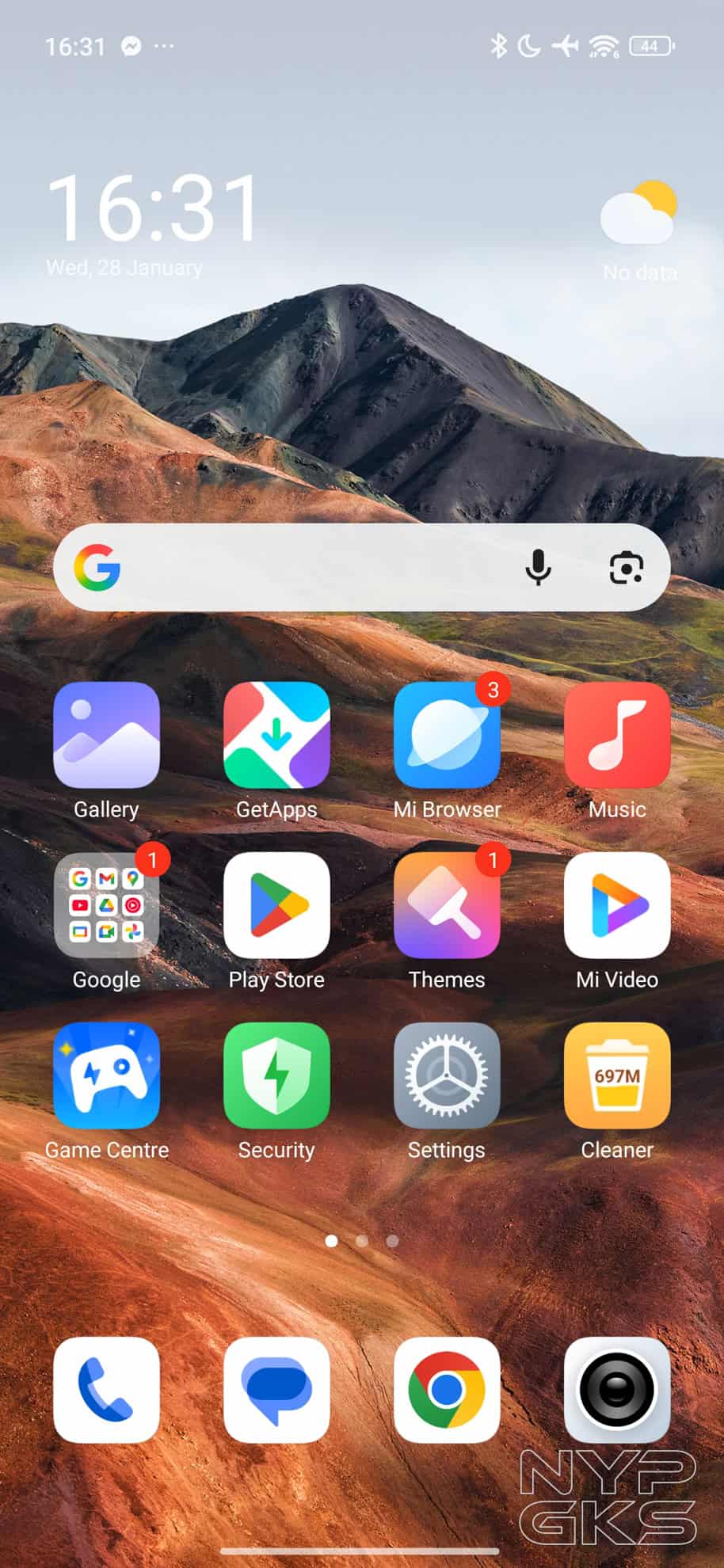
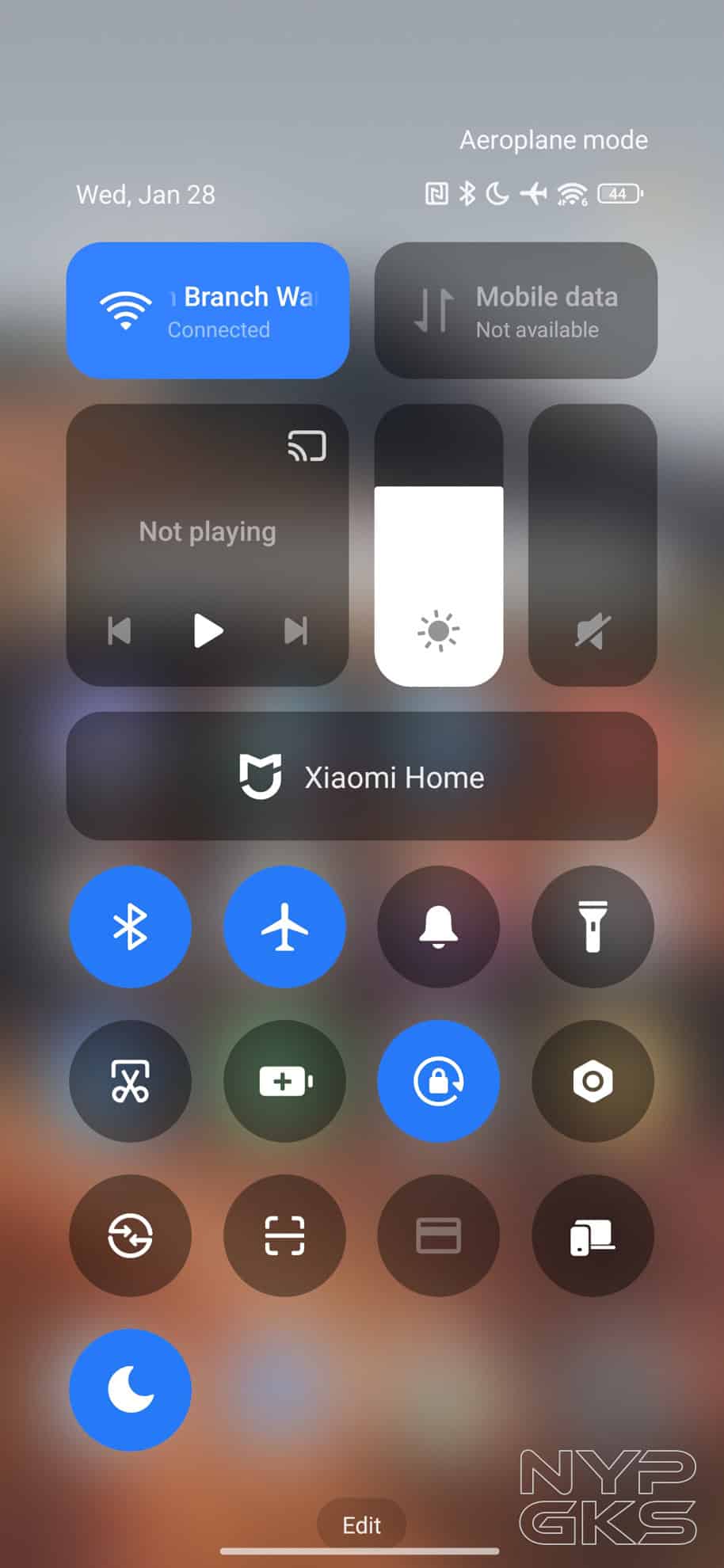
On the upside, it will also receive 6 years of security patches, great for futureproofing. HyperOS 2 is still great for daily use. But let’s just hope it gets the newer OS version as early as possible.
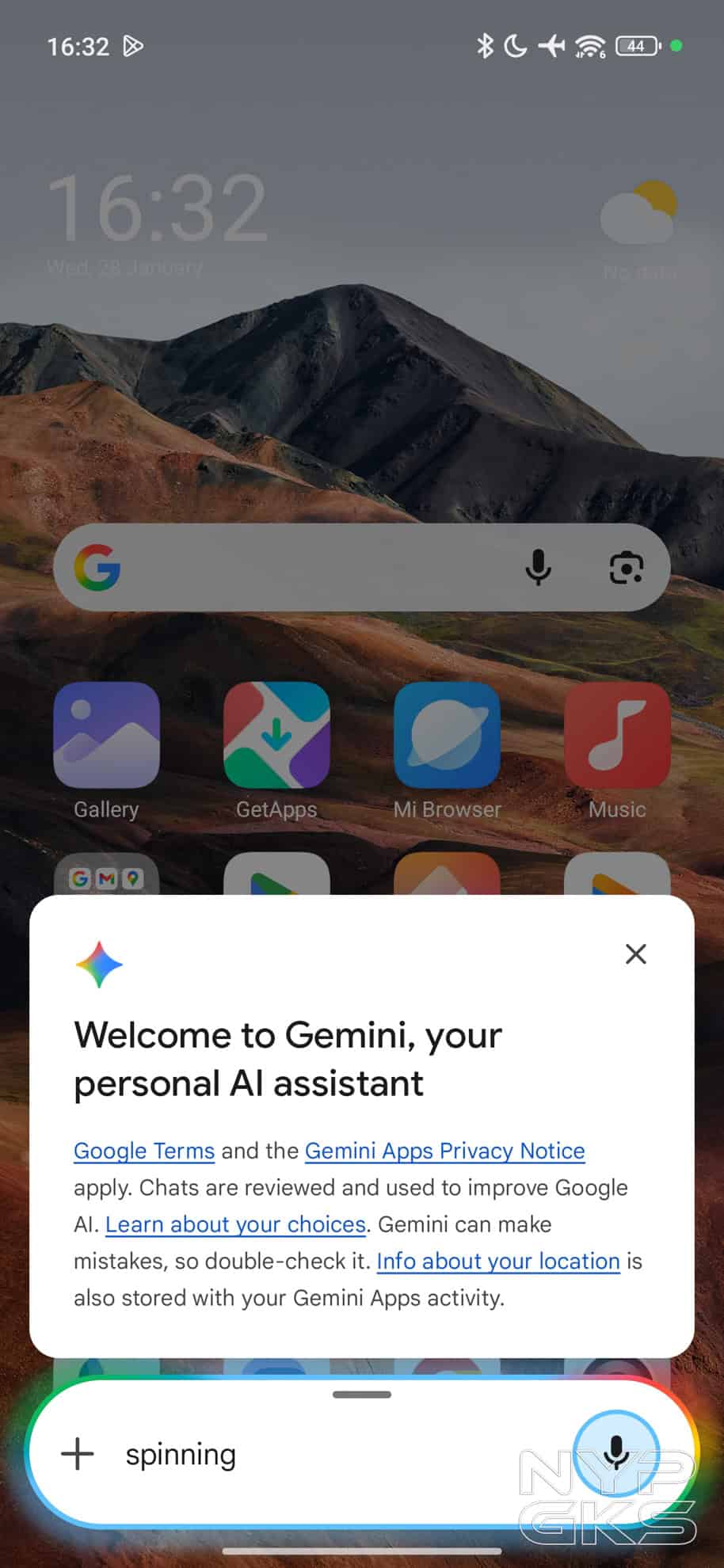

As you wait for HyperOS 3, HyperOS 2 already has plenty of AI features. There’s Google Gemini as the standard assistant, AI Writer, Dynamic Wallpapers, AI Interpreter, and more.
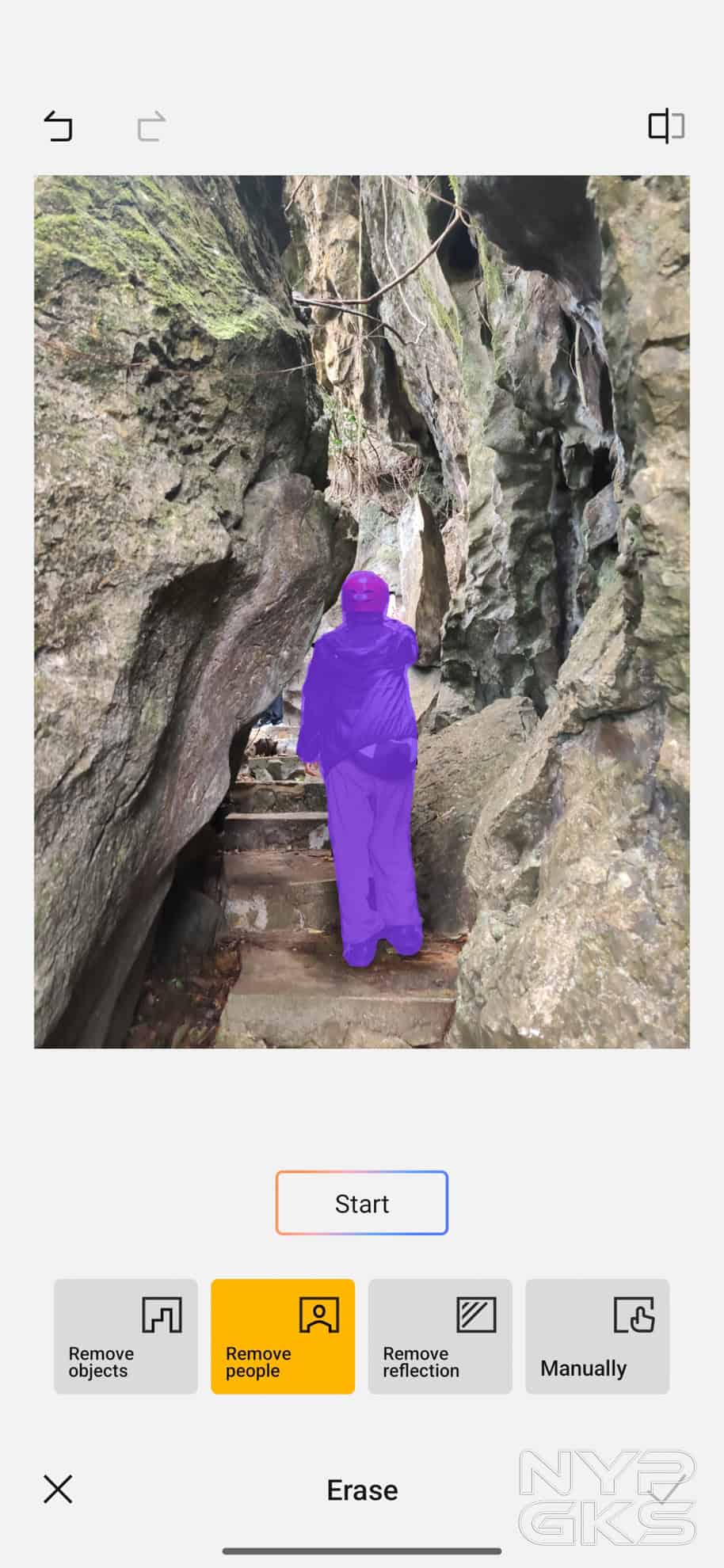
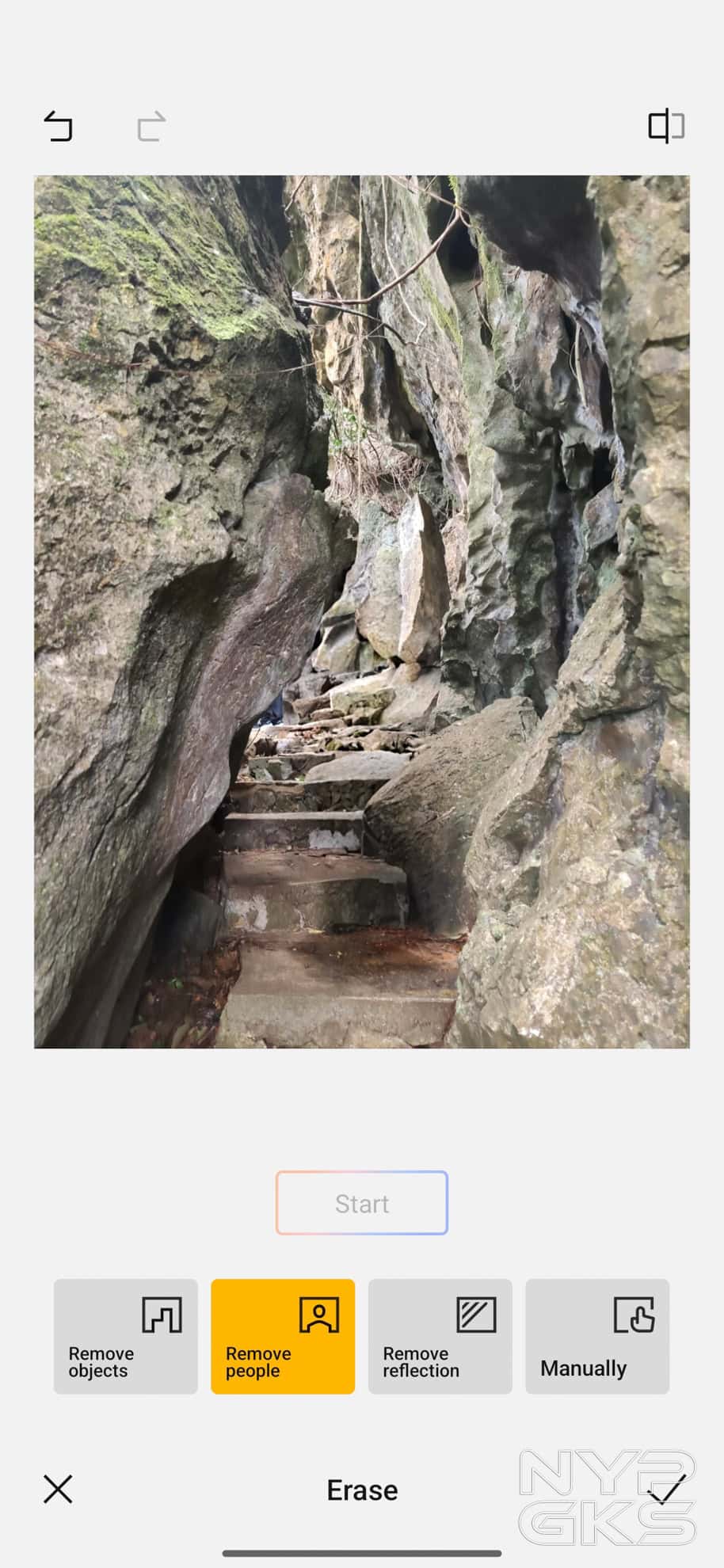
You also have a Gallery with many AI features like the Eraser, Image Expander, Sky Enhancer, Bokeh, and Background Separation. However, it’s a bit annoying that you have to sign in to a Xiaomi account to use these features.
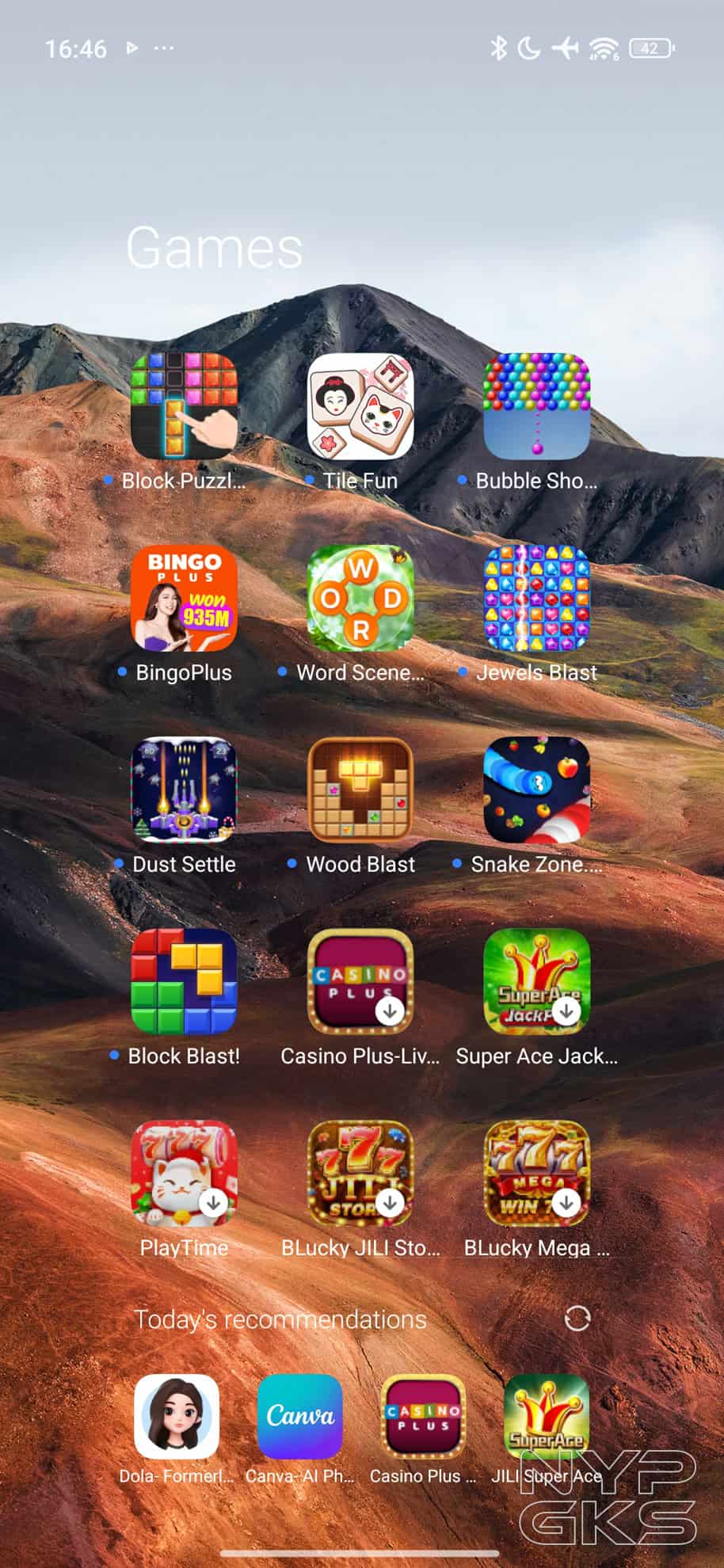
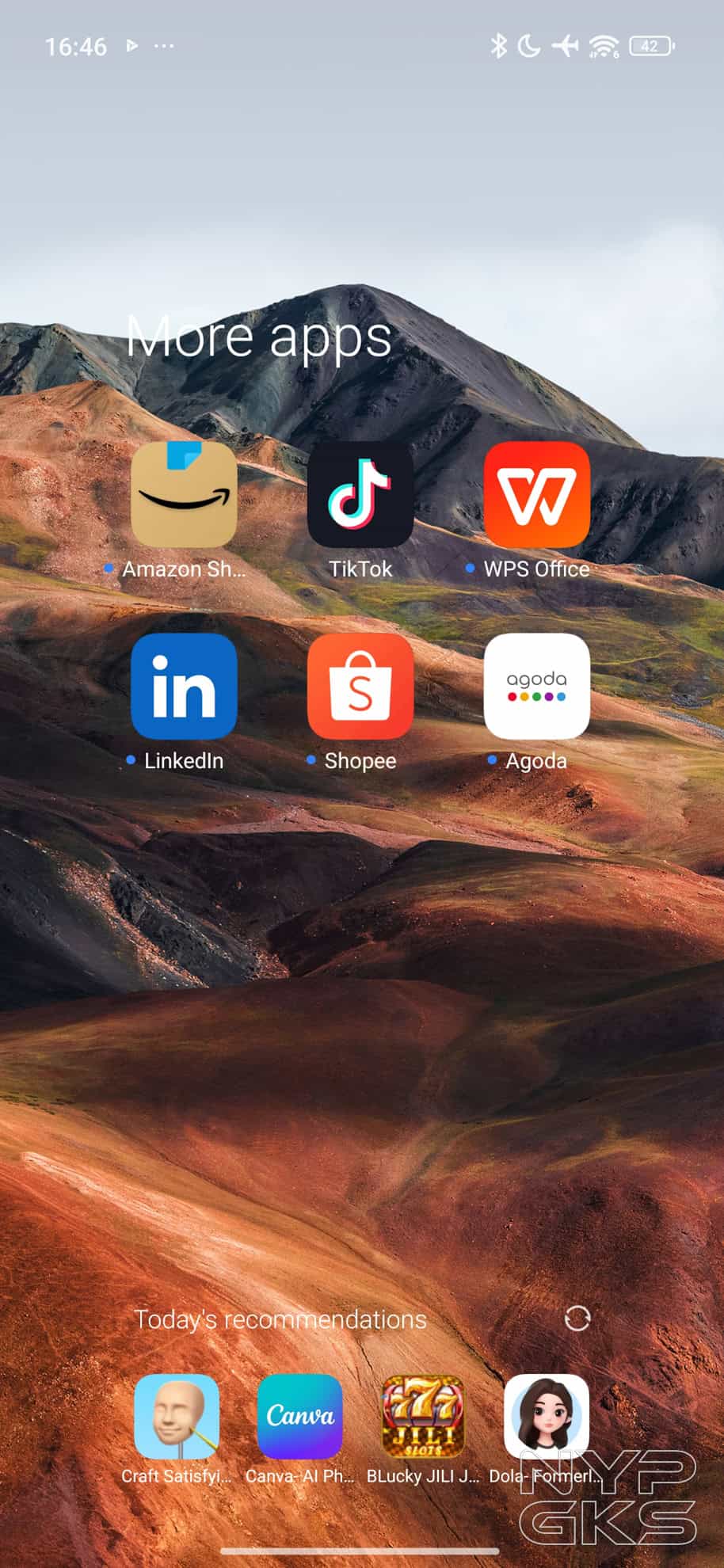
We’re not a big fan of the bloatware, which this phone has a lot of. You can remove them, thankfully, but you have to painstakingly do it one-by-one.
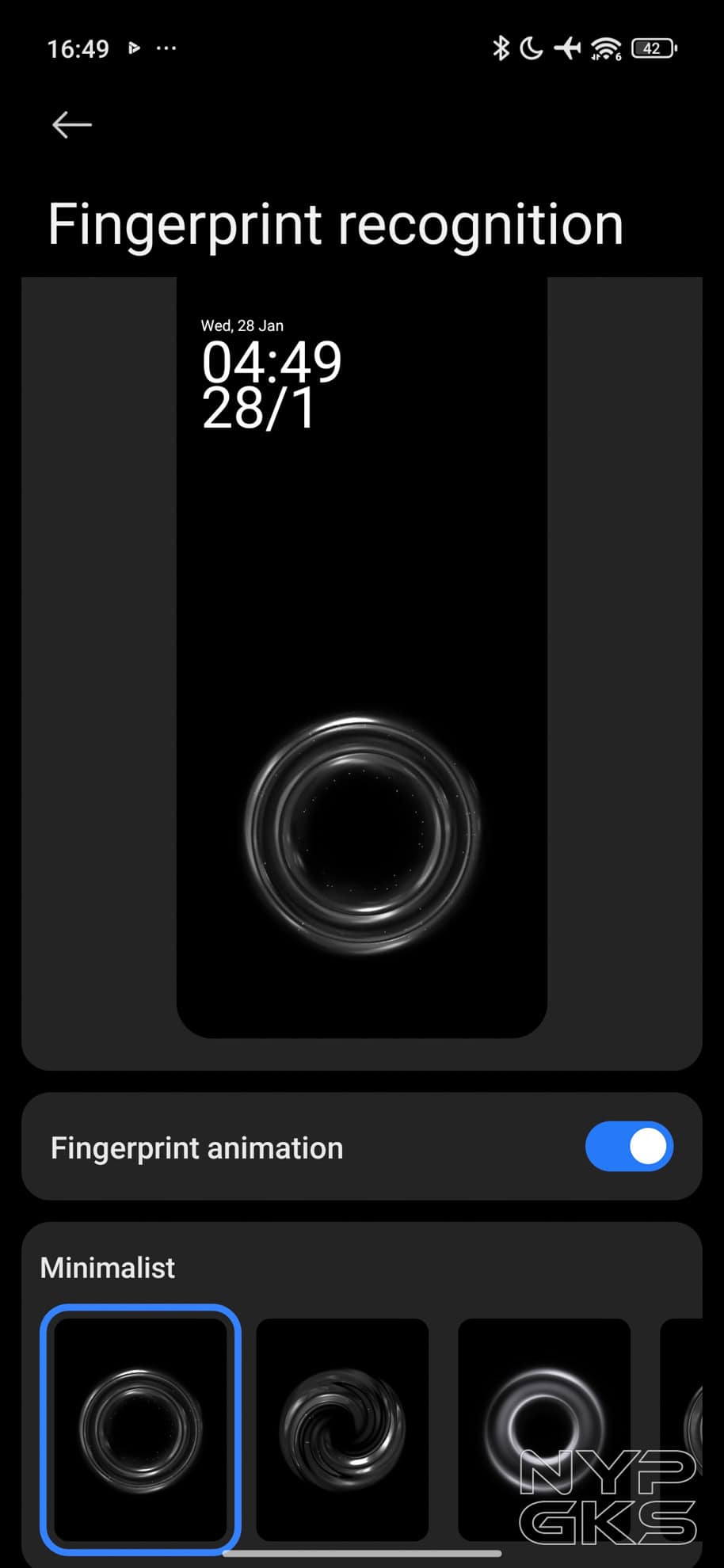
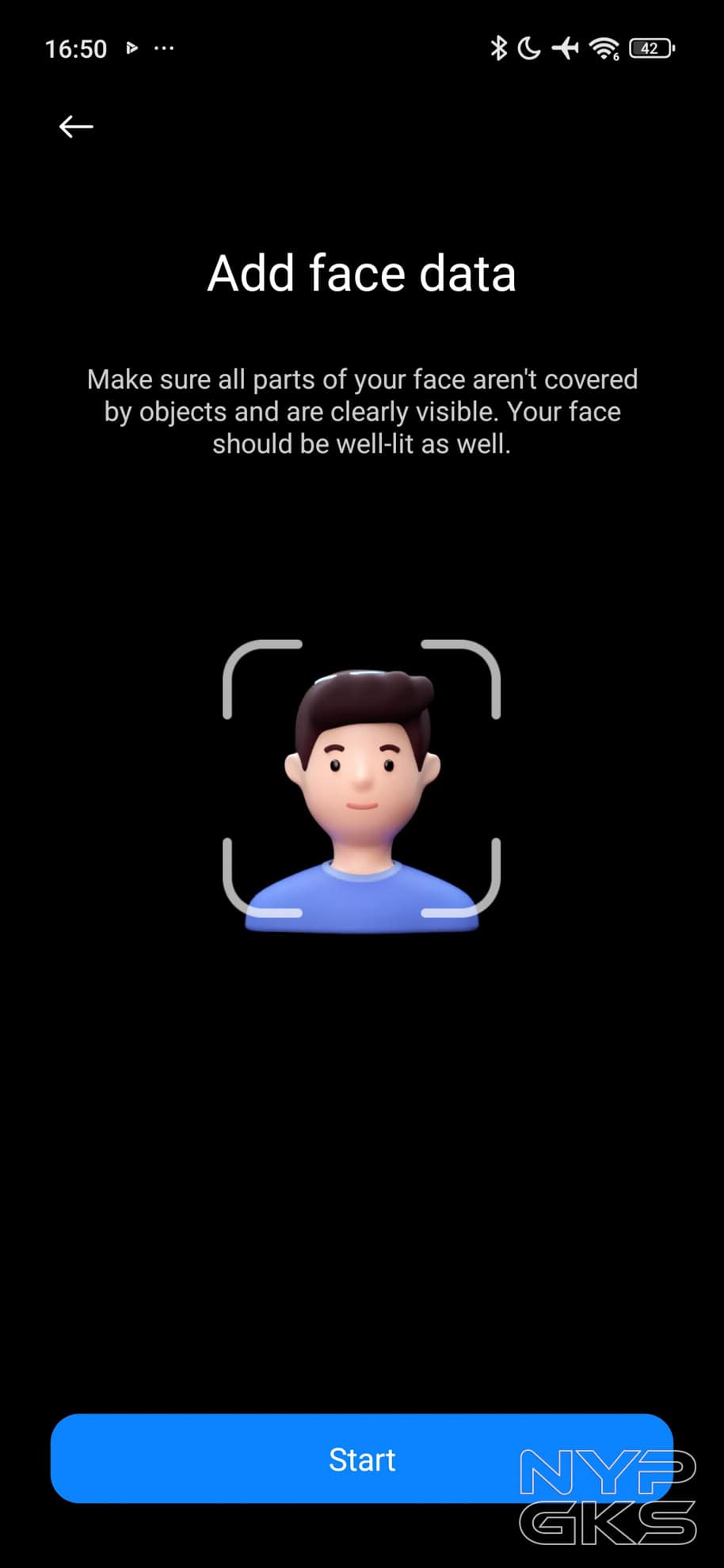
We tested both the ultrasonic fingerprint scanner and face unlock for security, and they work fine and fast. You can also use the fingerprint scanner to lock apps or press-and-hold it to show shortcut buttons.
Cameras
The Redmi Note 15 Pro+ 5G has a 200-megapixel ISOCELL sensor with an f/1.7 aperture, optical image stabilization, and multi-directional PDAF. We also have an 8-megapixel ultra-wide lens and a 32-megapixel lens for selfies. They have removed the macro lens from its predecessor.
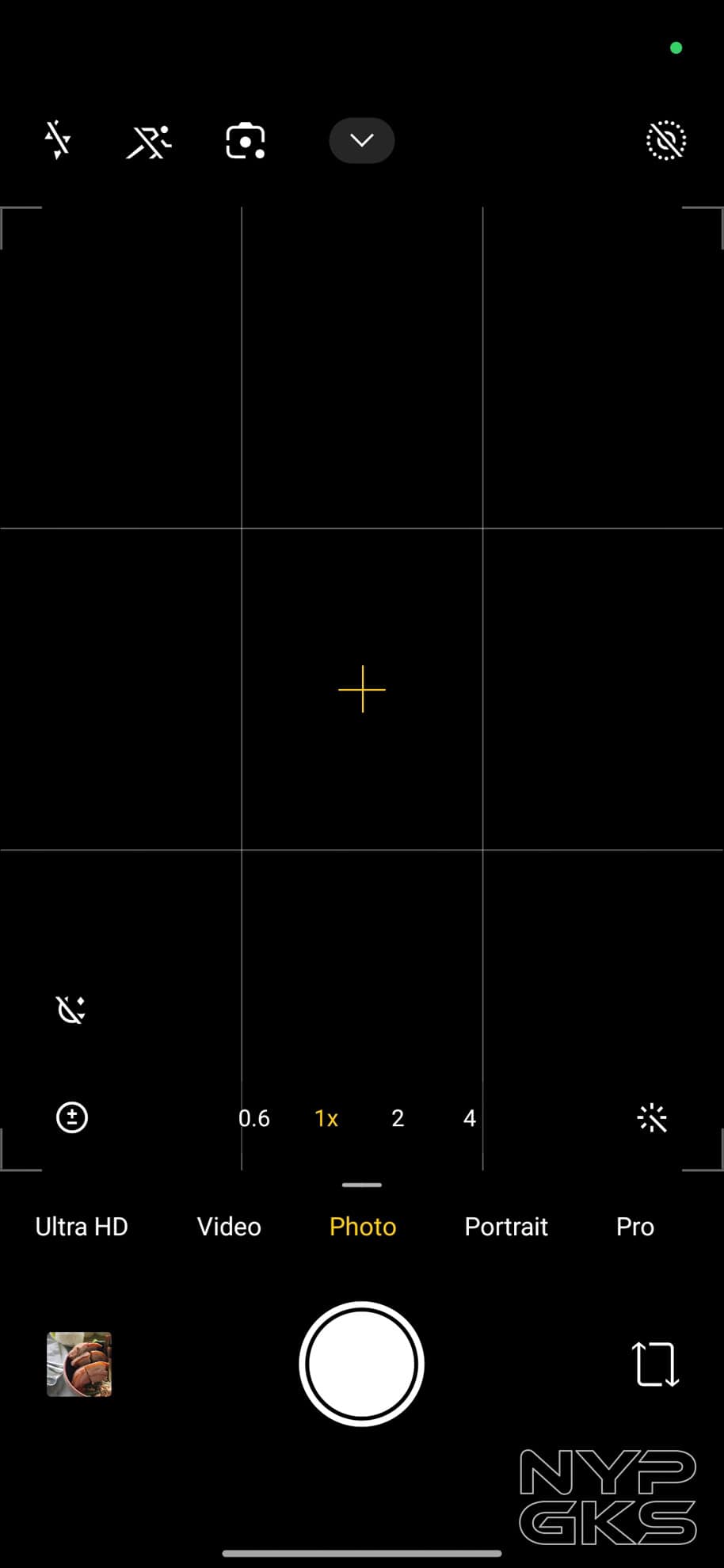
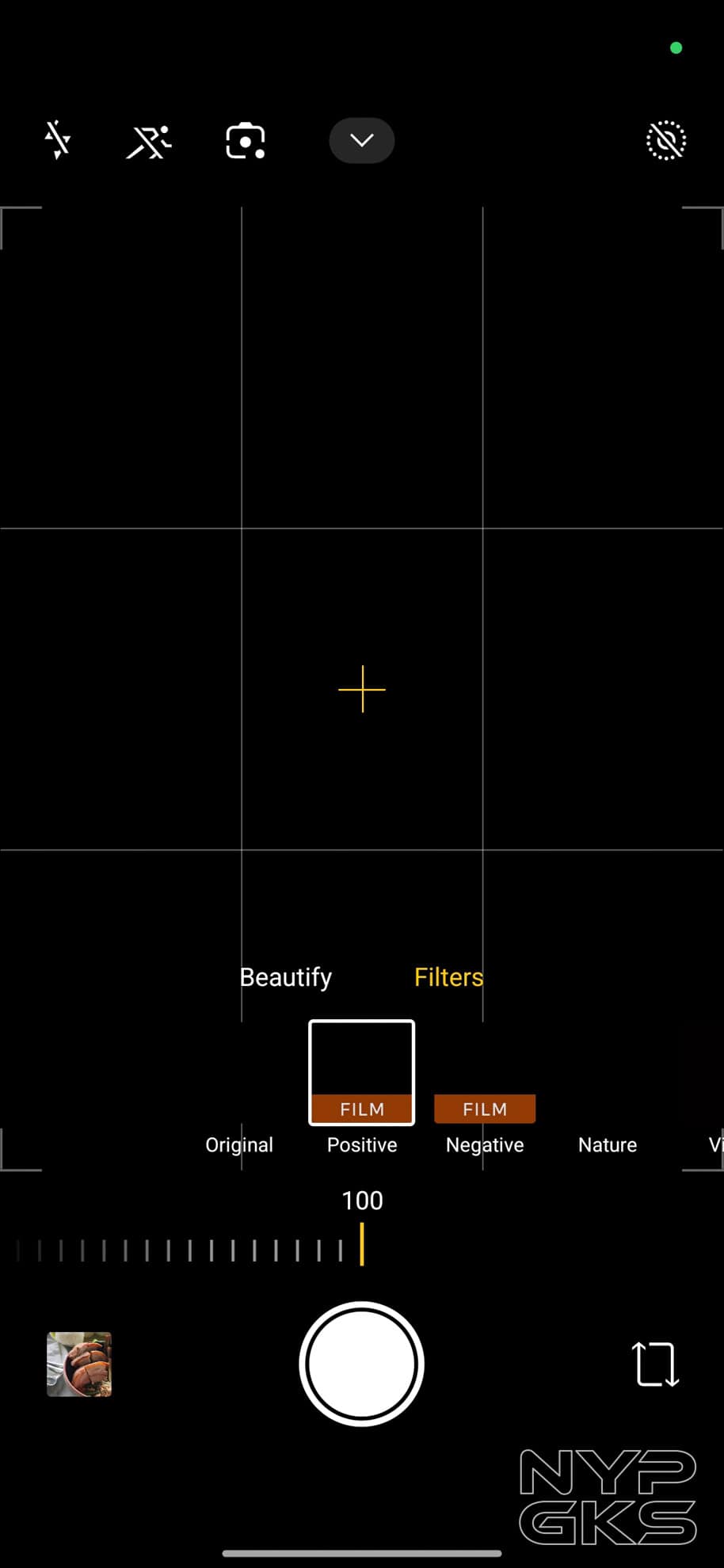
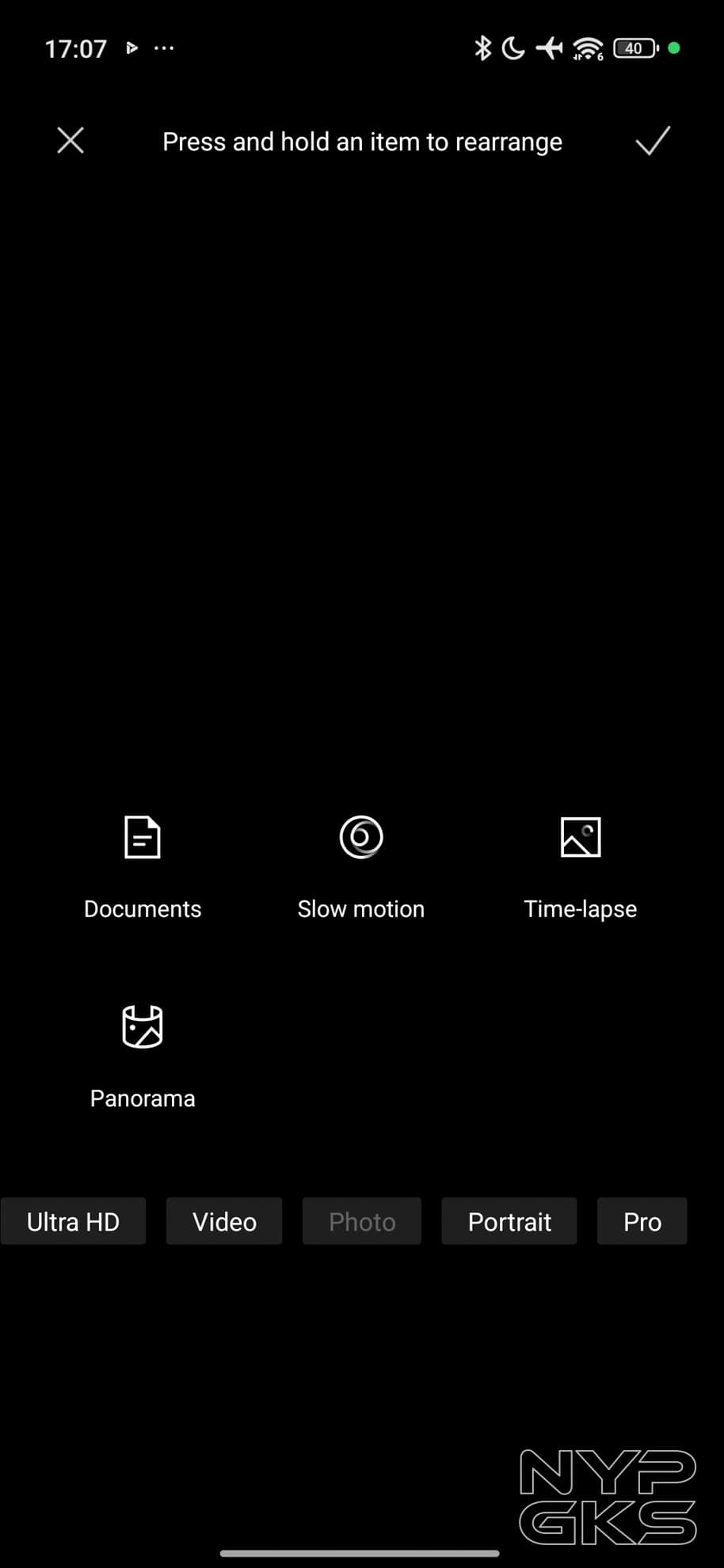
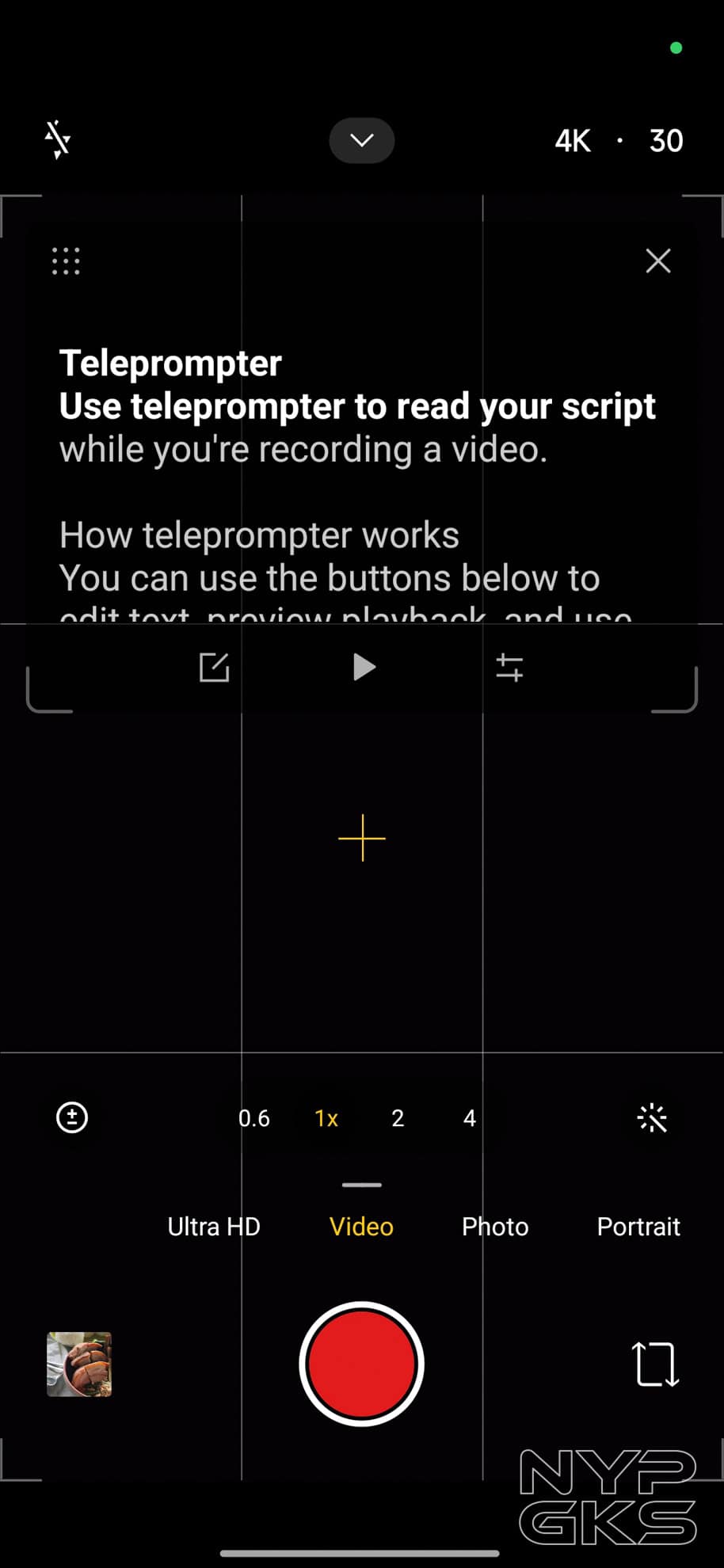
It has a feature-rich and customizable camera app with features like Motion detection, built-in filters, a teleprompter for videos, and a Pro mode.
You can shoot videos in H.264 (High Compatibility) and HEVC (High Efficiency) formats. You can also monitor sound through wired earphones. Video resolution options are 720p (30fps), 1080p (30fps, 60fps), and 4K (30fps). Slow-mo video is also available: 720p (120fps, 240fps) and 1080p (120fps).
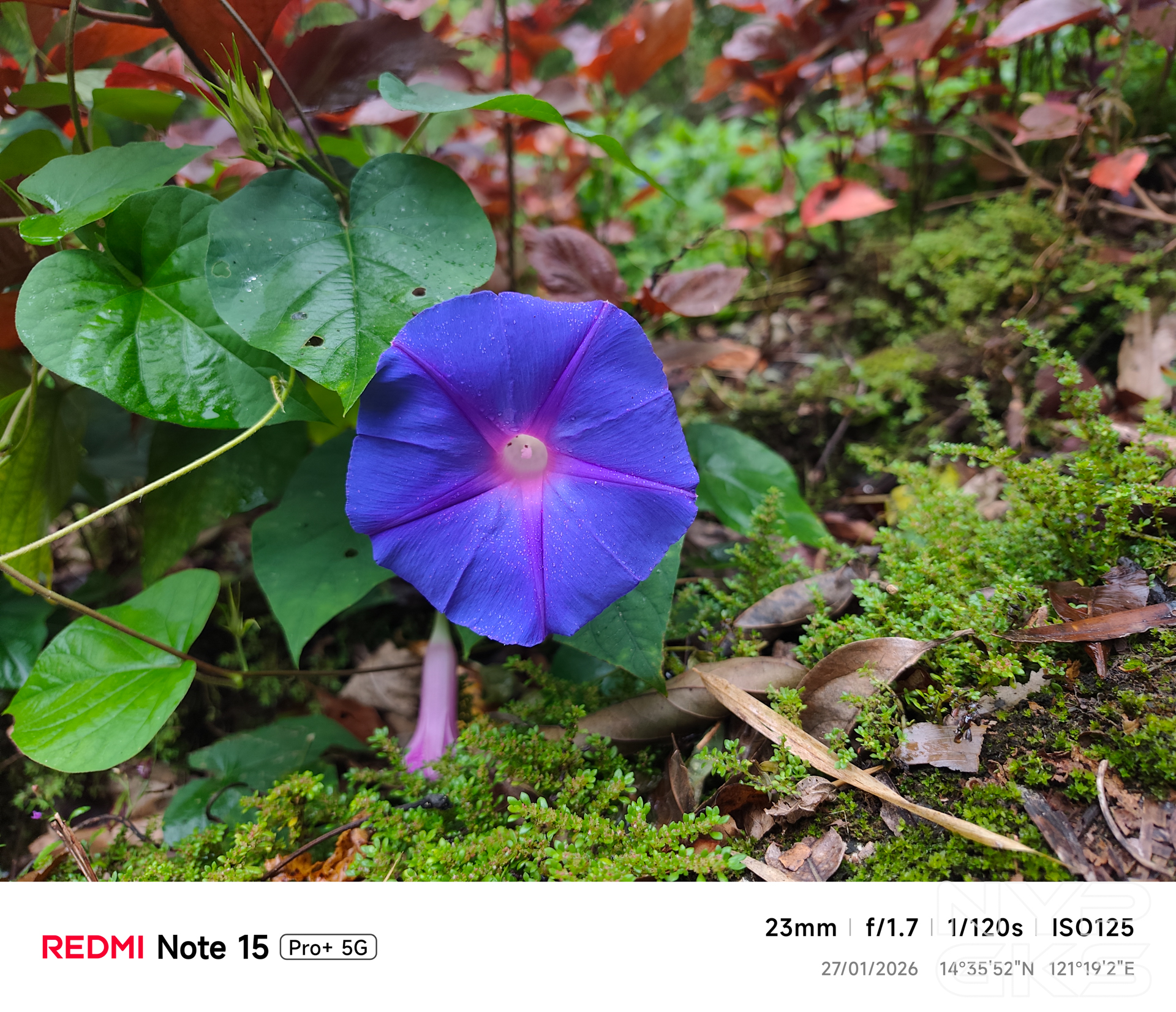
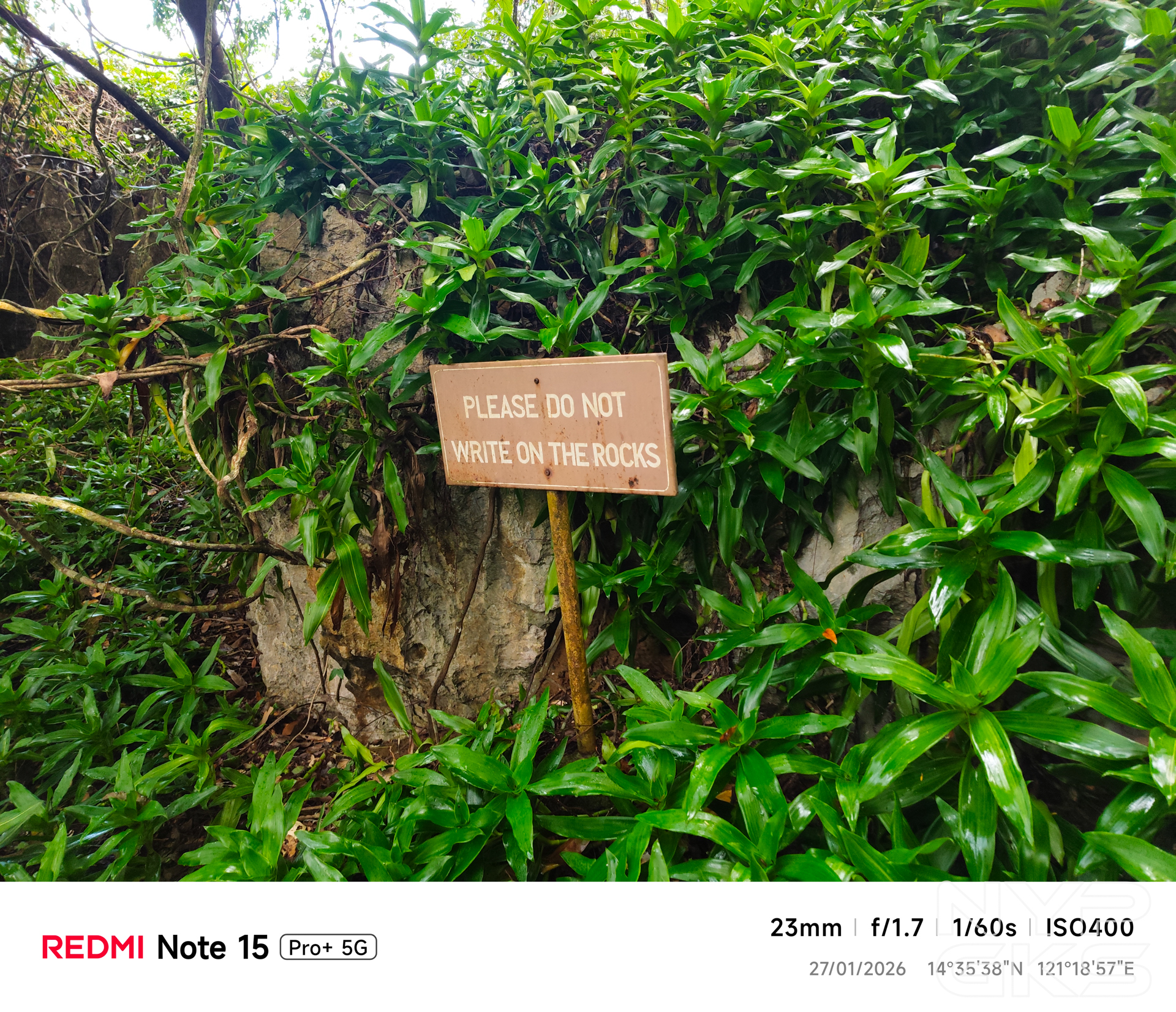
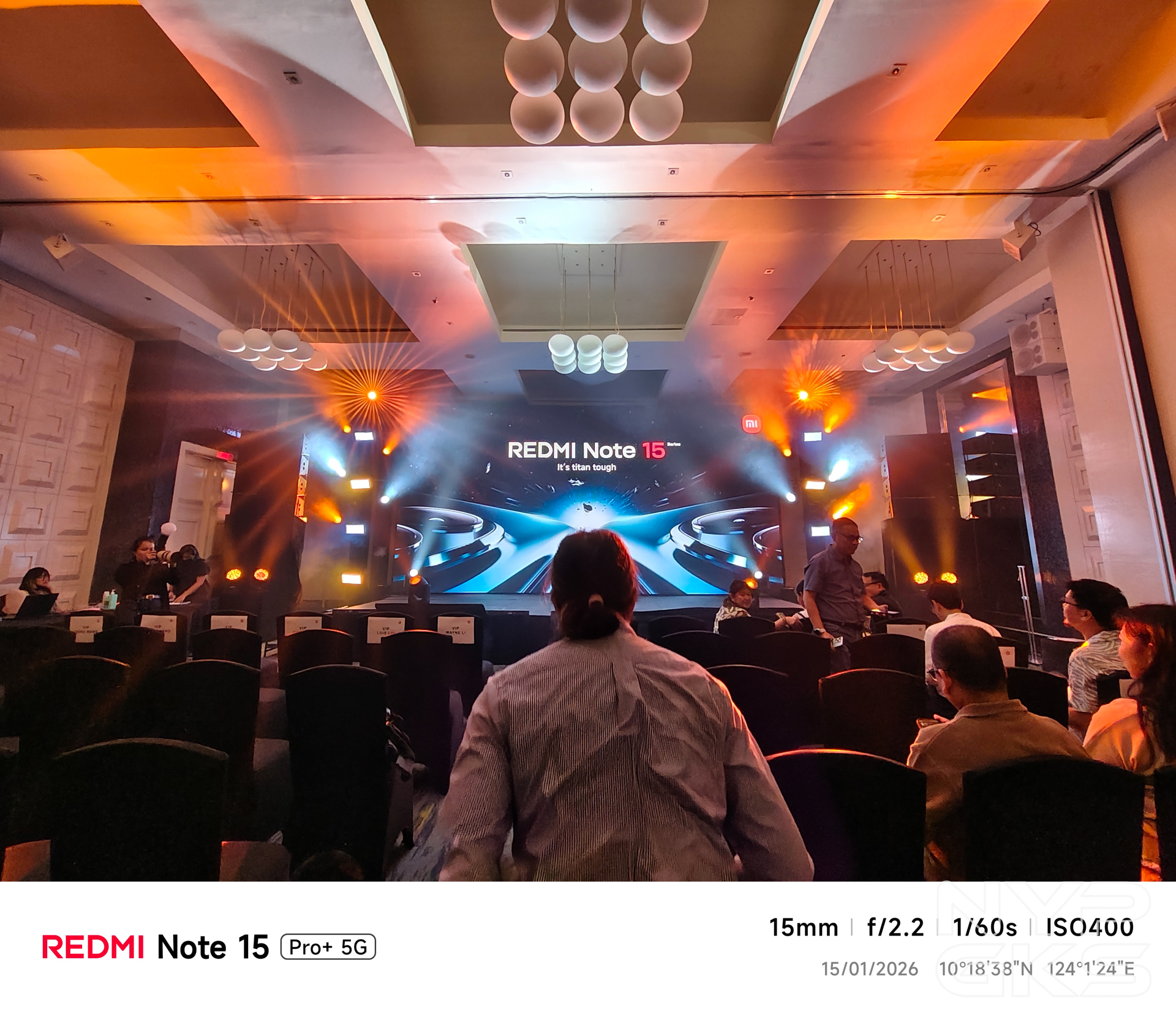
Daylight photos from the 200-megapixel main camera are good, but nothing to brag about. They capture photos with natural colors, nice contrast, and ample details.
However, the dynamic range is off a lot of times. Highlights are either overblown or clipped in some scenarios. Images could also be sharper when zoomed in.








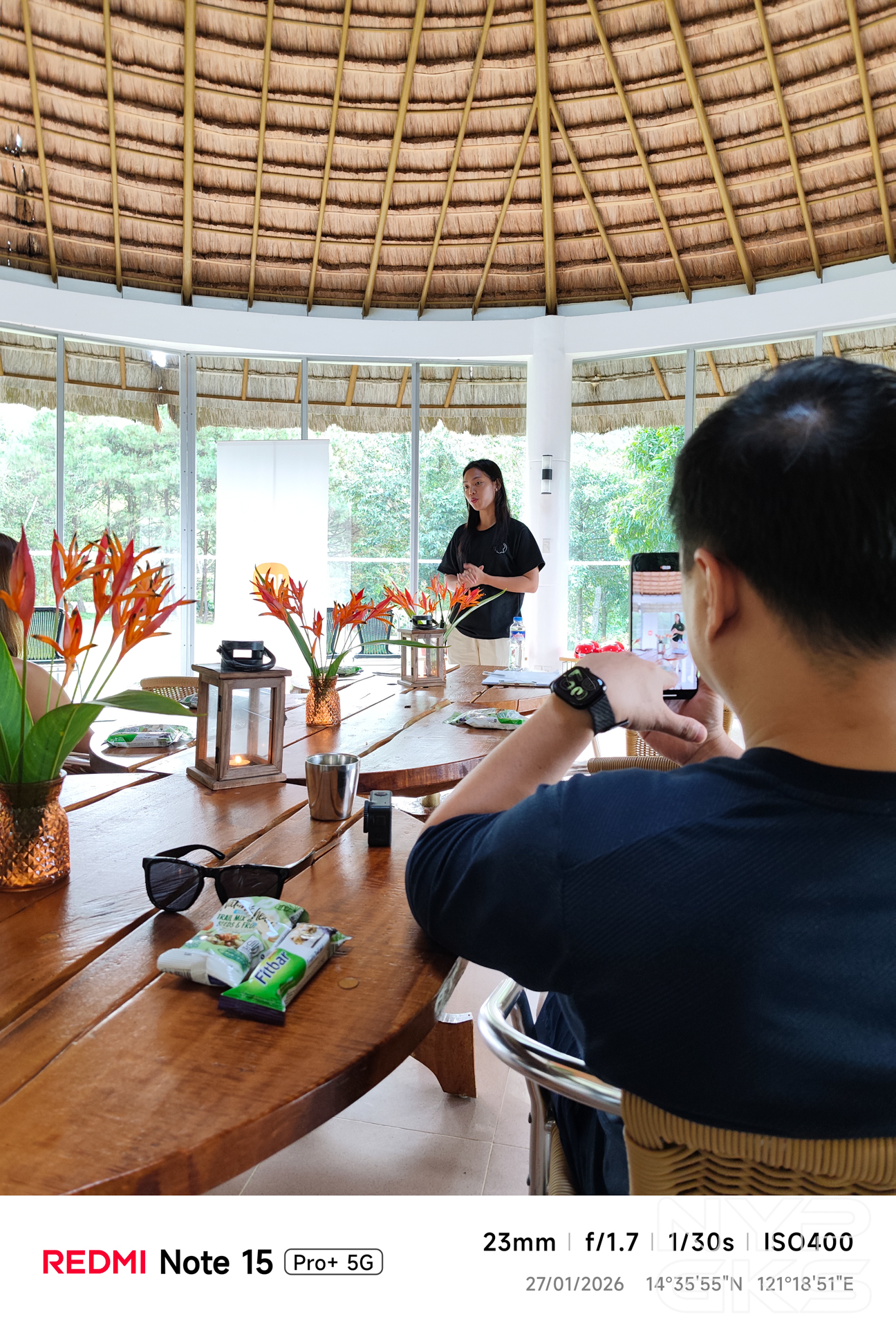
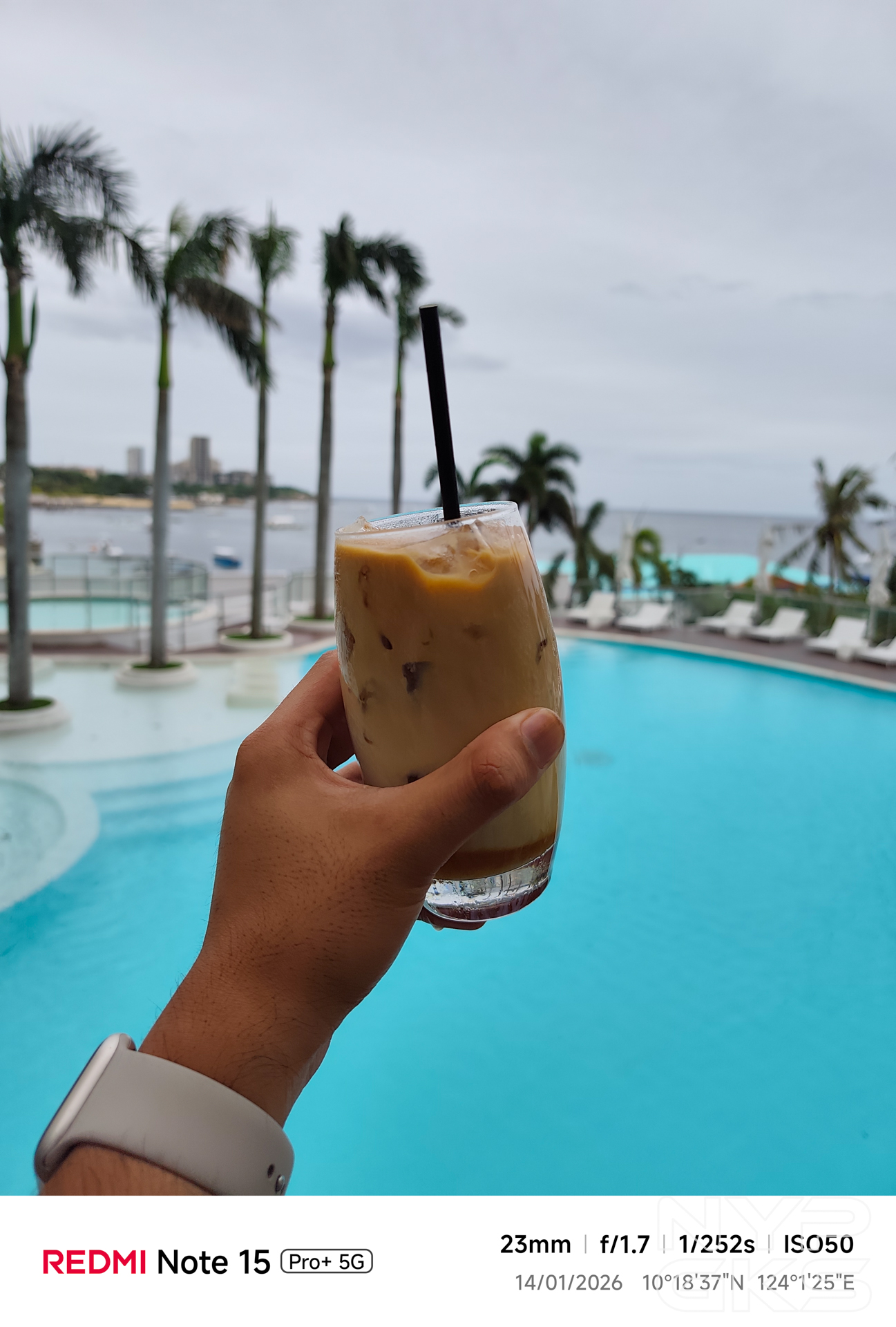
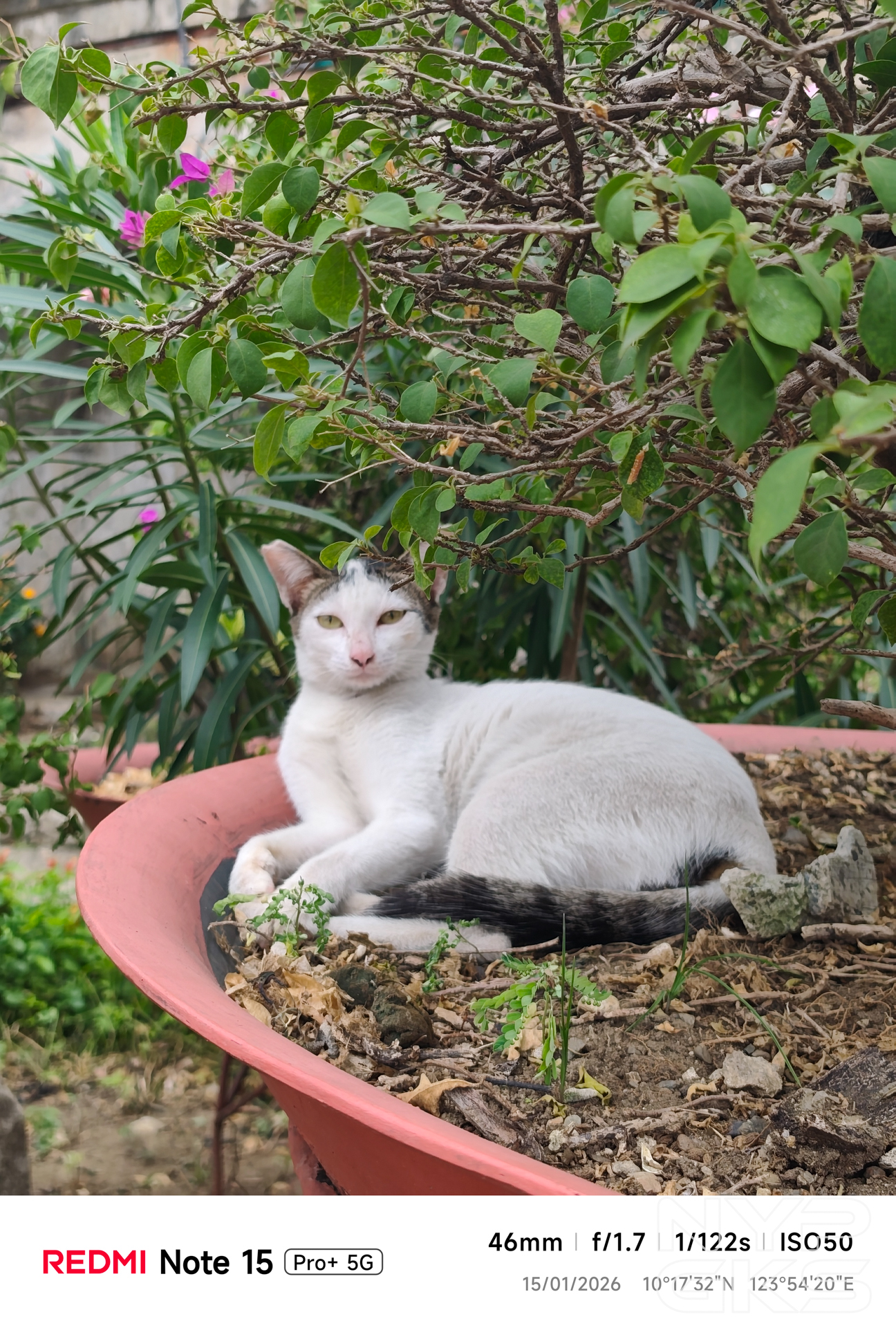
The pixel-dense sensor allows for 2x zoom. The quality is passable, but it’s far inferior to having a dedicated telephoto lens, which we really wish it had.







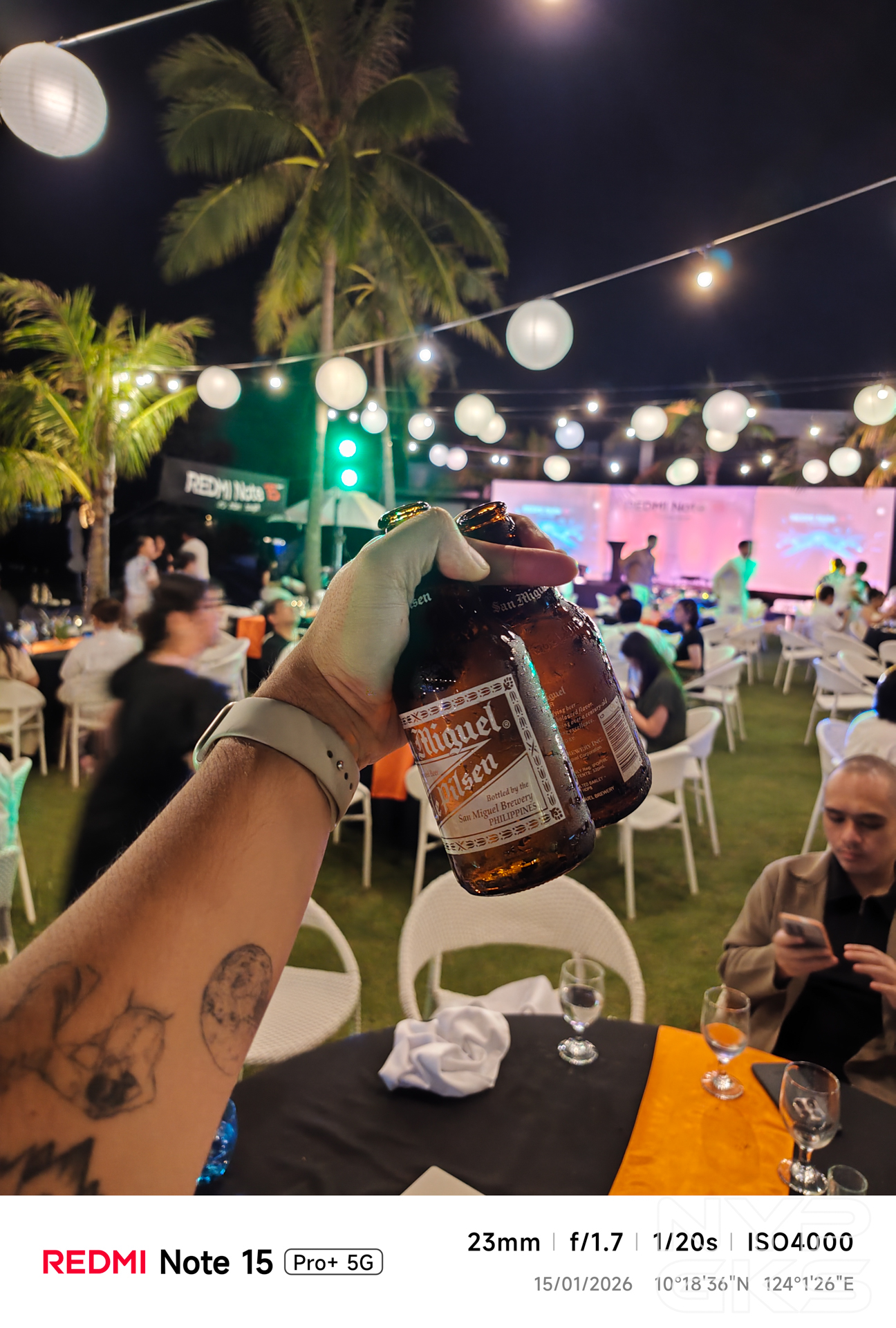
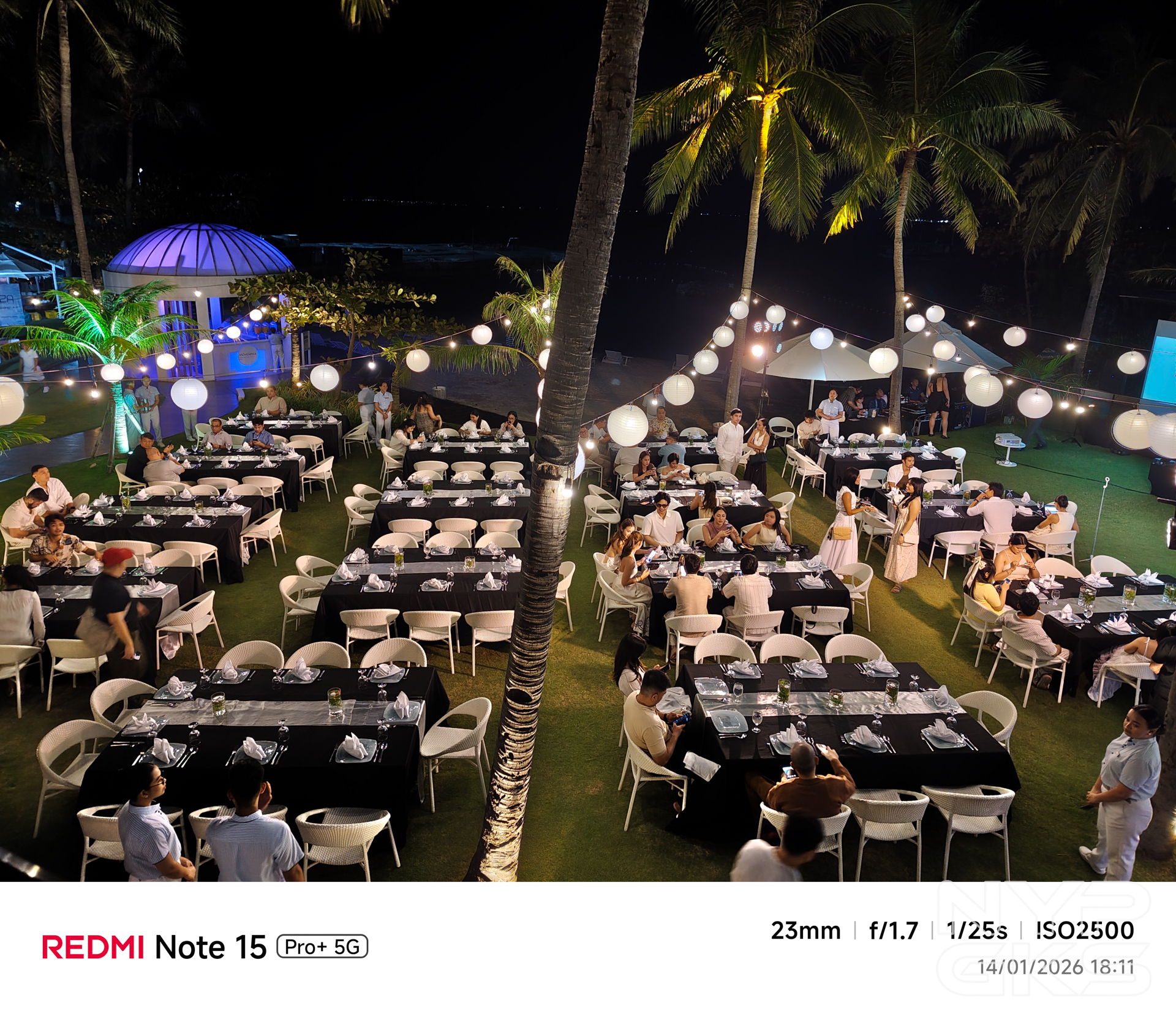
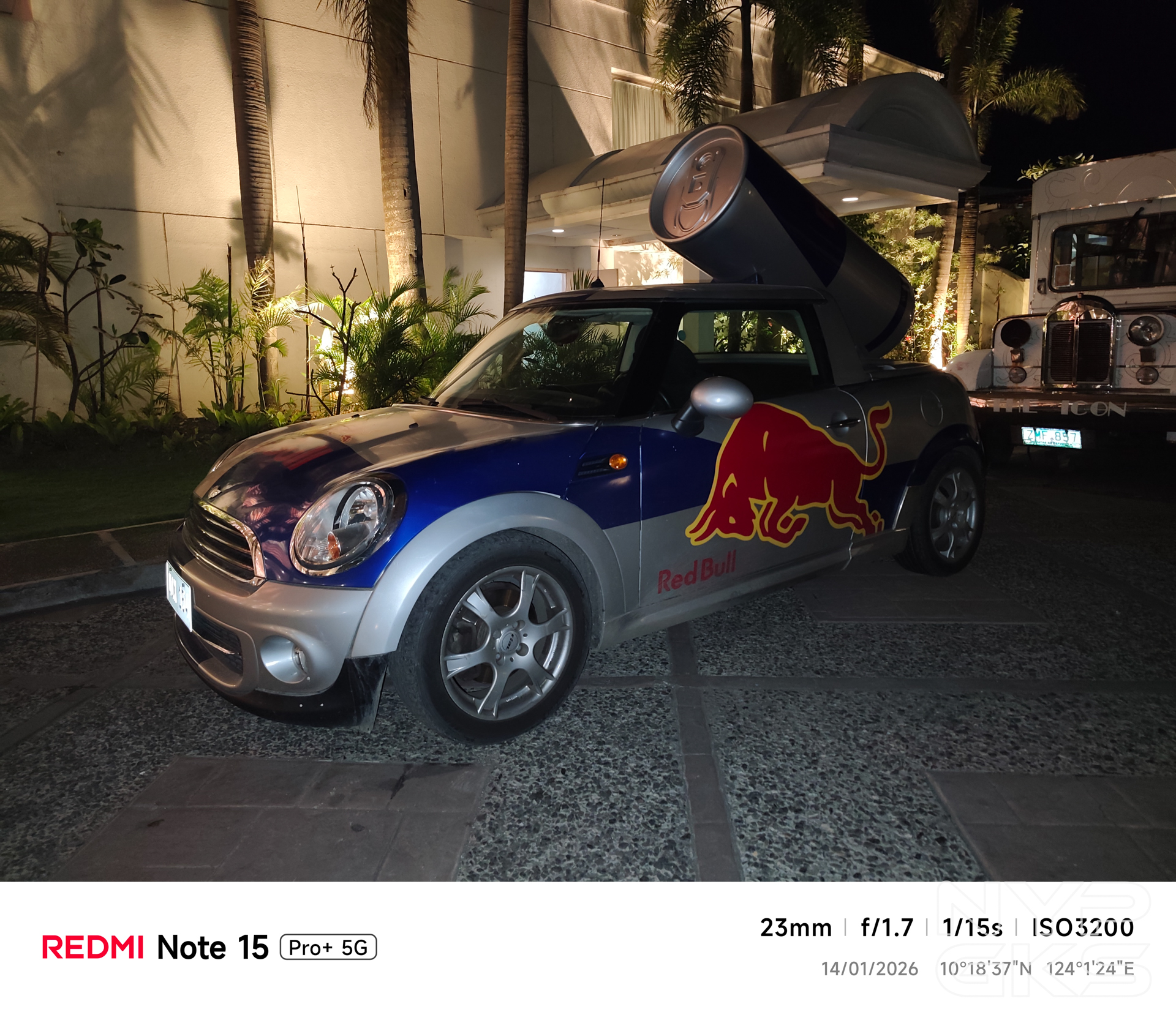
Low-light performance, while still suffering from sharpness issues, looks great. Colors pop, and the dynamic range looks better.





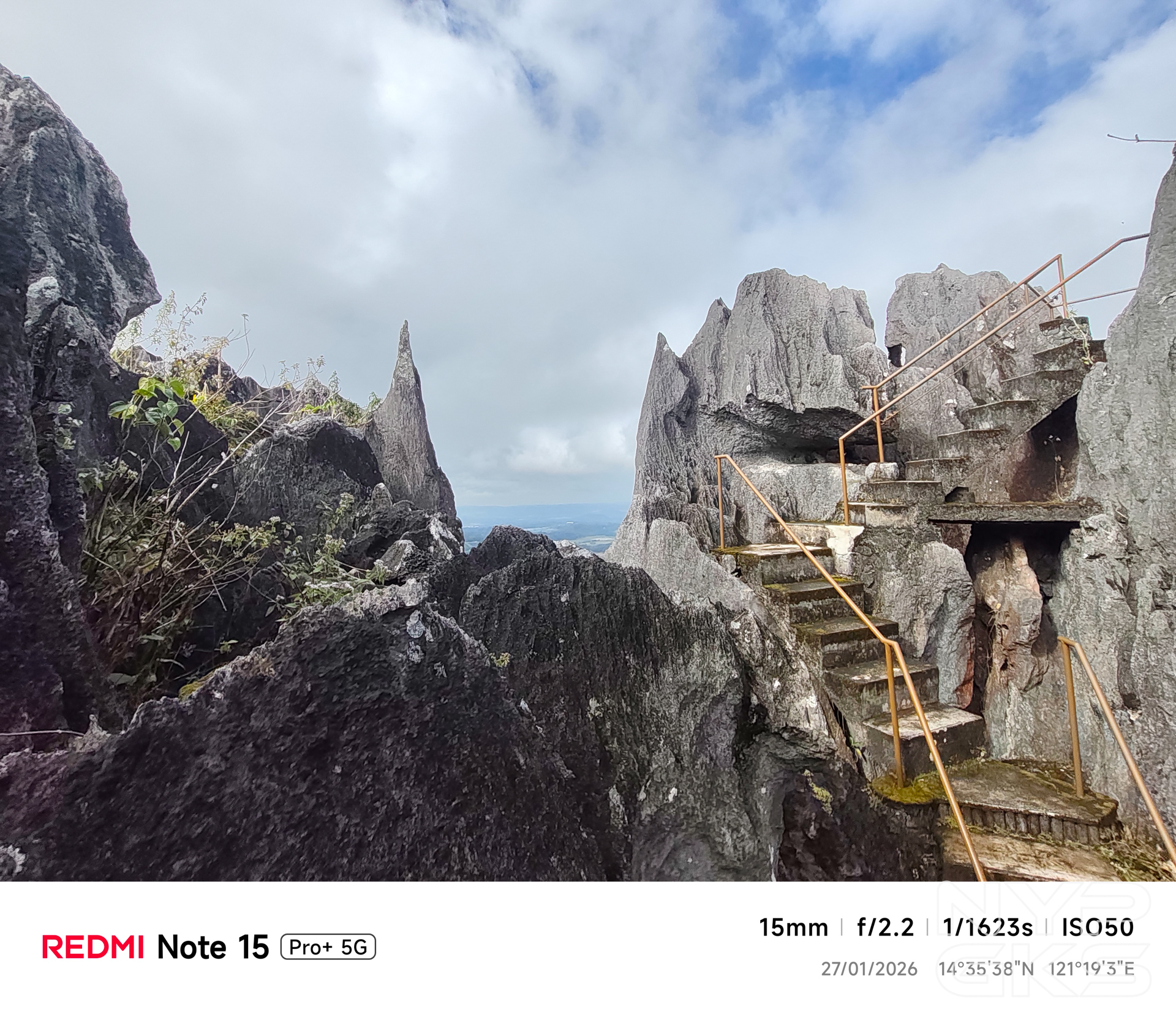
Quality from the 8-megapixel ultra-wide camera is usable, but then again, nothing to write home about. Details are soft, and the dynamic range is off. Colors are fine, though.
If we couldn’t get a telephoto lens, we should’ve at least gotten an upgraded sensor for the ultra-wide lens.






Only the selfie camera got an upgrade. From a 20-megapixel sensor, we now have 32 megapixels. Skin tones look accurate, exposure and dynamic range is fine, but sharpness is also lacking.




The cameras on the Redmi Note 15 Pro Plus are good, but far from great. It lacks the power to stand out from a crowd of midrange phones with stellar photography prowess.
Battery and Charging
The Redmi Note 15 Pro+ has a 6,500mAh silicon-carbon battery with 100W wired and 22.5W reverse wired charging support.
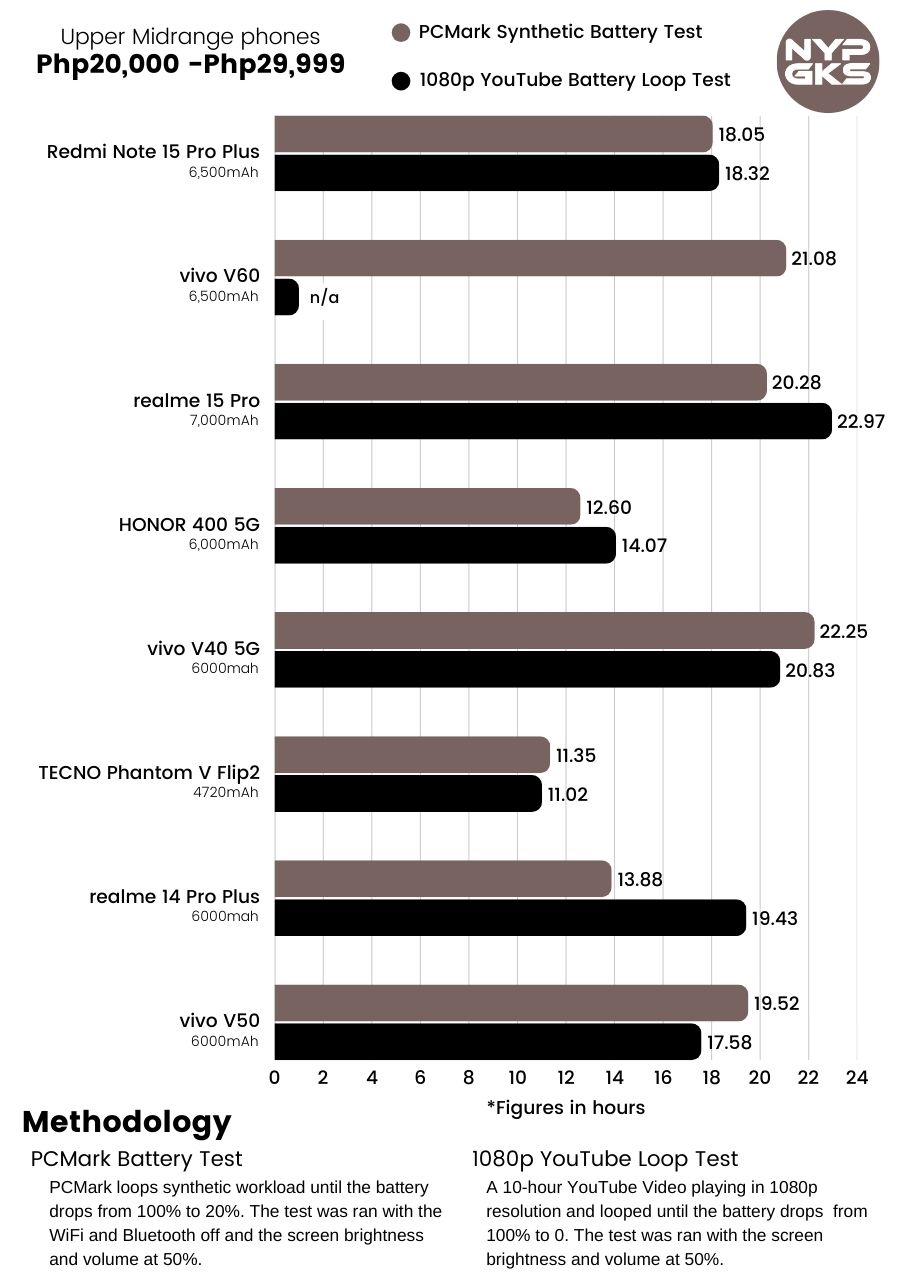
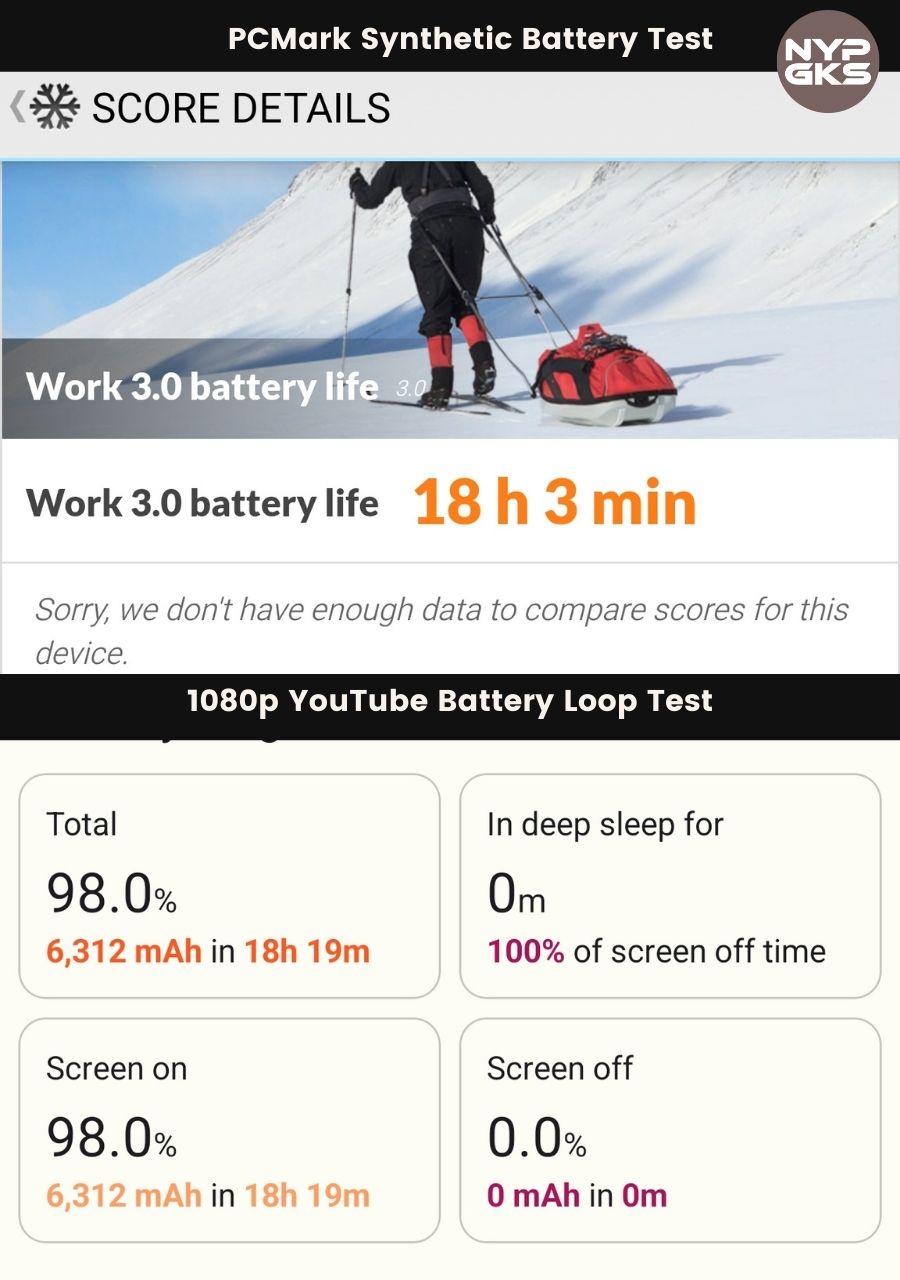
Battery life is good, but it falls behind the majority of the competition. Efficiency updates are in order.
It lasted for around 18 hours in our PCMark Synthetic Battery Test and 1080p YouTube Video Loop Test.
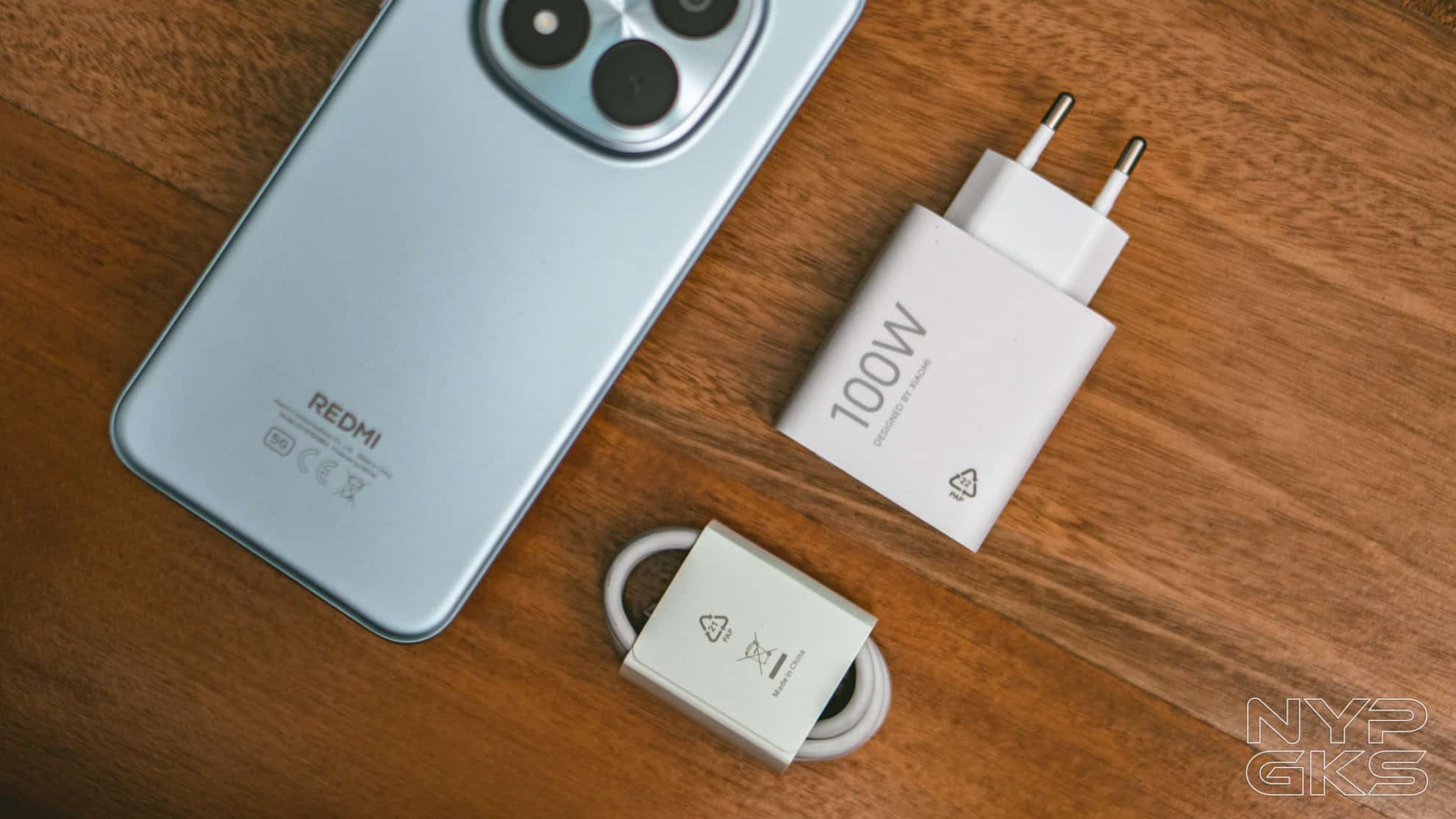
The 100W charger was fast and it took only about an hour to go from 0 to 100%. See the full test results below:
- 15mins: 0-37%
- 30mins: 64%
- 45mins: 90%
- 1hr: 98%
- 1hr 5mins: FULL
Verdict
The Redmi Note series used to be a go-to for people looking for the best performance for the price. But now, it seems like they are losing touch with their original target market (or they are giving it to POCO).
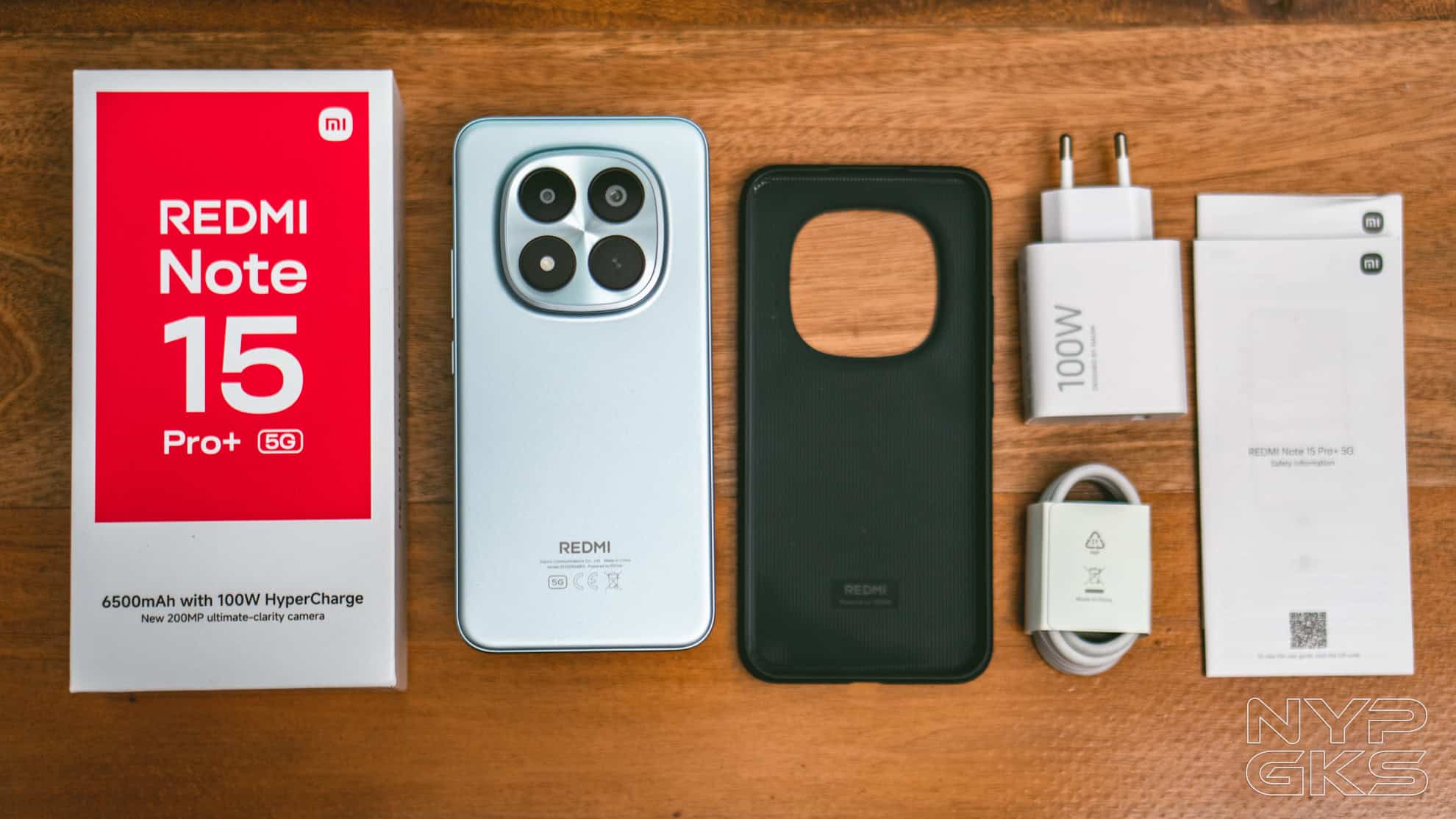
While the performance is still snappy and reliable, it’s barely an upgrade from last year, and it is not the best you can get for the price.
What’s more, the big battery is hindered by poor battery efficiency and the bloatware is kinda annoying.

But it’s not all bad. In fact, they may have compromised performance to give way to its other killer features.
There’s the build quality, which is now far more durable. We also have a good display and great speakers for an enjoyable entertainment experience, longer software support, and ultra-fast wired and reverse wired charging.

The Redmi Note 15 Pro Plus takes the series to a different route. It may not be the best-performer for the price, but it definitely feels more complete and futureproof. Now, it’s up to you to decide.
Redmi Note 15 Pro Plus pricing and availability
The Redmi Note 15 Pro+ 5G is available in the Philippines in a single 12GB/512GB configuration for a price of Php27,999. Together with the Redmi Note 15, Note 15 Pro 4G, and Note 15 Pro 5G, you can get it in Xiaomi Authorized Stores and online via Shopee, Lazada, and TikTok Shop.
Pros
- Extra durable build
- Good display
- Great speakers
- Capable day-to-day performance, gaming
- Extensive software support
- Fast 100W wired, 22.5W reverse wired charging
Cons
- Not the best chipset for the price
- Image quality could be better
- Bloatware galore
- Battery efficiency needs improvement