
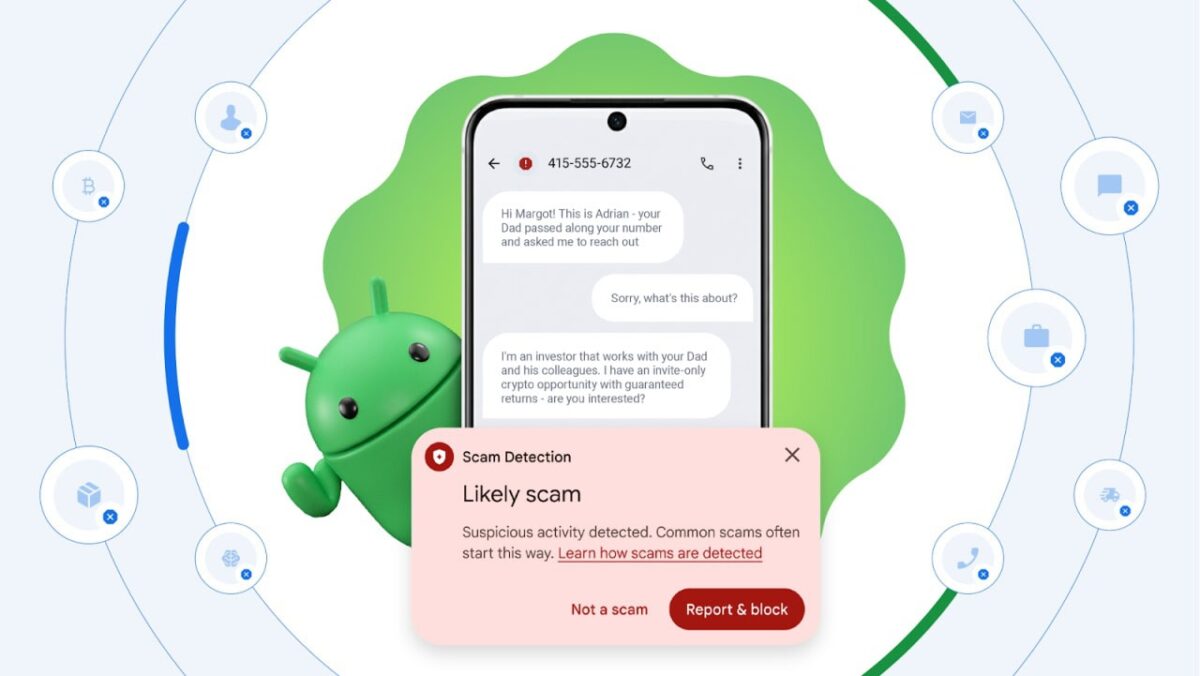

iOS has always triumphed in security and is always seen to be safer than Android. But apparently, that’s not always the case.
A YouGov study suggests that Android users are less susceptible to scams than iPhone users.
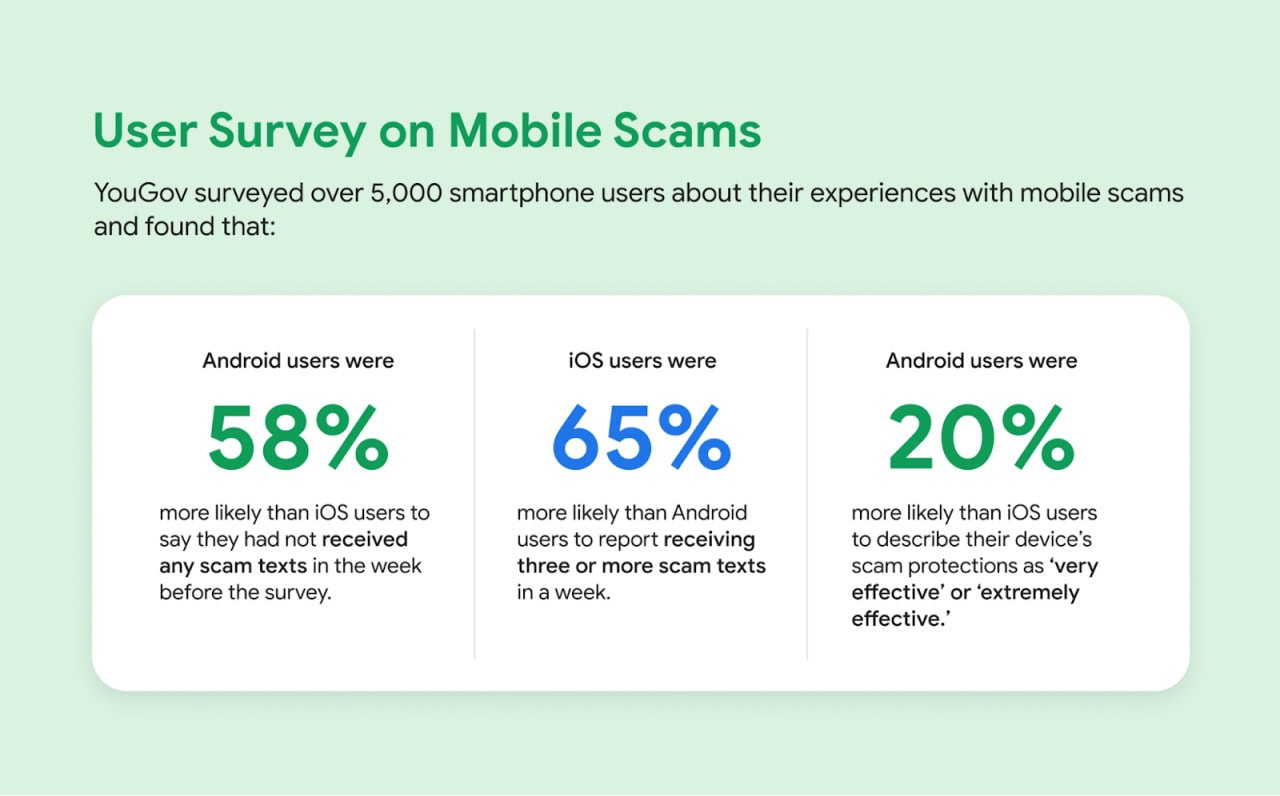
The study claims that 65% of iOS users are more likely than Android owners to report receiving three or more scam texts in a week, while Android users are 58% more likely than iOS users to report not receiving any scam texts at all in a week before the survey was taken.
What’s more, Android users are 20% more likely than iOS users to describe their phone’s anti-scam measures as “very effective” or “extremely effective”.

The study was conducted by surveying 5,000 users across the United States, Brazil, and India. But it’s worth noting that Android-owner Google was involved in the survey. In fact, the report was posted on Google’s own Security Blog.
Furthermore, Google Pixel owners were 96% more likely than iPhone owners to report zero scam texts, while iPhone users were 136% more likely than Pixel users to sa they have received a heavy volume of scam texts.
Also, iPhone users are 150% more likely than Pixel owners to say their device was not effective at all on eliminating fraud.

The report also included the assessment of different smartphones’ built-in scam and fraud protection, to which the iPhone 17 Pro was in last place and behind its Android competitors.
It highlights Android’s advanced security features like scam detection on texts, call screening, and real-time scam warning.
The default Google Messages app can already filter popular spam and complex threads. Meanwhile, Scam Detection utilizes on-device AI to analyze messages from unknown senders to give real-time warnings.
Meanwhile, Google’s default Phone app can automatically block known spam calls, while the Call Screen feature will answer calls to help identify fraudsters. But if you still take the call, the Scam Detection feature will use on-device AI to give real-time warnings for sketchy conversational patterns.
Android is taking it a step further by stopping social engineering during the call by blocking high-risk actions like installing sketchy apps and disabling security features and settings.