
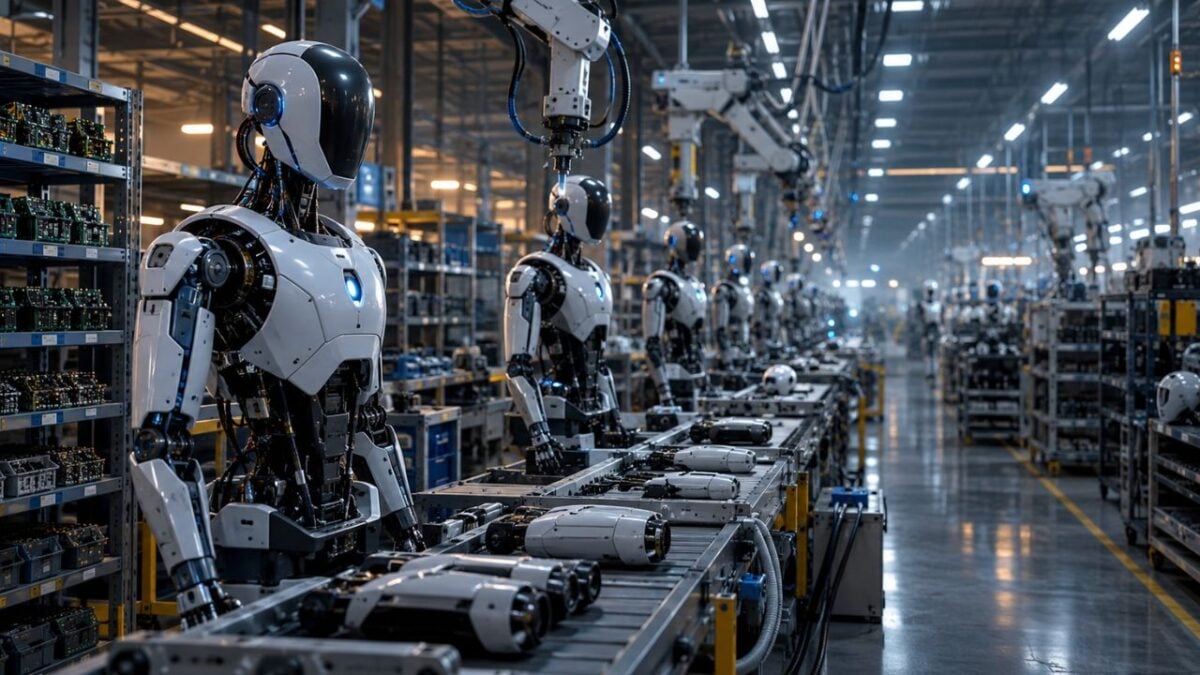
Micron Technology says humanoid robots will become a major source of memory demand, which means prices are unlikely to fall even if the AI boom cools down.
The Idaho-based chipmaker, one of the world’s three largest memory makers alongside Samsung and SK hynix, reported its fiscal fourth-quarter results on September 29, 2026. Revenue reached $54.2 billion, up 379 percent from a year earlier. Full-year fiscal 2026 revenue hit $133.2 billion, with net income of $85 billion.
Micron says each humanoid robot will need about 200 gigabytes of DRAM and several terabytes of NAND flash storage. CEO Sanjay Mehrotra said physical AI, starting with self-driving cars and later humanoid robots, could become a major driver of memory demand before this decade ends.

- Alibaba launches RynnBrain, an open-source AI model for robotics
- Japan Airlines tests humanoid robots as baggage handlers
Morgan Stanley estimates humanoid robot shipments in 2030 will range from 250,000 to 1.2 million units, possibly reaching 930 million units a year by 2050. At the end for 2030, robots would use 240 million gigabytes of DRAM.
Micron warned that demand will outpace supply in both calendar 2027 and 2028, with the shortage worse than in 2026. Customers have already booked more than 75 percent of Micron’s production capacity for fiscal 2027, and most of its high-bandwidth memory for AI chips is locked in at higher prices.
Memory prices are not coming down anytime soon. Micron expects higher gross margins beyond the first quarter of fiscal 2027, with a gentler pace of price increases. That means the memory inside computers, phones, and other devices will likely stay expensive for the foreseeable future.
Source: Wccftech