
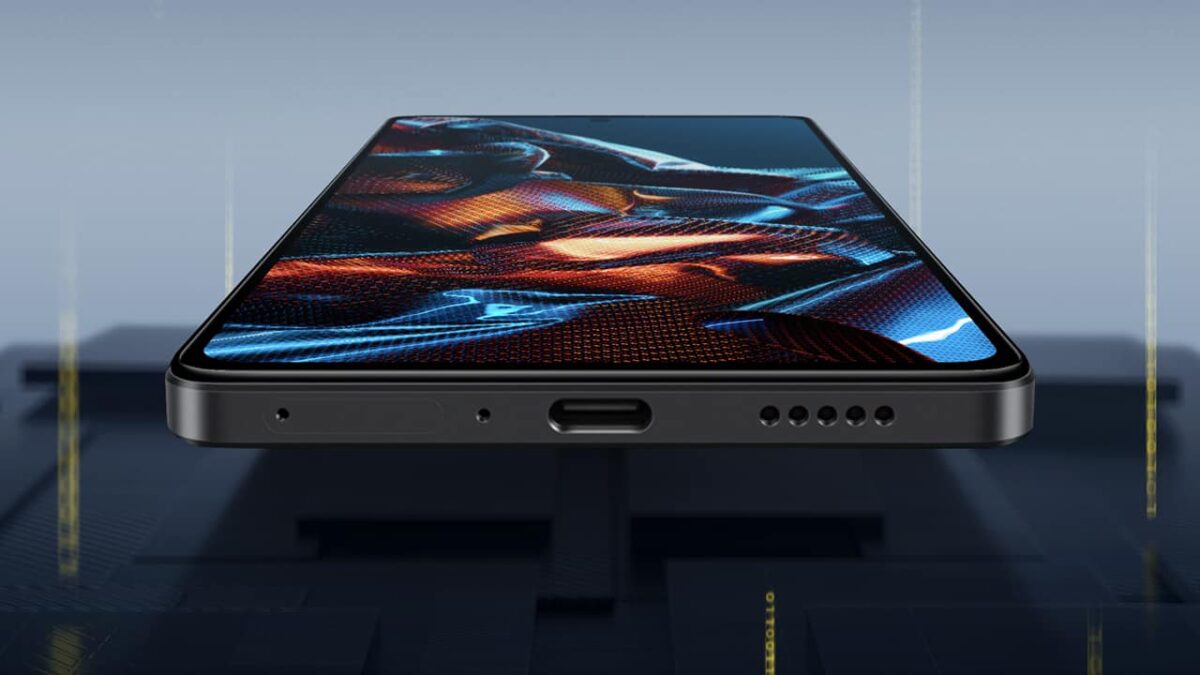
Innovations in the smartphone industry continues to ramp up since the first one came out many years ago. We’ve seen resistive touchscreens with styluses to capacitives, flat displays started to curve, and LCD panels transformed into more colorful OLEDs. However, for the longest time, these innovations are first brought on high-end phones. But will we ever see a new screen development first land on a more affordable phone?
POCO — one of the most popular brands known for bang-for-the-buck, budget-friendly smartphones — is introducing a new display technology on its line-up. The best part is, being a brand for the masses, they are first bringing it to a semi-flagship device, the all-new POCO X50 Pro 5G.
OLED screens are easily the most vibrant and contrasty displays you can get on a mobile phone these days. However, POCO is stepping it up by introducing the new Flow AMOLED on the X50 Pro 5G.
Now, you might be wondering, what it is and how Flow AMOLED is better than regular AMOLED? That’s what we’ll explain today.
What is Flow AMOLED?

The Flow AMOLED’s technical principle is similar to regular OLED. It consists of millions of light-emitting diodes which only light up when needed, creating a more vibrant and contrasty color. In addition, it can improve battery management and efficiency.
Now the question is, what makes it special compared to the conventional OLED? Well, the main one is its better substrate material that offers flexibility, durability, space savings, and more.
We’ll go into detail about these features later. But that should give you an idea of how great Flow AMOLED screens are. In fact, it’s actually being used by other brands on their flagship devices, while POCO managed to bring it to a more affordable smartphone.
Thinner and lighter
As said earlier, a Flow AMOLED panel uses a flexible substrate, which gives it characteristics. Other than the flexibility, it also has high plasticity. That, and the use of an advanced COP packaging process, reduces the width of the screen frame which results in an overall thinner and lighter smartphone.
In fact, POCO claims that Flow AMOLED is only half the thickness of traditional OLED panels.
Tougher and more durable
The panel is also said to be tougher and more durable as it is slightly shock absorbent. This is possibly due to its flexible nature and high plasticity that allowed it to take minor beatings better than standard OLED panels.
Better eye protection
It may offer better colors, but OLED screens usually have one big problem: low-frequency flickering. That’s one of the reasons why people with sensitive eyes prefer LCD panels.
That’s something the Flow AMOLED screen on the POCO X5 Pro is trying to address. It has a 1920Hz high-frequency PWM dimming technology, which keeps your eyes safe from pesky flickers.
Also, compared to regular DC dimming, using the device at night with low screen brightness still feels really comfortable to the eyes.
Faster and more colorful
The display on the POCO X5 Pro 5G also has a high 120Hz refresh rate, which makes scrolling through the interface or scrolling through social media feeds feel like butter and silky smooth.
It is also a 10-bit display that can project up to 1.07 billion colors. Compared to standard 8-bit screens, this one offers more accurate colors that are great for watching content, or creating content yourself.
These are the things you should know about the Flow AMOLED display, which can be found on the upcoming POCO X5 Pro 5G. It’s a flagship-level feature that now can be experienced in a semi-flagship and bang-for-the-buck smartphone.
The POCO X5 Pro 5G will make its official debut on February 6, 2023, at 8PM (GMT+8) via an online launch event streaming on Facebook, Twitter, YouTube, and the POCO Store.
Great insights! I never realized how much the POCO Flow AMOLED enhances color accuracy and brightness compared to standard OLED screens. It’s impressive to see how technology is evolving for a better viewing experience. Thanks for breaking it down!
Great insights on the POCO Flow AMOLED! I’m particularly impressed by the enhanced brightness and color accuracy compared to traditional OLED screens. It really shows how innovation in display technology can elevate the overall viewing experience!
Great insights on the POCO Flow AMOLED! I love how you highlighted the advantages over regular OLED screens, especially the improved brightness and color accuracy. It’s fascinating to see how these advancements enhance the overall viewing experience. Can’t wait to try a device with this technology!
Great article! I’m really impressed by how the POCO Flow AMOLED offers better color accuracy and brightness compared to regular OLED screens. It’s exciting to see advancements in display technology that enhance our viewing experience. Looking forward to seeing how this impacts future devices!
I found the comparison between POCO Flow AMOLED and regular OLED screens really insightful! It’s fascinating how the higher refresh rates and improved color accuracy of the POCO Flow AMOLED can enhance the overall viewing experience. Can’t wait to see this technology in more devices!
Great insights on the POCO Flow AMOLED! I’m really intrigued by how its brightness and color accuracy stand out compared to regular OLED screens. Those features seem like a game changer for mobile viewing experiences! Can’t wait to see how this impacts gaming and video streaming on POCO devices.
Great breakdown of the differences! It’s impressive how the POCO Flow AMOLED enhances brightness and color accuracy compared to traditional OLED screens. I’m curious to see how this technology really performs in everyday usage. Thanks for sharing!
Great post! I really appreciate the detailed comparison between POCO Flow AMOLED and regular OLED screens. The enhanced brightness and color accuracy of the POCO Flow AMOLED sound impressive. I’m curious about how these improvements will affect battery life in real-world usage. Thanks for sharing this info!
Great post! I found the comparisons between POCO Flow AMOLED and regular OLED screens really insightful. The faster refresh rates and improved color accuracy are definitely game-changers for a better viewing experience. Can’t wait to see how this technology evolves in future devices!
Great insights! I had no idea that the POCO Flow AMOLED screen offered such significant improvements in color accuracy and energy efficiency compared to regular OLED displays. It’s impressive how advancements in technology can enhance our viewing experience. Thanks for the detailed comparison!