
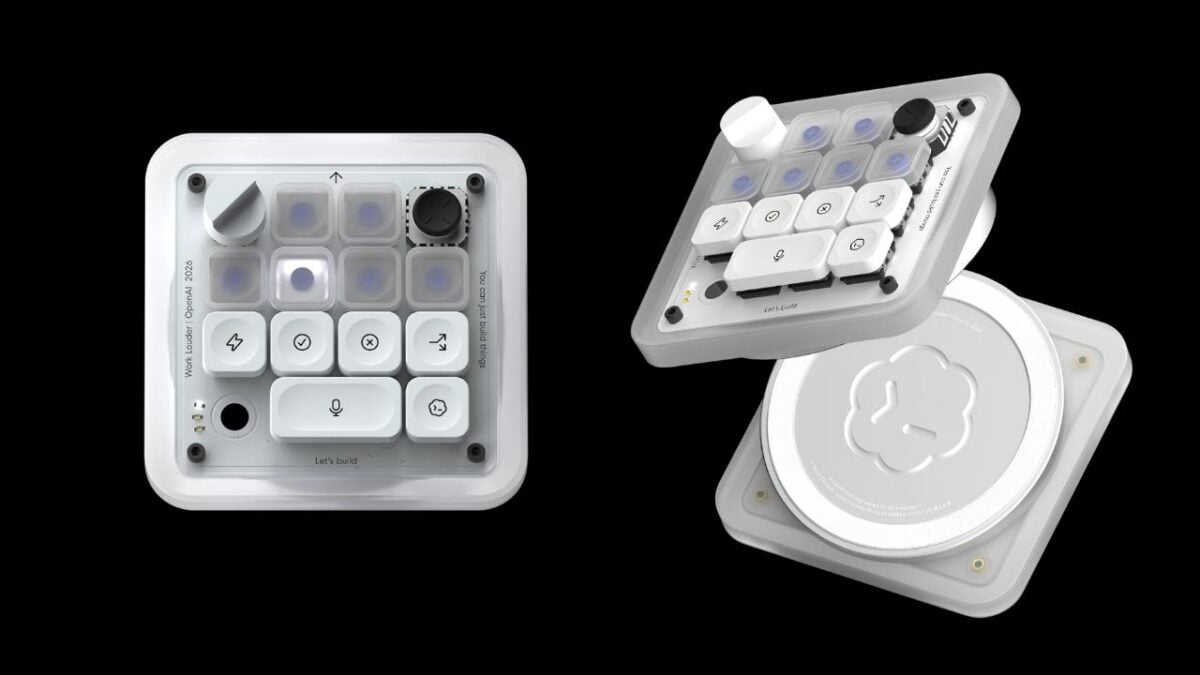

OpenAI has officially entered the physical hardware space, but not in the way many expected. Instead of a futuristic gadget, the company has released a dedicated keypad called the Codex Micro, made in partnership with the accessory brand Work Louder.
This small device is built for developers who heavily rely on OpenAI’s coding assistant, Codex. It gives users physical buttons to control various tasks, which can be faster than using a mouse or keyboard shortcuts.
The keypad includes six backlit keys that show the status of active coding agents. There are also extra buttons for quick actions like approving or discarding code changes, splitting different work threads, or activating voice commands. A dial lets users adjust the assistant’s reasoning level, while a small joystick helps switch between different workflows. The device is fully customizable, and extra keycaps are included for those who want to set up their own controls.
This launch comes shortly after OpenAI merged its Codex tool with the main ChatGPT app and a new productivity feature called ChatGPT Work. While the app works fine without the keypad, the Codex Micro is meant to make navigation smoother for power users.
Interestingly, this keypad is the least complicated hardware project OpenAI has right now. The company is also rumored to be working on a smart speaker with designer Jony Ive, but that effort has hit some legal trouble. Previous reports also say that they might be working on an agentic AI-powered smartphone. Two OpenAI employees, who used to work at Apple, are currently facing a lawsuit from Apple over allegations that they stole trade secrets.
Priced at $230 (~Php14,000), the OpenAI Codex Micro keypad is now available for purchase through both OpenAI and Work Louder. However, the maker has noted that stock is limited, so it might not be around for long.