
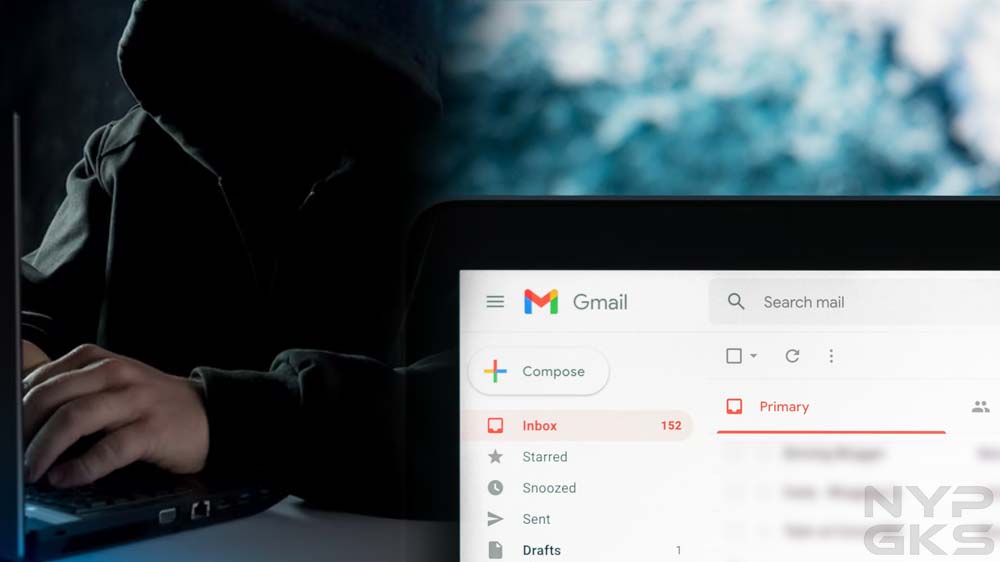
One random Tuesday, I noticed an email with a subject line that said, “Do you do any of these embarrassing things?” The first thing that came to my mind was that this was spam. Gmail did put it in my spam folder. Normally, I would’ve simply deleted the message and moved on, but there was one thing that really concerned me: the email was sent from my own email address. Have I been hacked?
Email Spoofing
After digging up some information online, I learned this message was sent using a spamming technique called email spoofing. Through some software, spammers and fraudsters can forge email headers and make an email client application display any sender address in the “From” field they want recipients to see. A closer inspection of the email header usually exposes the forgery.
Your connections may also receive spoofed messages that appear to be sent by you. Fraudsters know that people tend to be less suspicious of messages that come from friends, family, and other known contacts, which means they’re more likely to click on potentially malicious links and attachments due to a false sense of trust.
Signs That Indicate Your Email Account Was Hacked
With email spoofing, scammers can make it appear they sent an email using your own email address, but that doesn’t mean they’ve gained access to it. In my case, the fraudster claimed my device was hacked. They also claimed they obtained my personal information, which they would immediately delete immediately if I pay them via Bitcoin. It all seemed intimidating, but I didn’t give in to their demands.
Instead, I went through the checklist below to see if my email account hadn’t been accessed without authorization by a third party. Should you feel your email account was hacked, here’s what you can check to confirm it:

1. Can you no longer access your account? Hackers usually change your password to lock you out of your account.
2. Is there suspicious activity in the login history? See if your email client has alerted you of an unusual sign-in on a new device or a different IP address. Popular services such as Gmail and Yahoo! Mail record your account login activity for your reference.
3. Do you see changes to your email client’s settings? Look for any changes you didn’t make. For instance, see if your filters have been changed, if automatic forwarding has been set up to forward your messages to an unknown destination, or if your username or other account information has changed.
4. Are there missing or unexpected messages? Your account may show activity you didn’t make. Your sent folder may have messages you didn’t write. Your inbox may have new messages that appear to have been read already. Messages that used to be in your inbox may be displaced or deleted.
5. Are there new apps or services connected to your account? Hackers may use your email account to subscribe to online services and apps.
How Fraudsters Learn Your Email Address
If, like in my case, you received a spoofed message that supposedly came from your own email address, you might be wondering how fraudsters got hold of your email address in the first place. Perhaps your email address is displayed publicly and indexed by search engines. Or your email address is exposed by a data breach. Services you subscribed to may have sold your email address to their partners without your permission.
These days, it’s easy for your email address to get out and end up in the hands of hackers. The best you can do is to protect your email account and ensure it’s not accessed by anyone without your permission. Use a strong password, enable two-factor authentication, and regularly monitor for suspicious activities.
I have read so many articles about the blogger lovers but this article is really a pleasant
paragraph, keep it up.
I don’t know if it’s just me or if everyone else experiencing issues with
your site. It appears like some of the written text within your content are running off the screen.
Can somebody else please comment and let me know if this is happening to them as
well? This might be a problem with my web browser because I’ve had this happen previously.
Thanks
Wow, this post is fastidious, my younger sister is analyzing these things, thus I am going to let know her.
Hi there, just wanted to mention, I loved this post. It was inspiring.
Keep on posting!
Наркотики разламывают эндосимбионт
равно психику. Катализаторы (кокаин, мефедрон, эфедрин) сжигают резерв тела,
зажигая инфаркты, предсмертную гипертермию, тление сосудов а также
паранойю. Каннабиноиды (ямба, спайсы) водят
буква слабоумию, отказу почек равно психозам.
Опиоиды (опиоид, физептон) обездвиживают чухалка, разгоняют гниение
тканей и беспощадную ломку.
Итог употребления ПАВЛИНЧИК — отказ
органов, фатуизм равным образом смерть.
Наркотики разламывают эндосимбионт а
также психику. Стимуляторы (снежок, мефедрон,
эфедрин) сжигают средства тела, вызывая инфаркты, предсмертную гипертермию,
гниение сосудов равно паранойю.
Каннабиноиды (ямба, спайсы) водят к полоумию, отказу почек
и еще психозам. Опиоиды (героин, метадон) парализуют чухалка, вызывают тление мануфактур а также беспощадную ломку.
Итог употребления ПАВ
— отказ органов, фатуизм и смерть.
Hello, I enjoy reading all of your article. I wanted to write a little comment to support you.
This is the right website for everyone who wants to understand this topic.
You know a whole lot its almost tough to argue with you (not that I personally will
need to…HaHa). You definitely put a new spin on a topic that’s been written about for
a long time. Excellent stuff, just excellent!
What’s up to all, how is all, I think every one is getting more from this
website, and your views are good designed for new users.
For hottest information you have to go to see web and on the
web I found this website as a most excellent site for most recent updates.