
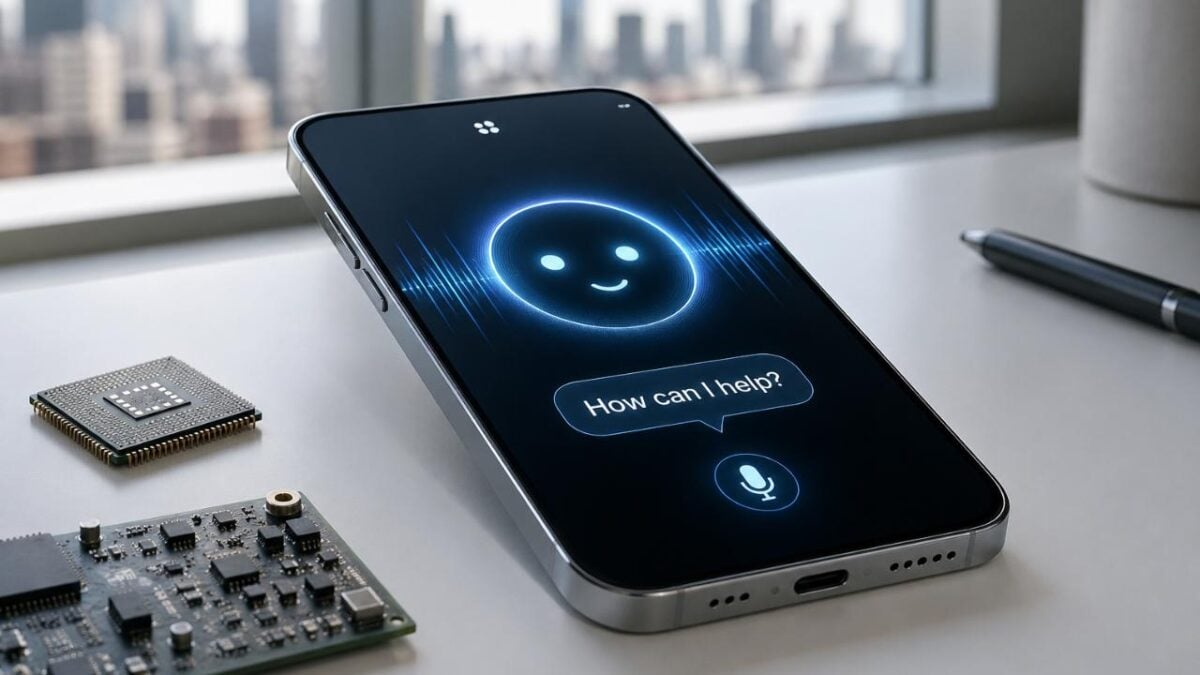
There’s growing evidence that OpenAI wants to build its own smartphone.
And according to Ming-Chi Kuo’s report, the company isn’t going at it alone. It has brought on chip giants Qualcomm and MediaTek as partners, along with manufacturing specialist Luxshare.
The report says company believes the only way to deliver that kind of service properly is to control both the operating system and the hardware. No other device captures a user’s real-time situation, location, and habits as well as a smartphone does. That live information is exactly what an AI agent needs to be useful.
Plus, even with all the new gadgets out there, phones remain the biggest product category by a long shot.
The OpenAI phone will reportedly split the work between the device itself and the cloud. Simple, always-on tasks, like understanding what you are doing at any moment, will run locally on the phone. That means the processor has to be smart about battery life, memory, and running small AI models efficiently.
For heavier jobs, like deep analysis or creating long pieces of text, the phone will pass those to the cloud.

See also: Undetectable AI? OpenAI says AI writing detectors don’t work
OpenAI is allegedly aiming at the high end of the smartphone market first, which sells about 300 to 400 million units every year. If people start replacing their phones more often because of better AI features, that could add a lot of extra demand for these chips.
As one of the leaders in artificial intelligence, OpenAI has a few clear advantages. It has a well-known brand, years of user data, and some of the best AI models in the world. Smartphone hardware is already very mature, so the company can lean on existing supply chains instead of starting from zero.
On the business side, OpenAI might sell the phone with a subscription bundle. It could also build a new ecosystem where developers create AI agents for different tasks, similar to how app stores work today.
Kuo says Qualcomm and MediaTek will help design the processor inside the phone. The final decisions on specs and suppliers should be made by late 2026 or early 2027.
The OpenAI Agentic AI smartphone is expected to hit mass production in 2028.
Via: CNET
The concept of an AI-agent ecosystem sounds particularly promising. If developers can build specialized AI agents the same way they build apps today, it could open the door to entirely new categories of software.
The timeline seems ambitious, but OpenAI certainly has the brand recognition and technical expertise to attract attention in the premium smartphone market. Running AI features directly on the device could make interactions feel much faster and more natural.
The smartphone market has been relatively mature for years, so a true AI-first device could be one of the few innovations capable of driving a new upgrade cycle. Partnerships with established suppliers like Qualcomm, MediaTek, and Luxshare also make the project sound more realistic.
The potential subscription model is an interesting business angle. If OpenAI bundles premium AI services with the device, it could create a very different ecosystem from traditional smartphones. Success will likely depend on whether the AI features provide enough value to justify the cost.
A dedicated AI-first smartphone could be particularly interesting for content creators. Having advanced AI capabilities built directly into the device might streamline workflows for writing, image generation, and productivity tasks.
The strategy of handling lightweight AI tasks locally while sending more demanding workloads to the cloud seems like a practical approach. Battery life and performance will be critical if users are expected to rely on AI assistants throughout the day.
This is a fascinating development. If OpenAI really plans to build both the hardware and software stack, it could create a much more seamless AI experience than what we see today. The idea of an AI agent that understands context and assists throughout the day is particularly interesting.
This is such exciting news! The idea of an AI-native smartphone with on-device processing for lightweight tasks is really forward-thinking. Can not wait to see how this develops over the next few years!
The OpenAI Agentic AI smartphone is expected to hit mass production in 2028.
They can experience the intensity of competition and gain insight into the challenges of team building in it.